
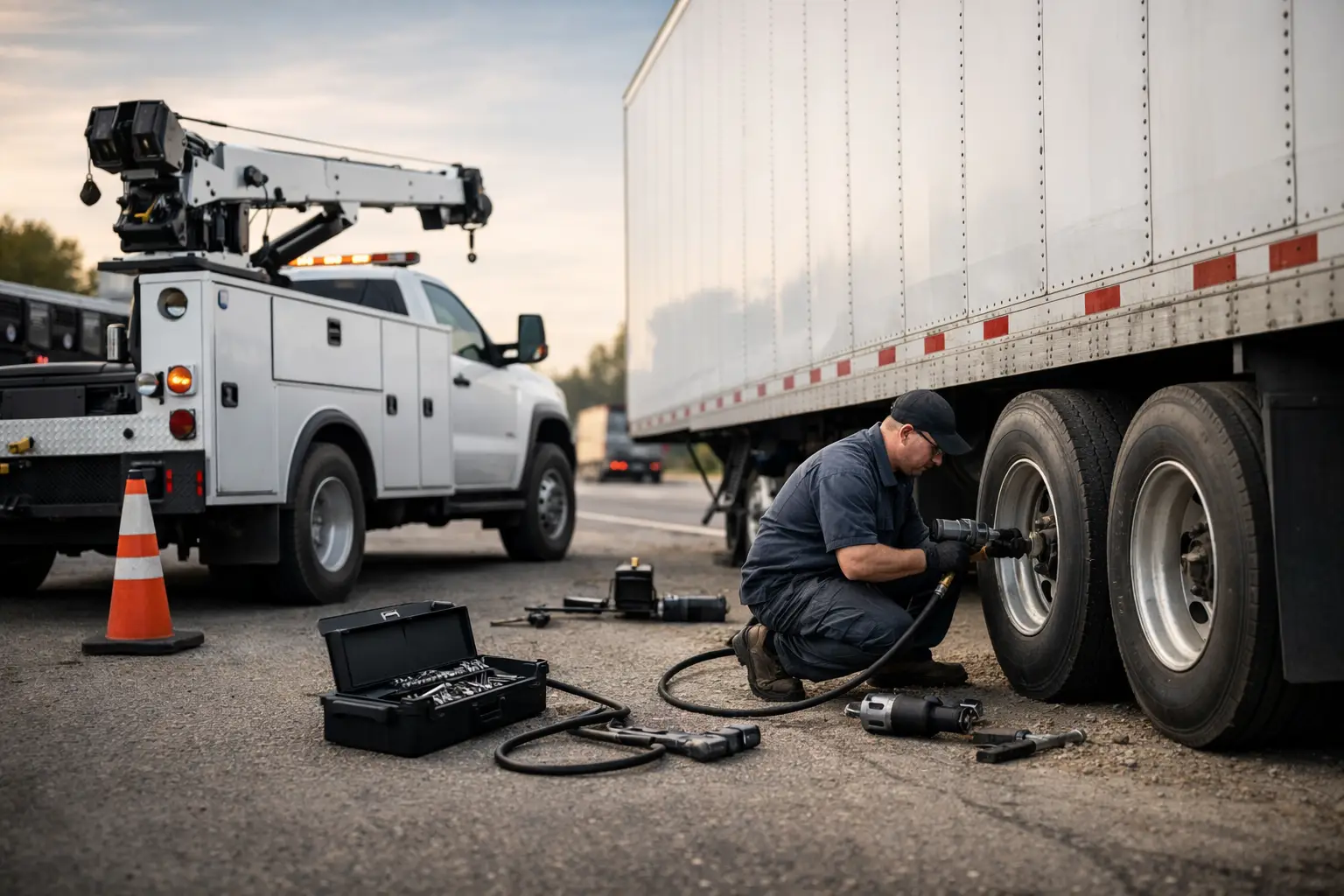
A trailer issue rarely happens at a convenient time. It happens at a receiver with an appointment clock running, on the shoulder after dark, at a jobsite before a crew can unload, or in a parking lot hours from the nearest repair bay. 24/7 trailer repair is built for that moment: qualified mobile service that comes to the equipment, diagnoses the problem in the field, and works to get the trailer safe and operational without adding an unnecessary tow or shop delay.
For drivers, dispatchers, and fleet managers, the goal is not simply to fix a component. It is to protect the load, keep the driver safe, preserve the schedule where possible, and limit the cost of downtime.
When a Trailer Problem Requires Immediate Service
Not every defect requires an emergency call. A minor cosmetic issue or a noncritical item found during a planned inspection may be able to wait for scheduled maintenance. But a trailer that cannot move safely, cannot be loaded or unloaded, or risks a roadside violation needs attention now.
Brake trouble is one of the clearest examples. Air leaks, damaged hoses, failed chambers, dragging brakes, or brake lights that do not work can take a trailer out of service quickly. The same is true for a locked-up wheel end, damaged tire, broken suspension component, loose landing gear, or an electrical failure that leaves critical lights inoperative.
Cargo-related issues can be just as urgent. A damaged door, broken latch, compromised roof, or failed liftgate can leave freight exposed or prevent a customer from accepting delivery. For flatbeds and equipment trailers, problems with tie-down points, ramps, or securement hardware can stop a load from moving even when the tractor is running normally.
The right response depends on the defect, the load, and the location. A mobile technician can assess whether the equipment can be repaired on site, whether it needs a controlled move, or whether a more extensive shop repair is the safer choice. That decision is worth making before a driver attempts a temporary fix that creates a larger problem down the road.
What Mobile 24/7 Trailer Repair Can Address
A capable field repair response starts with diagnosis. Trailer failures often show up as a symptom - an air warning, no brake lights, a wheel that is smoking, a door that will not close - but the root cause may be elsewhere in the system. On-site troubleshooting helps avoid replacing the wrong part or sending a trailer toward a shop when a practical repair can be completed where it sits.
Common mobile trailer repairs include air system leaks and damaged air lines, brake component issues, lighting and wiring faults, tire and wheel-end concerns, suspension repairs, landing gear problems, door and latch repairs, and basic cargo-control defects. Roadside service may also help with ABS-related electrical issues, connector failures, mud flap damage, and other defects that can affect safe operation or inspection compliance.
Field repair is especially valuable when the trailer is loaded. Towing a loaded trailer, transferring cargo, or arranging a shop appointment can multiply the disruption. If the repair can be completed safely at the customer location, the operation avoids extra handling and gets closer to its original delivery plan.
There are limits, and a dependable repair provider should be clear about them. Severe frame damage, major structural failures, extensive body work, or repairs that require specialized equipment may need a shop environment. Mobile service is not about forcing every repair roadside. It is about resolving the problem efficiently when field repair is the safe, practical option.
Why Location Matters During a Breakdown
A fixed repair shop requires the equipment to come to it. That can mean a tow, a risky limp-in decision, a driver waiting for transportation, or a load sitting while dispatch tries to coordinate the next move. Mobile repair changes that sequence. The technician comes to the roadside, terminal, warehouse, customer yard, truck stop, or jobsite.
That matters across long operating areas where a conventional shop may be miles away. A trailer breakdown near Green River or Rock Springs, along the Front Range, or on a Texas freight route does not pause because it is after business hours. The need is immediate, and the repair plan should match the location and operating conditions.
For dispatch, a mobile response also provides better control of the situation. Instead of coordinating a tow before anyone has inspected the trailer, dispatch can get a professional assessment of what failed, what parts are needed, and whether the trailer can return to service. Clear information makes it easier to update the customer, reassign freight if needed, and make the next decision with facts rather than assumptions.
Information That Speeds Up the Repair Call
The fastest repair calls start with useful details. When requesting service, provide the trailer type, unit number, exact location, and a clear description of the issue. If the trailer is loaded, share the cargo type and whether there are delivery or temperature requirements that affect the repair decision.
It also helps to explain what the driver observed before the equipment stopped. For example, tell the technician whether there was a loud air leak, a brake warning, smoke from a wheel end, an impact with debris, a light outage, or a failure while raising or lowering landing gear. Photos can be useful when they can be safely taken, but the driver should never work around traffic or crawl under an unsecured trailer to document a defect.
Access conditions matter, too. A trailer in a tight dock lane, on a soft jobsite, or parked along a busy shoulder may require a different approach than a trailer at a truck stop. Let the service provider know about gate access, site contacts, safety requirements, and any restrictions that could delay the technician on arrival.
Protect the Driver, Load, and Equipment While Waiting
Once a trailer problem is identified, the first priority is securing the scene. The driver should follow company procedures, use warning devices where required, and position the vehicle as safely as conditions allow. If brakes, suspension, wheels, or landing gear are involved, the trailer should not be moved until a qualified technician has assessed it.
Do not assume an air leak is minor or that a brake issue will clear after the system builds pressure. Do not drive on a damaged tire to reach the next exit if there are signs of sidewall failure, wheel-end heat, or loose components. Those decisions can turn a repairable issue into a major roadside event, cargo claim, or crash risk.
For loaded trailers, keep security in mind. Close and secure accessible doors, document the condition of the freight if there is visible damage, and notify dispatch promptly if cargo may be exposed. Refrigerated, hazardous, high-value, or time-sensitive loads require additional coordination, which is another reason early communication matters.
Reduce Repeat Breakdowns With Better Follow-Through
Emergency repair gets the trailer moving again, but it should also create a maintenance signal. If a trailer has repeated lighting failures, recurring air leaks, uneven tire wear, or chronic door problems, there may be a larger issue that deserves scheduled inspection. Replacing the failed part without addressing the cause can leave the same unit stranded again next week.
Fleet managers can use repair notes to spot patterns by trailer, component, route, or operating condition. A single roadside repair may be unavoidable. Repeated failures often point to missed inspection items, aging equipment, loading practices, or parts that need a more complete repair plan.
Drivers play a critical role here. A thorough pre-trip and post-trip inspection catches many trailer defects before they become a roadside call. Reporting a small air leak, worn tire, weak latch, or intermittent light while the trailer is at a terminal is far easier than dealing with the same issue at midnight on a loaded run.
When the trailer cannot safely continue, waiting for the right help is often the decision that saves the most time. MTG Truck Shops provides mobile, around-the-clock repair support because the equipment is already where it needs help. Give the technician accurate details, keep the scene safe, and let the repair start where the breakdown happened.