
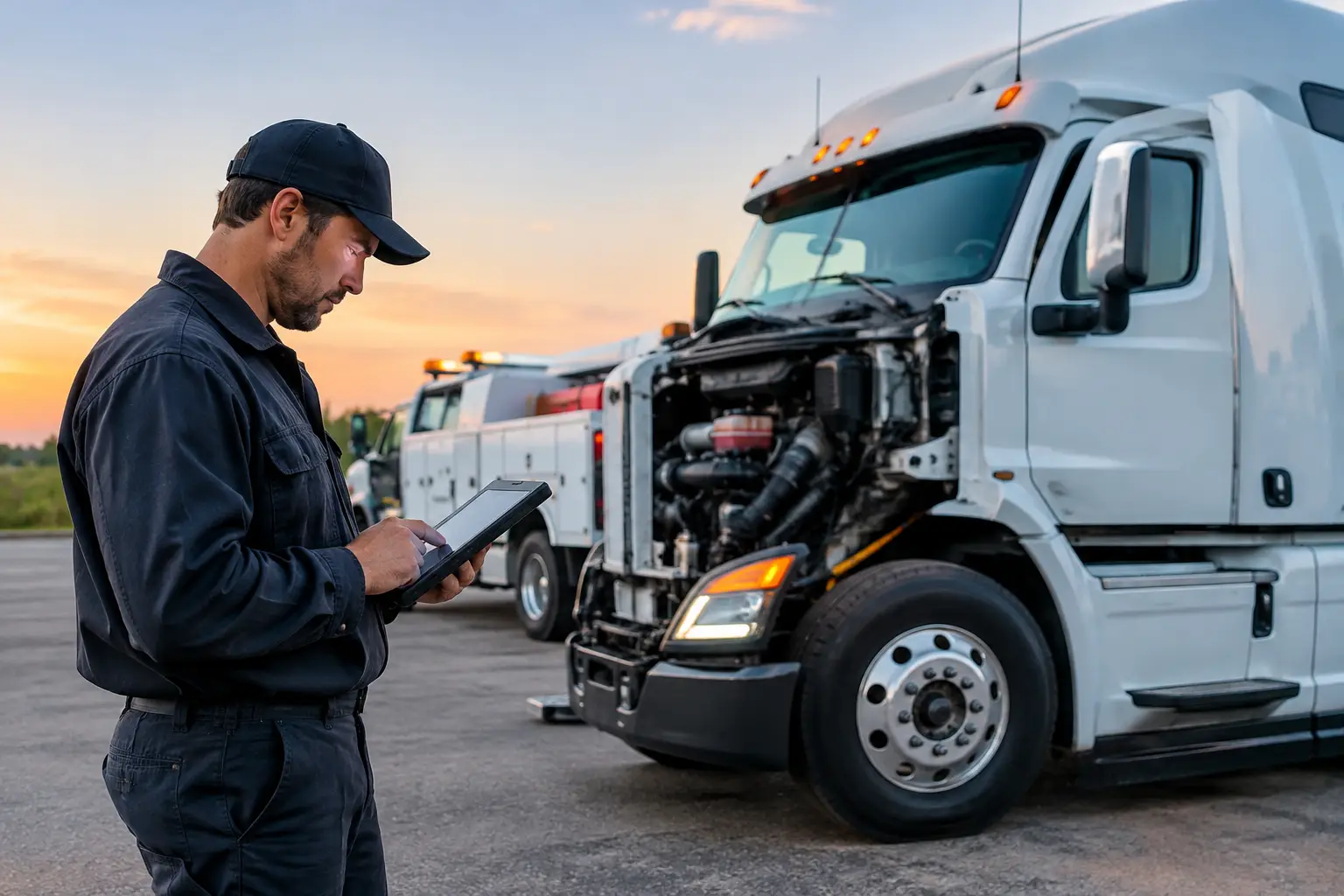
A truck parked on the shoulder at 2:10 a.m. is not just a maintenance problem. It is a driver waiting without answers, freight at risk, a dispatch plan coming apart, and equipment that is not earning. An after-hours truck service review should help you judge whether a repair provider can actually reduce that exposure when normal shops are closed.
The right provider is not simply the one that answers the phone. They need to dispatch qualified help, work safely at the truck or trailer location, communicate clearly, and make a realistic repair decision without creating more delay. For owner-operators, that protects the next load. For fleets and dispatch teams, it protects the entire schedule behind that load.
What an After-Hours Truck Service Review Should Measure
A useful review looks beyond a star rating or a single roadside story. Emergency truck repair is time-sensitive, so the question is not whether everything went perfectly. The better question is whether the provider handled the situation with urgency, competence, and straight answers.
Start with the time between the initial call and an actual technician dispatch. A provider may advertise 24/7 availability, but that can mean different things. Some answer calls overnight and schedule work for the morning. Others have mobile technicians who can respond after hours. Ask what happens after you provide the location, truck or trailer type, and issue. You want a clear answer on dispatch status, estimated arrival, and what information the technician needs before rolling out.
Response time will always depend on location, weather, traffic, technician availability, and the nature of the breakdown. A truck stopped in a remote area of Wyoming will not have the same response conditions as a unit near Denver, Dallas, or Fort Worth. What matters is honest communication. A dependable provider does not promise an impossible arrival time just to win the call.
Mobile capability matters more than a shop address
An after-hours repair provider should be evaluated on what can be repaired where the equipment sits. A mobile service call may be able to address common truck and trailer failures without sending the unit to a fixed shop. That can include electrical issues, air system problems, lighting defects, brake concerns, tires, batteries, starting issues, trailer components, and other field-service needs.
Still, not every problem is a roadside repair. Major internal engine damage, extensive collision damage, a failed transmission, or a repair that requires specialized lifting equipment may require a shop or towing. That is not a failure of mobile service. The value is getting a qualified diagnosis early, making the equipment safe, and avoiding a tow when a practical on-site repair can get the truck moving.
A credible provider explains the difference. They do not push a temporary patch as a permanent fix, and they do not recommend a tow before assessing whether field repair is possible.
Communication protects the operation
During an overnight breakdown, dispatch needs updates they can act on. The driver needs to know help is coming and whether the vehicle can be safely moved. The customer may need a repair status before deciding to reschedule a delivery, arrange a relay, or notify a receiver.
Good after-hours service includes direct, usable communication: confirmation that the call is assigned, an estimated arrival window, technician updates when conditions change, a clear diagnosis, and a report of work performed. If parts are needed, the provider should explain whether the part is available now, can be sourced locally, or requires a next-day repair plan.
That level of communication is especially important for fleet managers handling several units. One vague status update can lead to unnecessary calls, poor driver support, and bad decisions made with incomplete information.
Review the Repair Process, Not Just the Arrival Time
Fast arrival is valuable, but it is only the start. Once a technician reaches the truck, the repair process should be organized and safe. The technician needs enough information to assess the failure, identify related issues, and determine whether the truck or trailer can return to service without creating another problem down the road.
Ask how the provider documents work after hours. A clear invoice and service record should identify the reported issue, diagnosis, labor, parts used, and any recommended follow-up repairs. This helps fleets track recurring defects and gives owner-operators a record for maintenance planning.
Also consider whether the provider can handle both the power unit and trailer. A trailer defect can be just as disruptive as an engine or starting issue. Failed lights, air leaks, brake issues, damaged landing gear, electrical faults, and door problems can stop a load from moving or create a safety concern at a shipper, receiver, jobsite, or roadside location.
A mobile truck and trailer repair provider that understands both sides of the combination can reduce handoffs and keep the repair decision in one place.
Compare Cost With Downtime, Not With a Daytime Shop Rate
After-hours service costs more than scheduled daytime maintenance. There may be emergency call-out charges, travel time, overnight parts sourcing, or added labor for difficult conditions. That is a real trade-off, and it should be explained before work begins whenever the situation allows.
But the cheapest repair quote is not always the lowest-cost decision. Consider the total downtime cost: missed appointment windows, detention, late-delivery penalties, lost driver hours, hotel needs, towing, cargo risk, and the cost of an idle truck. For a fleet, one disabled unit can also pull dispatch attention away from the rest of the operation.
A strong provider communicates pricing clearly and explains the repair path before unnecessary work is performed. In an emergency, estimates can change once the equipment is inspected. The key is whether the provider keeps the customer informed instead of presenting surprises after the truck is back on the road.
Questions to Ask Before You Need Emergency Service
The best time to assess an after-hours provider is before a driver is stranded. Keep the conversation practical. Ask whether they dispatch mobile technicians at night, what truck and trailer repairs they commonly perform in the field, how they handle parts after normal business hours, and how they communicate with dispatch during the call.
For fleets, ask whether the provider can work with your approval process, purchase-order requirements, maintenance contact, and unit information. A technician may lose valuable time waiting for authorization if the provider does not know who can approve work overnight.
You should also confirm service coverage along your regular lanes. Carriers operating through Green River and Rock Springs, along the Colorado Front Range, or across North Texas need to know whether a provider truly serves those areas after hours rather than only maintaining a nearby shop address.
Warning Signs in an After-Hours Service Review
Be cautious when reviews repeatedly mention unanswered calls, unclear arrival estimates, incomplete updates, or repairs that create the same failure shortly afterward. One difficult call does not define a company. Severe weather, scarce parts, and remote locations can make any emergency repair harder. Patterns matter more than isolated complaints.
It is also worth watching for reviews that are too vague to be useful. “Great service” is positive, but it tells you little about the work. More helpful feedback describes whether the provider arrived as promised, diagnosed the issue accurately, treated the driver professionally, explained the repair, and helped return the unit to service.
For commercial equipment, the strongest proof is operational: did the repair provider reduce downtime, communicate clearly, and make a sound decision about repair versus tow?
Choose a Provider That Can Act When the Truck Stops
A dependable after-hours service partner should give drivers and dispatch one less problem to manage. That means available support, mobile repair capability, practical updates, and a focus on getting safe equipment moving again.
MTG Truck Shops operates on that standard with 24/7 mobile truck and trailer repair: We Come to You. Before the next late-night failure changes your schedule, know who can respond, what they can repair on-site, and what information they need to start the job without delay.