
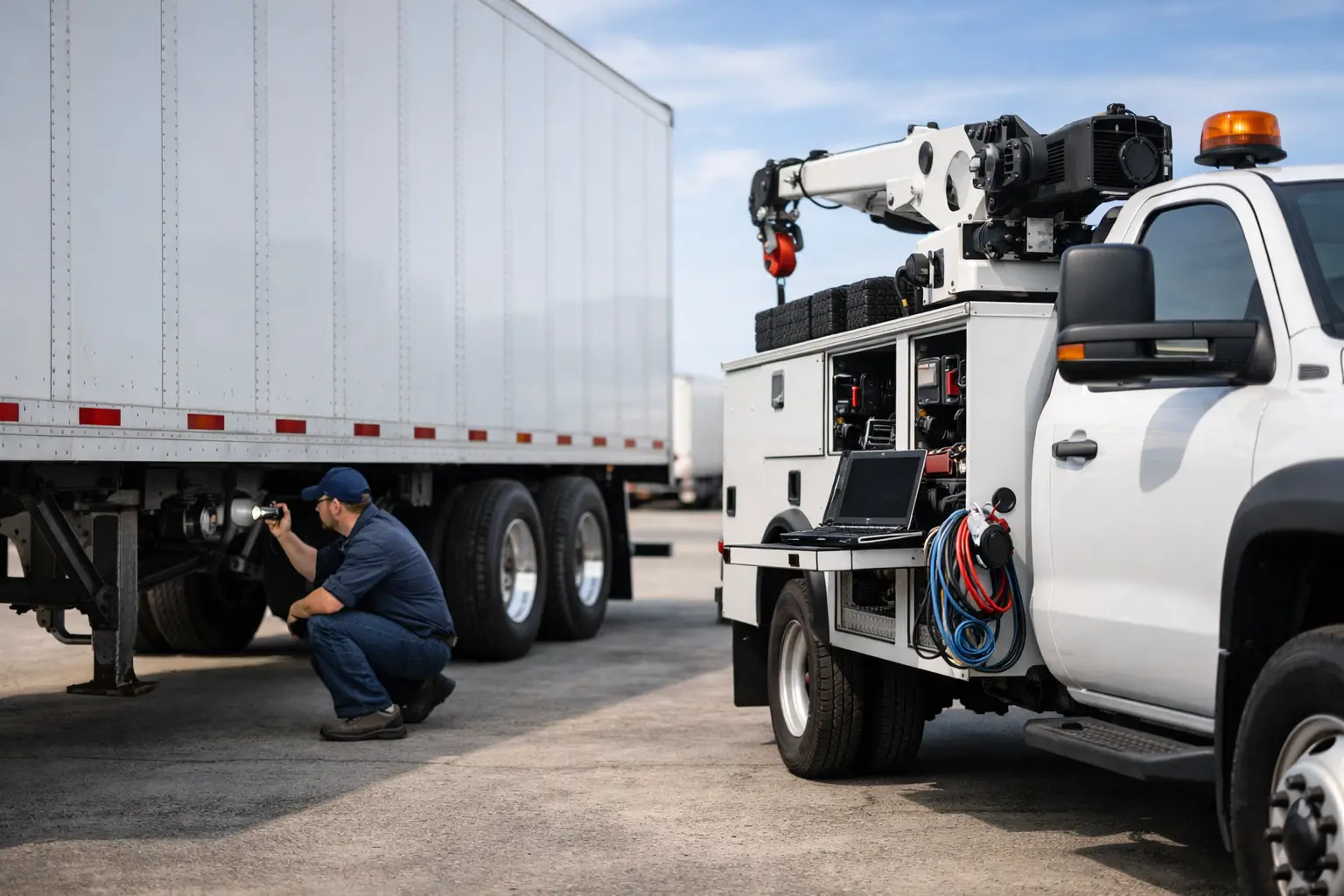
A trailer can look ready at the yard and still become the reason a load sits on the shoulder, at a receiver, or at a jobsite. The best methods for trailer inspections are the ones that make defects visible before they turn into downtime, out-of-service violations, cargo damage, or an unsafe trip.
For drivers and fleets, the goal is not to create paperwork for its own sake. The goal is to find the small issues that become expensive when they are ignored: a worn tire, a loose connection, a leaking air line, a damaged light, or a cracked securement point. A consistent inspection process gives the driver a clear decision before departure and gives maintenance teams useful information when repairs are needed.
Best Methods for Trailer Inspections Start With a Routine
The most effective inspection is repeatable. Walk the trailer in the same direction every time, use the same sequence, and avoid rushing because the equipment ran fine on the last trip. A clockwise walkaround works well because it reduces missed areas. Start at the front, move down one side, inspect the rear, return along the opposite side, and finish underneath where practical and safe.
A pre-trip inspection should happen before the trailer is put into service. A post-trip check matters too, especially after a rough route, severe weather, construction-site use, heavy loading, or a hard docking event. Those conditions can damage tires, lights, landing gear, suspension components, doors, and cargo-control equipment without producing an immediate warning.
Build the inspection around what can stop the load. Check coupling, brakes, tires, lighting, structure, cargo securement, and the condition of the load space. If anything is questionable, document it and get it evaluated before it becomes a roadside problem.
Start at the Coupling and Air Connections
The front of the trailer deserves close attention because a coupling issue can quickly become a major safety event. Verify that the trailer is properly seated on the fifth wheel and that the fifth wheel jaws are locked around the kingpin. There should be no gap between the upper coupler and fifth wheel. Confirm that the release handle is in its locked position and that the landing gear is fully raised for travel.
Inspect the kingpin and apron for cracks, bending, excessive wear, or damage from improper coupling. Look over the glad hands, air hoses, electrical pigtail, and mounting points. Lines should not be chafed, kinked, leaking, or hanging where they can rub against the frame or road surface. Electrical connections should be secure and free of corrosion.
Listen for air leaks after the trailer is connected. A leak that seems minor in the yard can reduce braking performance or leave a driver stranded after a few hours on the road. When a leak is found, do not rely on a temporary adjustment if the line, fitting, or connection is damaged. Repair the cause.
Inspect Tires, Wheels, and Suspension at Every Stop
Tire and wheel issues are among the fastest ways to lose time. Check each tire for proper inflation, visible cuts, bulges, exposed cords, uneven wear, objects in the tread, and signs of rubbing. Compare dual tires for matching size and adequate spacing. A low tire next to an inflated tire can overwork both tires and create a heat problem.
Look for loose, missing, or damaged lug nuts. Rust trails around wheel hardware can signal movement. Check wheel seals and the inside of the rim for oil or grease, which may point to a leaking hub seal. Inspect mud flaps, brackets, and fenders as well. A loose bracket can damage a tire or become a road hazard.
Then look at the suspension. Watch for broken leaves, cracked hangers, damaged airbags, loose U-bolts, worn bushings, or parts sitting out of alignment. On air-ride trailers, check that the bags inflate correctly and that no air lines are leaking. Uneven ride height or a trailer leaning to one side calls for attention before loading or dispatching it.
Confirm Brakes and Lights Work as a System
A trailer brake check should involve more than a quick look at the chambers. Inspect brake chambers, pushrods, slack adjusters, hoses, and wiring for damage, corrosion, loose mounting, or air leaks. Look for evidence of dragging brakes, including a burnt odor, excessive heat, or discoloration around a wheel end. Drivers should know the condition of the trailer brakes before entering traffic, not after a roadside inspection or a sudden stop.
Check all required lighting with the tractor connected: headlights if applicable, marker lights, turn signals, brake lights, four-way flashers, license plate light, and reflective tape. Have someone assist or use a method that lets you verify the lights yourself. A light that works intermittently is still a defect. Inspect the wiring harness along the frame and near the rear of the trailer, where road debris and loading activity often cause damage.
For refrigerated trailers, this check also includes the reefer unit, fuel level, alarms, temperature settings, and door seals. A roadworthy trailer does not protect a temperature-sensitive load if the refrigeration system is not operating as required.
Check the Trailer Body, Doors, and Cargo Area
A trailer's structure takes abuse from loading docks, forklifts, road vibration, weather, and shifting cargo. Examine the frame rails, crossmembers, floor, sidewalls, roofline, and rear impact guard for cracks, bends, holes, loose fasteners, or fresh damage. Pay particular attention to areas near the landing gear, suspension mounts, and rear doors.
Open and close the doors. Hinges, latches, retainers, seals, and locking bars must operate correctly. A door that is difficult to secure can become a cargo-security issue or delay a delivery. On dry vans and reefers, inspect the interior for water intrusion, floor damage, loose panels, sharp edges, and debris that could damage freight.
For flatbeds, step decks, lowboys, and equipment trailers, inspect the deck surface, stake pockets, rub rails, D-rings, chain slots, ramps, and winches. Cargo securement points must be intact and rated for the work being done. Do not assume a bent or worn tie-down point will hold because it held on the previous run.
Make Documentation Useful, Not Just Complete
A good driver vehicle inspection report identifies the defect, trailer number, location of the problem, and whether the trailer is safe to operate. Vague notes such as “needs work” slow down dispatch and maintenance. A note like “right rear outer tire has a sidewall cut” gives the repair team a starting point and helps the fleet decide whether the equipment can move.
Photos are useful for damage, leaks, tire wear, and load-related concerns. They create a record of the condition at the time of inspection and reduce confusion between drivers, dispatchers, maintenance staff, and customers. If a defect is safety-critical, mark the trailer out of service according to company procedure rather than sending it out with a note for later.
Inspection frequency depends on the trailer’s duty cycle. Long-haul equipment may need thorough checks at pre-trip, post-trip, and fuel stops. Construction, oilfield, agricultural, and heavy-haul trailers may need more frequent checks because mud, uneven terrain, loading equipment, and heavier loads create different wear patterns. The right schedule is the one that matches the work, not simply the minimum interval on a calendar.
Know When an On-Site Repair Is the Better Call
Some defects can wait for planned maintenance. Others cannot. Active air leaks, brake problems, damaged tires, failed lighting, broken landing gear, door issues that prevent secure loading, and cargo-securement damage should be addressed where the trailer sits when possible. Moving a questionable trailer to a shop can add towing costs, create more damage, and extend the delay.
When a defect stops the trailer, MTG Truck Shops provides 24/7 mobile truck and trailer repair so a technician can come to the roadside, yard, dock, or jobsite. That approach can be especially valuable when the alternative is leaving freight, equipment, or a driver waiting for a shop opening.
The best inspection habit is simple: treat every walkaround as a chance to prevent the next missed delivery. A few focused minutes before departure can keep a minor trailer defect from becoming the reason the whole operation stops.