
A truck that cannot move is not just a repair issue. It is a missed appointment, a frustrated driver, freight sitting still, and a dispatcher rebuilding the day’s schedule. The best ways to reduce fleet downtime come down to catching problems earlier, responding faster when failures happen, and making repair decisions that protect the next load instead of only the current one.
For fleets, owner-operators, and carriers, the goal is not to eliminate every breakdown. That is not realistic. The goal is to reduce the number of preventable failures and shorten the time between a breakdown call and a safe return to service.
1. Build preventive maintenance around real operating conditions
A generic maintenance interval is a starting point, not a complete plan. A truck running long highway miles has different wear patterns than a unit pulling heavy loads through mountain grades, sitting in stop-and-go traffic, or working around construction sites.
Review maintenance schedules against actual mileage, engine hours, load weight, routes, weather, and trailer use. Oil changes, brake inspections, tire checks, cooling-system service, and suspension inspections should reflect how the equipment is being worked. Waiting for a dashboard warning or a roadside failure is usually the expensive option.
Preventive maintenance also needs room for the small defects that become major delays. A slow air leak, loose electrical connection, worn belt, weak battery, or damaged gladhand may not stop a truck today. It can stop it at the worst possible time tomorrow.
2. Make pre-trip inspections useful, not rushed
Drivers are the first line of defense against downtime. A thorough pre-trip and post-trip inspection can identify defects before the truck leaves the yard or before a trailer is assigned to the next load.
The key is making inspections practical. Drivers should know what requires immediate attention, what can be scheduled, and who to contact when they find a problem. If reported defects disappear into a stack of paperwork, drivers learn that inspections do not lead to action.
Focus on high-impact items: tires, lights, brakes, air lines, fluid leaks, coupling equipment, trailer doors, landing gear, and visible suspension damage. For refrigerated, specialized, or jobsite trailers, add checks that match the equipment’s job. A five-minute inspection that catches a failing tire can prevent hours of roadside delay and a missed delivery.
3. Track recurring defects instead of repairing the same problem repeatedly
A repair invoice tells you what was fixed. A useful downtime record tells you why the same truck, trailer, or component keeps failing.
Track breakdowns by unit number, component, location, mileage, repair type, out-of-service time, and total cost. Patterns often show up quickly. One trailer may have repeated lighting failures because of damaged harness routing. A group of tractors may be losing uptime to batteries that are not being load-tested. Frequent tire failures may point to alignment, inflation, loading practices, or route conditions.
This does not require complicated software for every operation. A consistent spreadsheet or maintenance platform can reveal where repair dollars and driver hours are being lost. The point is to move from emergency repairs to root-cause repairs when the data supports it.
4. Keep critical parts and service information ready
A technician can diagnose a problem quickly, but a repair still takes longer if basic information or common parts are unavailable. Fleet downtime grows when a truck is waiting for a part number, a tire size, a wiring diagram, a key, or approval to make the repair.
Keep accurate unit records available to dispatch and maintenance staff. Include VINs, engine and transmission details, tire specifications, trailer information, maintenance history, and any recurring concerns. For frequently used equipment, stocking selected high-failure parts can make sense. Examples may include lamps, hoses, fittings, belts, filters, batteries, air-line components, and common trailer electrical parts.
There is a trade-off. Carrying too much inventory ties up cash and creates obsolete stock. Start with parts that repeatedly create delays in your operation, then adjust based on repair history.
5. Use a clear breakdown response plan
When a truck fails on the road, confusion costs time. Drivers need a simple process that works at 2 p.m. and 2 a.m.: secure the vehicle, report the location, describe the symptoms, share the unit details, and contact an authorized repair provider.
Dispatch should know who has authority to approve repairs, where replacement equipment may be available, and how customers will be notified if a load is at risk. The plan should also identify when towing is truly necessary and when mobile repair can get the unit moving without sending it to a shop.
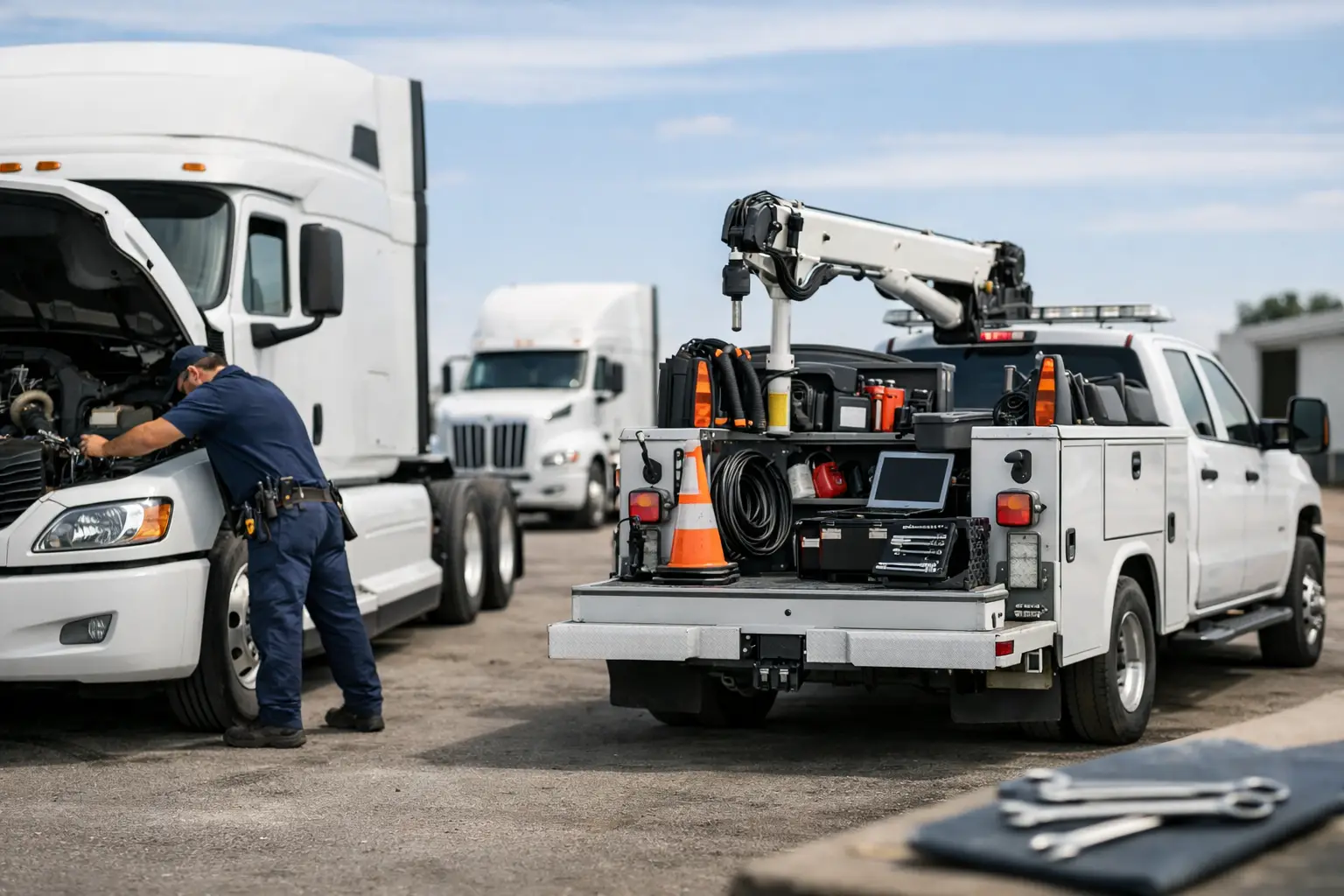
A mobile truck and trailer repair provider can reduce downtime by bringing diagnosis and repair to the disabled equipment. That can avoid towing costs, eliminate the wait to enter a repair bay, and help get a driver back on route sooner. MTG Truck Shops provides 24/7 mobile service in its operating areas because breakdowns do not wait for normal business hours.
6. Prioritize repairs by operational impact
Not every defect deserves the same response. Some issues are safety-critical or place the unit out of service. Others are repairable during the next scheduled stop. Treating every issue as an emergency wastes resources, but delaying the wrong repair can turn a manageable problem into a roadside event.
Create three practical categories: repair now, schedule soon, and monitor. Brake defects, major air leaks, tire damage, steering concerns, serious fluid leaks, lighting failures that affect legal operation, and coupling issues generally demand immediate attention. Minor cosmetic damage may not.
The right call depends on the equipment, route, freight, weather, and driver safety. A small trailer-door issue can wait on one route but become urgent if it threatens cargo security. Clear decision standards help dispatch and maintenance teams act faster without guessing.
7. Protect tire, brake, and electrical uptime
Many roadside calls involve systems that can be monitored without taking a truck out of service for long. Tires, brakes, and electrical connections deserve consistent attention because a failure in any one of them can sideline a truck or trailer immediately.
For tires, maintain correct inflation, inspect tread and sidewalls, check for irregular wear, and address alignment issues early. For brakes, inspect adjustment, air-system condition, chambers, hoses, and warning signs before they become violations or safety risks. For electrical systems, look beyond burned-out bulbs. Corrosion, loose grounds, damaged wiring, and worn connectors can create intermittent failures that are difficult to diagnose after dark on the shoulder.
These systems are not glamorous, but they are where disciplined inspections often pay back the fastest.
8. Measure downtime in hours, not just repair bills
A low repair invoice does not always mean a low-cost event. If a truck sits for eight hours waiting for service, parts, or a tow, the operational cost may exceed the repair itself. Measure downtime from the first report of the defect until the equipment is safely returned to service.
Review average response time, diagnostic time, repair time, towing frequency, repeat repairs, and missed-load incidents. Use those numbers to evaluate vendors, maintenance intervals, spare-unit needs, and driver reporting procedures.
For smaller fleets, one disabled truck can disrupt the entire day. For larger fleets, repeated delays across multiple units can quietly drain capacity. Measuring the full time loss makes it easier to justify preventive work and reliable mobile repair support.
Reduce Fleet Downtime Before the Next Breakdown
The strongest uptime plan combines disciplined inspections with fast field response. Preventive maintenance lowers the odds of failure, but trucks and trailers still operate in hard conditions and unexpected defects still happen.
When they do, speed matters. Keep equipment records current, make the breakdown process clear, and have a dependable 24/7 repair option ready before a driver is stranded. The next roadside call will be easier to manage when the plan is already in place.