
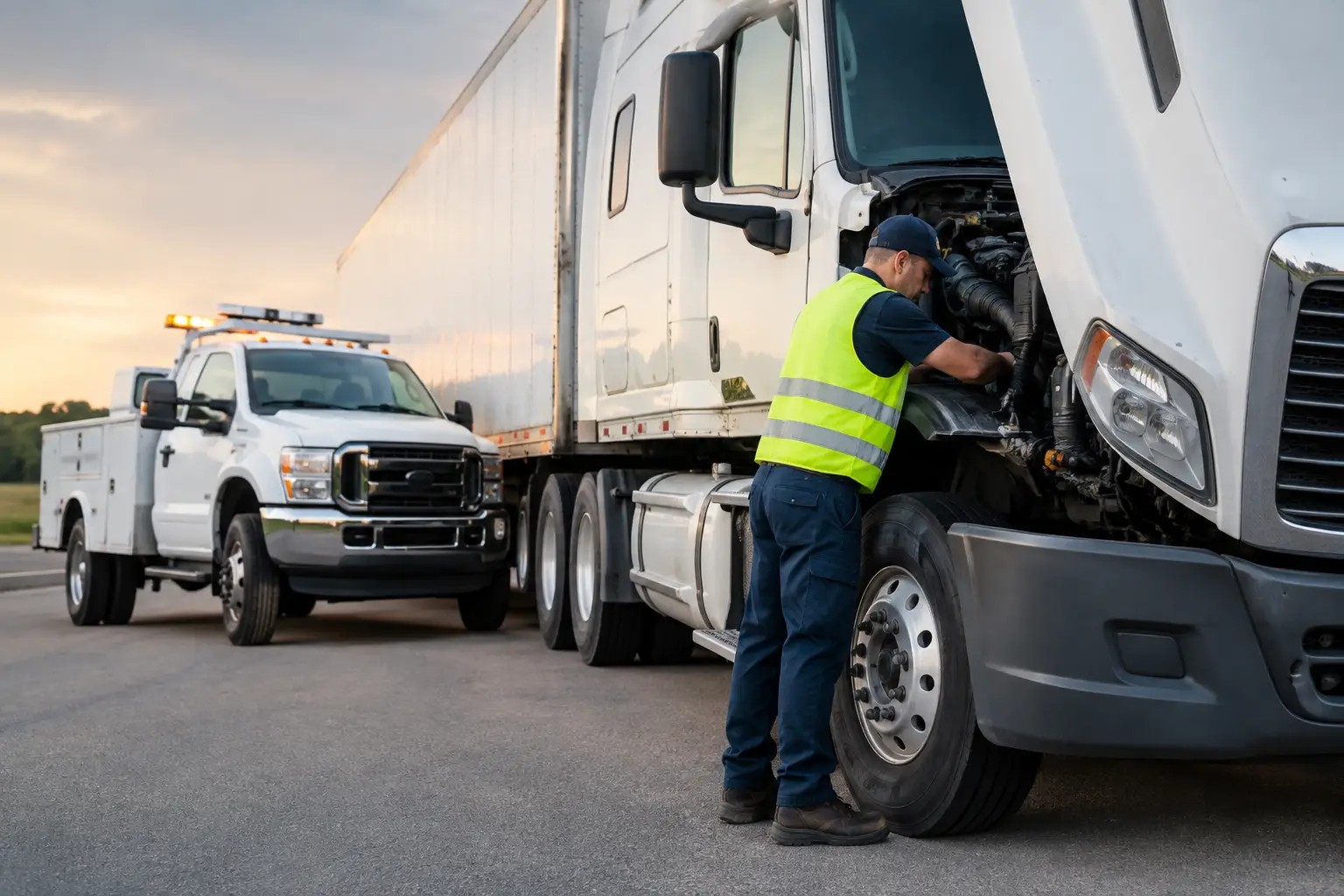
A truck stopped on the shoulder, at a receiver, or on a jobsite is not just a mechanical problem. It is a missed appointment, a driver waiting on the clock, freight at risk, and a dispatch plan that may need to be rebuilt. The right breakdown response starts with one priority: get qualified help to the equipment location fast.
For commercial operators, the first question is rarely, “What failed?” It is, “How quickly can we get moving again?” A mobile truck and trailer repair response can shorten the time between a reported issue and a real diagnosis, without adding a tow to a distant shop before service even begins.
What a Good Breakdown Response Looks Like
A useful response is more than answering the phone. It means gathering the right details, dispatching a technician who can assess the problem in the field, and making a practical repair decision based on safety, the equipment condition, and the load situation.
The location matters. A truck may be at a distribution center with a tight delivery window, on a rural highway with limited services, or parked at a construction site where the trailer is needed before work can continue. Field service brings the repair process to that location. That can eliminate an avoidable towing expense and prevent more time from being lost waiting for a shop opening or an available bay.
A dependable mobile provider should also understand that truck and trailer issues do not follow business hours. Air leaks, no-start conditions, lighting failures, wheel-end concerns, brake problems, damaged trailer components, and other defects can happen in the middle of a run or at the start of a shift. A 24/7 response gives drivers and dispatchers a clear next step when the equipment cannot wait.
The First Minutes After a Commercial Breakdown
The first priority is safety. The driver should get the vehicle as far from moving traffic as conditions allow, activate warning devices, and follow company procedures for the location. If the issue involves smoke, fire, a fuel leak, cargo instability, or an unsafe roadside position, emergency services may need to be involved before any repair work begins.
Once the driver is safe, the information given to the repair provider affects how quickly the visit can be handled. Dispatch needs an accurate location, the truck and trailer type, the nature of the problem, and whether the unit is loaded. A gate number, cross street, mile marker, customer facility name, or GPS pin can prevent wasted time finding the equipment.
It also helps to describe what happened before the failure. Did the truck lose air pressure? Did a warning light come on? Does the engine crank but not start? Is a tire or wheel-end issue visible? Is the trailer door, landing gear, lighting, suspension, or brake system involved? Drivers do not need to diagnose the repair, but clear symptoms help the technician arrive prepared.
Photos can be valuable when they can be taken safely. A picture of a damaged hose, warning message, tire condition, or trailer component can help confirm the issue before the technician reaches the site. For a fleet manager or dispatcher, sharing the unit number, VIN when available, and maintenance history for a recurring issue can further reduce delays.
Why Mobile Repair Can Reduce Downtime
A traditional repair path often begins with waiting for a tow, transporting the truck or trailer, checking it into a shop, and waiting again for diagnosis. That process is sometimes necessary. Major collisions, extensive engine damage, severe structural defects, or repairs requiring shop-only equipment may not be safe or practical in the field.
But many breakdowns do not require that extra step. When the problem can be inspected and repaired where the unit is parked, mobile service can put the technician at the point of failure first. That is especially useful when a trailer is loaded, when access to a tow is limited, or when moving the equipment could create more damage or risk.
The value is not just measured in repair time. It is measured in the operational time around the repair. A fast field response may help avoid a missed loading appointment, a rescheduled delivery, driver detention, load transfer complications, or a tractor and trailer sitting in separate locations. For owner-operators, it can mean protecting the next day’s revenue. For fleets, it can mean keeping a disruption from affecting several runs.
Truck and Trailer Problems Need Different Decisions
Not every breakdown has the same urgency, and not every repair should be handled the same way. A warning light on a truck that remains safe to operate may call for a different decision than a loss of air pressure, a brake issue, or a wheel-end concern. A trailer defect can be just as disruptive as an engine problem if it prevents loading, unloading, or legal road operation.
A qualified technician should assess whether the unit can be safely repaired and returned to service at the location, whether it can be moved to a safer nearby area, or whether towing is the right next move. The fastest option is not always the correct option. A repair decision has to protect the driver, the public, the load, and the equipment.
That is why experience with both trucks and trailers matters. The issue may be in the tractor, the trailer, or the connection between them. An air system problem, electrical fault, coupling concern, brake defect, suspension issue, or damaged component can affect the whole operation. A field technician needs to identify the actual source rather than treating the first visible symptom as the full problem.
How Dispatchers Can Improve Breakdown Response Time
Breakdowns are unpredictable. The response process does not have to be. Carriers and fleet managers can reduce confusion by giving drivers a simple procedure for reporting a roadside or jobsite issue. The goal is to make sure dispatch, the driver, and the repair provider are working from the same facts.
Keep current equipment details available to the people who need them. Unit numbers, trailer numbers, common tire sizes, maintenance contacts, preferred repair authorization limits, and customer delivery requirements can speed up decisions. If a driver is hauling a temperature-sensitive, high-value, or time-critical load, communicate that early. It may affect where the truck can be parked and how urgently the unit must be moved.
It is also wise to set expectations before an emergency happens. Drivers should know who to call, what information to provide, and when they must stop operating immediately. Dispatchers should know when to authorize a mobile repair and when to arrange towing or a replacement unit. Clear rules prevent a minor defect from becoming a long delay because everyone is waiting for approval.
Breakdown Response in the Field
Roadside service is not limited to interstates. Commercial equipment fails at customer yards, terminals, warehouses, fuel stops, construction sites, and remote work locations. In service areas across Wyoming, Colorado, and Texas, distance and weather can make a local, mobile response especially valuable. Waiting until normal shop hours is not a workable plan when a truck or trailer is holding up a load, a crew, or a delivery schedule.
MTG Truck Shops provides 24/7 mobile truck and trailer repair because downtime happens where your equipment is, not where a repair bay is located. The focus is direct: assess the issue on site, make the repair when field conditions allow, and help get the unit back into service.
A breakdown does not need a complicated process. Keep the driver safe, provide a clear location and symptom report, and get a qualified technician moving toward the truck or trailer. Fast action at the point of failure gives your operation the best chance to protect the load, the schedule, and the next mile.