
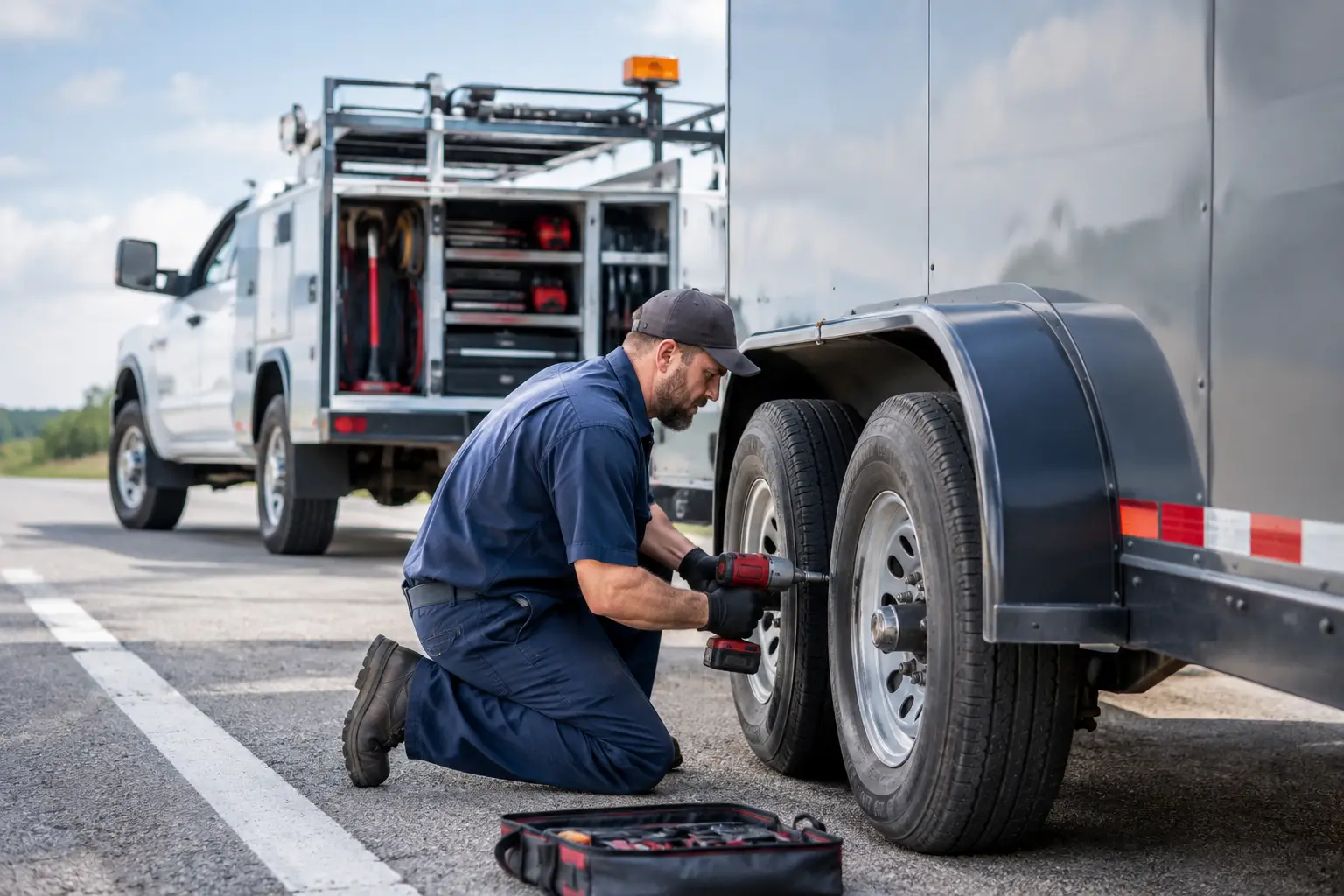
A trailer problem can stop a loaded unit just as completely as an engine failure. A flat tire, locked brake, damaged air line, failed light, or broken landing gear can put a driver out of service, delay a delivery, and leave dispatch scrambling. So, can mobile mechanics fix trailers? In many cases, yes. A qualified mobile technician can diagnose and repair a wide range of trailer issues right where the equipment is parked, broken down, or waiting at a jobsite.
For commercial operators, the question is not just whether a repair is possible. It is whether the repair can be completed safely in the field, fast enough to protect the load and schedule, and correctly enough to keep the trailer in service.
What Mobile Trailer Mechanics Can Repair On-Site
Mobile trailer repair is built for problems that do not require a full shop bay, major fabrication equipment, or extended teardown. Technicians arrive with diagnostic tools, common replacement parts, air-system fittings, electrical supplies, and equipment suited to roadside or customer-location repairs.
Common on-site trailer repairs include brake and air-system issues. A technician can often find and repair air leaks, replace damaged hoses or fittings, address loose connections, and inspect components that are causing brakes to drag, fail to release, or lose pressure. Because air leaks can quickly create out-of-service conditions, field response matters when a trailer is sitting on the shoulder, at a receiver, or in a remote yard.
Electrical repairs are also common mobile service calls. Trailer lights, turn signals, brake lights, clearance lights, wiring connections, plugs, and harnesses take constant abuse from weather, road debris, vibration, and repeated coupling. A mobile mechanic can trace the fault, repair damaged wiring where practical, replace failed components, and confirm the lighting system is working before the unit rolls again.
Tires, wheels, and wheel-end concerns may also be handled on-site, depending on the damage and available parts. A roadside technician can assess a flat or damaged tire, inspect for obvious wheel-end trouble, and determine whether the trailer can safely move after service. If a hub, bearing, or axle component has sustained major damage, the right decision may be to arrange a controlled move to a facility rather than risk further failure.
Other field-repair work can include landing gear problems, trailer doors, latches, hinges, mudflaps, suspension components, minor body damage, and securement concerns. The exact repair depends on trailer type, condition, load status, and access to the failed component.
Can Mobile Mechanics Fix Trailers With Brake Problems?
Often, yes - but brake work requires a careful inspection before anyone promises a quick repair. Air brake defects can stem from leaking lines, damaged chambers, failed valves, loose fittings, contaminated components, or mechanical wear. The symptom may be obvious, such as audible air loss, or it may show up as poor braking performance, a wheel that will not release, or an issue found during an inspection.
A mobile mechanic can diagnose the system where the trailer sits and make many necessary repairs without sending the trailer to a shop. This can prevent a tow, avoid an unnecessary trailer swap, and get a driver moving sooner.
Still, not every brake issue belongs on the roadside. Severe drum or rotor damage, major wheel-end failure, extensive contamination, or structural damage around a brake assembly may require shop-level repair. The priority is not simply getting the trailer to move. It is restoring safe, legal operating condition.
When a Mobile Repair Is the Best Option
Mobile service is usually the best fit when the trailer is disabled away from a repair facility and the defect can be safely accessed and repaired in place. This includes breakdowns at truck stops, warehouses, distribution centers, construction sites, parking lots, roadside locations, and fleet yards.
It is especially useful when towing the trailer would add cost or create more operational trouble. A loaded trailer may be difficult to transfer. A trailer with a simple air leak or electrical fault does not always need to be pulled to a shop before work starts. Sending a technician to the equipment can shorten the time between diagnosis and repair.
For fleets and owner-operators, 24/7 availability is part of the value. Breakdowns do not wait for business hours, and a trailer defect discovered late at night can threaten a morning delivery just as much as a daytime failure. A mobile response gives dispatch a real option when waiting until the next day is not workable.
When the Trailer Needs a Shop Instead
Mobile mechanics are highly capable, but field repairs have real limits. A shop may be necessary when a trailer has major frame damage, significant structural corrosion, a bent axle, extensive collision damage, severe floor damage, or a repair that requires welding and fabrication under controlled conditions.
The same applies when the trailer cannot be safely supported or accessed where it sits. Soft ground, heavy traffic exposure, hazardous cargo, an unstable load, or a compromised landing-gear system can change the plan. In those situations, the technician's first job is to assess the risk and determine the safest next step.
A shop may also be the better choice for long-term maintenance work, extensive inspections, or repairs that require specialized parts and more time than a roadside call allows. Mobile service is not a shortcut around proper repair. It is a way to bring capable service to the equipment when on-site repair makes operational and safety sense.
What to Tell a Mobile Trailer Technician Before Arrival
Clear information helps the technician arrive prepared and reduces wasted time. Dispatch should provide the trailer number, location, trailer type, and a plain description of the problem. If the trailer is loaded, include the cargo type and whether there are any access restrictions, dock rules, or safety requirements at the site.
Photos can be useful when available. A picture of a damaged air line, failed light assembly, tire, landing gear, or door can help identify likely parts and tools before the technician is dispatched. Drivers should also report whether the trailer is blocking traffic, on a shoulder, connected to a tractor, or safe to approach.
Do not keep moving a trailer that has active brake trouble, a damaged wheel end, a major air leak, an unsafe tire condition, or unsecured cargo. Trying to limp it to a shop can turn a repairable defect into a larger breakdown, crash risk, or enforcement issue.
How Mobile Trailer Repair Protects Uptime
The real benefit of mobile repair is not convenience alone. It is the ability to start solving the problem at the point of failure. Instead of waiting for a tow, moving equipment, locating a shop, and entering a service queue, a technician can inspect the trailer where it stopped.
That can reduce driver downtime, protect appointment times, and help fleets make faster decisions about recovery, trailer swaps, and load coverage. It also gives operators a clearer answer quickly: repair it on-site, move it safely for further service, or take it out of service.
MTG Truck Shops provides 24/7 mobile truck and trailer repair for operators who need field service in areas including Wyoming, Colorado, and Texas. When a trailer issue interrupts the run, the goal is simple: assess the defect, make the right repair where possible, and help get the equipment back to work without unnecessary delay.
When a trailer goes down, act early. A fast, accurate assessment can be the difference between a short service call and a missed load, damaged equipment, or a trailer that should never have been moved in the first place.