
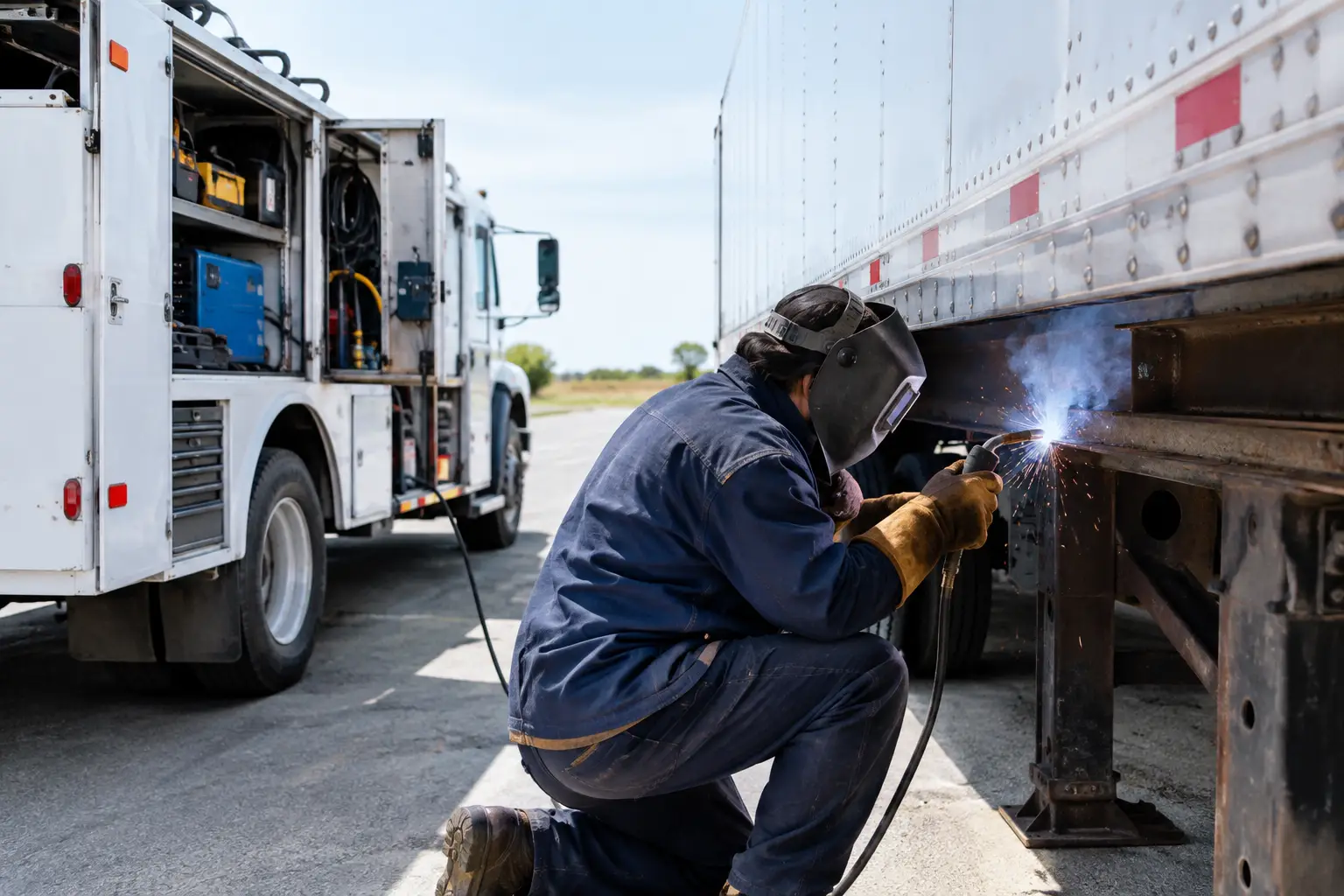
A cracked trailer bracket at a loading dock can stop a load just as completely as an engine failure. The question is: can mobile mechanics weld the damage where the truck is sitting? Often, yes. A properly equipped mobile truck repair technician can perform many field welding repairs on commercial trucks and trailers, saving the cost and delay of a tow.
But welding is not a one-size-fits-all roadside fix. The damaged component, the metal condition, the location of the repair, and the safety requirements all determine whether a mobile weld is the right move. The goal is not merely to make metal hold long enough to move. It is to complete a repair that supports safe operation and gets your equipment back to work without creating a bigger problem down the road.
Can Mobile Mechanics Weld at Your Location?
Mobile mechanics can weld when they arrive with the right equipment, a trained technician, and a safe work area. For commercial equipment, this commonly includes a portable welder-generator, leads, cutting and grinding tools, replacement steel, clamps, and personal protective equipment. The technician assesses the damage first, then determines whether a field repair can safely return the unit to service.
Field welding is especially useful when the truck or trailer is otherwise roadworthy but a cracked, broken, or loose metal component has taken it out of operation. Instead of arranging a tow to a fixed shop, the repair can be handled at a truck stop, terminal, jobsite, roadside location, yard, or receiver facility when conditions allow.
Mobile welding is not limited to a visible crack. A technician may need to remove damaged metal, prepare the joint, fit a reinforcement plate, weld the repair, grind sharp edges, and inspect the finished work. The right repair depends on why the part failed in the first place. A crack caused by vibration, overloading, corrosion, or an impact can return if the underlying issue is ignored.
Truck and Trailer Repairs That May Be Welded On Site
Many common commercial equipment repairs are good candidates for mobile welding. Trailer body damage, broken door hardware, cracked steps, loose brackets, damaged ramps, light-mount tabs, and torn mudflap hangers can often be repaired in the field.
Technicians may also weld non-critical supports or mounts when the metal is accessible and the repair can be completed safely. Examples include exhaust supports, battery box brackets, landing gear braces, dunnage rack components, and certain body or frame attachments. On construction and equipment trailers, mobile welding can be particularly valuable for ramps, rails, tie-down points, and equipment-support components.
A good field repair does not mean every damaged part should be welded. If a replacement part is available and provides the correct repair, replacement may be the better choice. A bent bracket, for example, may be safer and faster to replace than to heat, straighten, and weld.
When a Mobile Weld Is Not the Right Repair
Some damage requires a controlled shop environment, specialized measuring equipment, manufacturer procedures, or a full component replacement. This is common with major frame damage, heavily corroded structural members, severe collision damage, and repairs near sensitive systems.
Truck frames deserve particular caution. Welding on a frame rail or other major structural component may affect strength, alignment, warranty requirements, or compliance obligations. The repair method must match the vehicle and component manufacturer’s guidance. A quick weld on the wrong section of a frame can create stress points or hide a more serious crack.
The same caution applies to air tanks, fuel tanks, pressurized components, brake system parts, and areas near fuel lines or electrical wiring. These repairs can involve fire risk, contamination, pressure hazards, or safety-critical failure. They should never be treated as a routine roadside weld.
Weather and site conditions can also rule out field welding. High winds, standing water, poor access, nearby flammable materials, active fueling areas, or an unsafe traffic environment may make it impossible to perform the work safely. In those cases, moving the truck or trailer to a secure repair location is the responsible decision.
What Happens Before a Mobile Welding Repair
A qualified mobile technician begins by inspecting the damaged area, not by striking an arc immediately. They need to identify the material thickness, crack length, surrounding corrosion, load placed on the component, and whether the issue extends beyond what is visible.
The work area must then be made safe. That can include disconnecting or protecting electrical systems, moving combustible materials, shielding nearby components from sparks, and establishing adequate clearance around the truck or trailer. Welding produces heat and sparks, so the work cannot be performed carelessly in a crowded yard, on a fuel island, or beside leaking fluids.
Preparation matters as much as the weld itself. Paint, rust, grease, and damaged metal may need to be removed before welding. If the crack is not properly cleaned and prepared, the repair may look acceptable on the surface but fail under vibration and load. Commercial trailers see constant flexing from rough roads, cargo weight, and repeated loading cycles. The repaired area has to withstand that work.
After the weld, the technician should inspect the repair, address exposed metal as needed, and confirm that nearby components are secure. Depending on the repair, the unit may also need an operational check before it returns to service. If a weld was completed near lights, wiring, doors, ramps, landing gear, or other moving equipment, those systems need to work as intended.
The Downtime Advantage of Mobile Welding
For fleet managers and owner-operators, the biggest benefit is often not the weld itself. It is avoiding the chain of delays that starts with a disabled trailer: dispatching a tow, waiting for transport, finding a shop with capacity, moving the load, and waiting again for diagnosis.
A mobile repair can reduce those steps dramatically when the damage is suitable for on-site work. The driver stays with the equipment, dispatch gets a clearer status, and the truck or trailer may be returned to service without leaving the customer’s location. That can protect a delivery window and keep a minor defect from becoming a full-day outage.
There are trade-offs. Mobile welding may cost more than a simple shop repair because equipment and a technician must be dispatched to your location. Yet the total cost can still be lower once towing, lost driver time, missed appointments, cargo transfers, and idle equipment are considered. The right decision is based on the complete operational impact, not just the repair invoice.
Information to Have Ready When You Call
A faster response starts with accurate details. Tell the dispatcher whether the problem is on the tractor, trailer, ramp, body, landing gear area, or another component. Photos are useful when they can be provided safely, especially for cracks, broken brackets, bent steel, or visible corrosion.
Also share your exact location, the trailer type, whether the unit is loaded, and whether there are fuel, air, brake, electrical, or hydraulic components near the damaged area. Let the repair provider know if the truck is blocking a dock, parked on a shoulder, or located at a jobsite with restricted access. These details help determine whether mobile welding is appropriate and what equipment the technician needs.
If the damage followed an accident, a cargo shift, or a hard impact, say so. What looks like a broken bracket may be part of broader damage that needs a closer inspection before the equipment goes back on the road.
Get the Right Repair, Not Just a Fast Patch
When a trailer defect is holding up a load, speed matters. So does knowing when a weld is a safe repair and when the equipment needs shop-level work. MTG Truck Shops provides 24/7 mobile truck and trailer repair for operators who need help where the breakdown happens.
Before moving a damaged truck or trailer, take a hard look at the component involved. A qualified field inspection can turn a repairable delay into a controlled service stop - and keep a small crack from becoming the reason a truck misses its next run.