
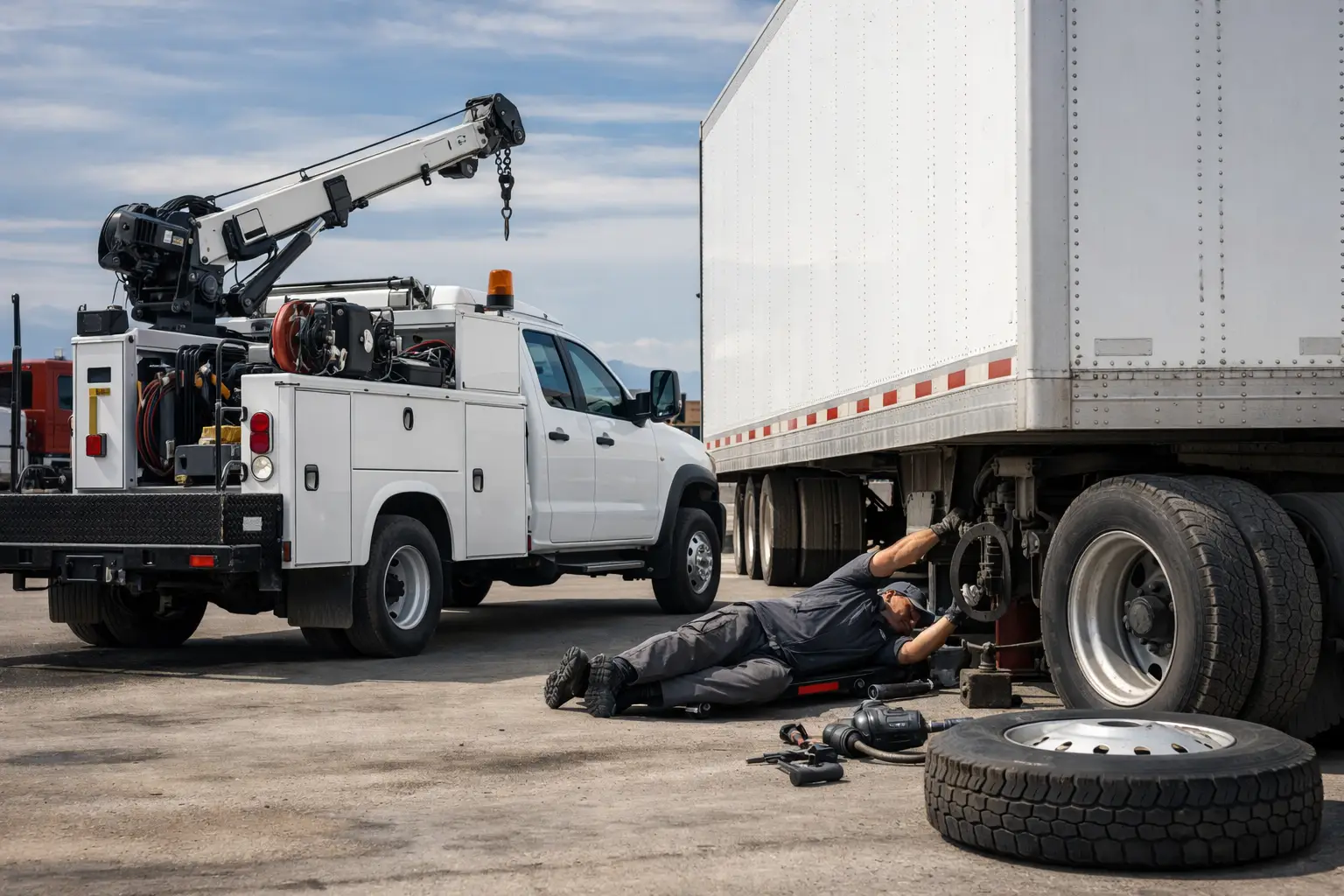
A trailer problem outside Cheyenne rarely waits for a convenient time. A failed light circuit, locked-up brake, damaged tire, broken door, or air leak can stop a load at a truck stop, customer yard, roadside, or jobsite. Cheyenne trailer repair needs to move as quickly as the operation it supports. The goal is simple: get a qualified technician to the equipment, identify the fault, make the repair when conditions allow, and reduce the time that trailer sits out of service.
For carriers, owner-operators, dispatchers, and construction crews, a disabled trailer is more than a maintenance item. It can tie up a driver, delay a delivery window, create a safety concern, and force a costly recovery plan. Mobile service changes the first step. Instead of arranging a tow or trying to limp damaged equipment to a shop, the repair response comes to the trailer.
When a Trailer Problem Needs Immediate Attention
Some defects are clear from the start. A flat or damaged tire, a brake issue, an air leak, or lighting that will not work can make a trailer unsafe to move. Other failures show up as a driver pulls into a pickup, reaches a weigh station, or attempts to secure a load. A ramp that will not operate, a door that will not latch, or a landing gear problem can bring the job to a standstill just as effectively.
The right response depends on the defect and where the trailer is parked. A minor repair at a safe location may be handled in the field quickly. A major structural failure, extensive collision damage, or an issue requiring specialized parts may need additional planning or a shop repair. What should not wait is the diagnosis. Knowing what failed and whether the trailer can move safely gives dispatch a real decision instead of a guess.
In Cheyenne, wind, temperature swings, road spray, long highway runs, and heavy freight use can expose weak points fast. Electrical connections corrode. Air lines and fittings wear. Tires pick up road damage. Brake components can develop problems that become expensive when they are ignored. A driver who notices a change early can prevent a roadside failure later, but once the trailer is down, speed matters.
What Mobile Cheyenne Trailer Repair Can Address
Mobile trailer repair is built around the problems that keep commercial equipment from working. A field technician can inspect the trailer where it is located, verify the cause of the issue, and perform repairs that can be safely completed on-site. That may include trailer tire service, lighting and wiring repair, air system troubleshooting, brake-related repairs, wheel-end concerns, door and latch repairs, landing gear issues, suspension components, and minor body or securement defects.
Electrical problems are especially frustrating because the symptom is not always the source. A light may be out because of a bad lamp, damaged wiring, a poor ground, a connector issue, or a problem farther up the circuit. Replacing a part without checking the system can waste time and leave the same fault in place. Field diagnosis should focus on finding the actual failure, then confirming the repair before the trailer returns to service.
Air and brake issues require the same disciplined approach. A visible leak may be a worn hose or fitting, but pressure loss can also involve valves, chambers, or damaged lines. If braking performance is questionable, the trailer should not be pushed back into traffic just to make a delivery. The immediate priority is safe equipment. The operational priority is restoring that equipment with the least possible disruption.
What to Have Ready When You Call
A faster repair starts with accurate information from the location. Dispatch does not need a long explanation, but a few details help send the technician prepared for the job. Have the trailer number, current location, a clear description of the issue, and the best contact for the driver or site available.
If possible, also share these details:
- Trailer type, such as dry van, reefer, flatbed, dump, or equipment trailer
- Whether the trailer is loaded, empty, connected to a tractor, or safely parked
- Warning signs such as low air pressure, a brake dragging, damaged wiring, or a blown tire
- Any recent repair work or event that happened before the failure
- Site access restrictions, gate instructions, or parking limitations
Photos can help when they are safe to take, especially for tire damage, broken doors, landing gear issues, or visible air leaks. They do not replace an inspection, but they can help narrow the likely problem before the technician arrives.
Protect the Driver, Load, and Equipment First
When a defect occurs, the pressure to keep moving can be intense. A late load affects the customer, and a parked truck affects revenue. But trying to move a trailer with an active brake problem, damaged wheel-end, unsafe tire, unsecured door, or significant lighting failure can turn a repair call into a much larger incident.
Move the vehicle only if it can be done safely and legally. Get the unit out of traffic when possible, set warning devices as required, secure the load, and communicate the situation to dispatch. For a trailer at a customer facility or construction site, keep the area clear around the damaged equipment so the technician can work safely.
This is where mobile service has practical value. The repair process begins at the point of failure, not after a tow, a shop check-in, and another wait in line. That can save hours, particularly when the trailer is far from a fixed repair location or cannot be safely moved.
Reduce Repeat Trailer Failures Between Calls
Emergency repairs keep freight moving, but recurring defects are often a sign that inspection routines need attention. A quick pre-trip and post-trip look at tires, lights, air lines, doors, landing gear, and visible suspension components can catch developing problems before they strand a driver.
For fleet managers, patterns matter. If several trailers show the same wiring issue, tire wear pattern, brake complaint, or door damage, treat it as an operational signal. It may point to a maintenance interval problem, a loading practice, a route condition, or a component choice that needs review. Repairing one trailer gets it back on the road. Finding the reason the same failure keeps returning protects the fleet.
It also helps to document what happened during every roadside event. Record the trailer number, location, symptoms, repair performed, and parts used. That information makes later maintenance decisions more useful and gives dispatch a better picture of which units may need scheduled attention.
24/7 Mobile Support Where the Trailer Stops
A trailer failure does not respect business hours, shop locations, or delivery schedules. That is why a mobile response matters when equipment is stopped in Cheyenne or along the surrounding freight routes. MTG Truck Shops provides 24/7 mobile commercial truck and trailer repair with a field-first approach: We Come to You.
Not every issue can be fully resolved roadside, and honest repair decisions matter. If a trailer needs a more extensive repair, a technician can help identify the safest next step. But for many common defects, on-site diagnosis and repair can avoid unnecessary towing, reduce driver downtime, and get a working trailer back into the operation faster.
When a trailer goes down, do not let uncertainty add to the delay. Secure the equipment, share the details, and get a repair plan started where the trailer is sitting.