
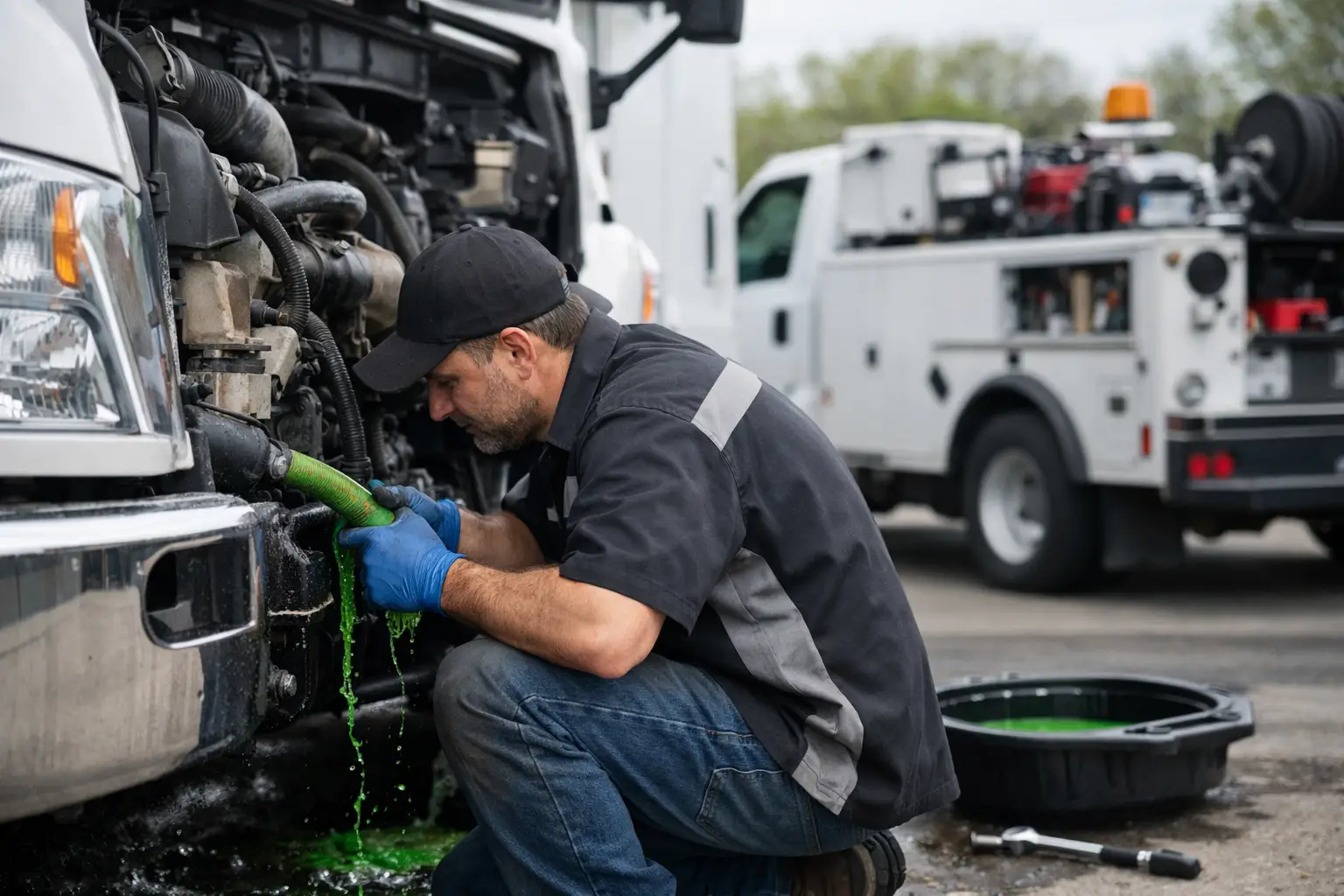
A coolant leak can turn a normal load into an immediate shutdown. When the temperature gauge climbs, a low-coolant warning comes on, or steam appears near the hood, commercial truck coolant leak repair should start before engine damage turns a roadside issue into a major repair bill. Continuing to run an overheating engine can damage head gaskets, warp cylinder heads, and leave the truck out of service far longer than the original leak would have.
For drivers, dispatchers, and fleet managers, the priority is simple: protect the engine, protect the load, and get qualified help to the truck's location. A mobile technician can diagnose many cooling-system failures on-site, helping avoid unnecessary towing and lost hours at a shop.
When a Coolant Leak Requires an Immediate Stop
Not every drop under a truck means the same thing, but coolant loss should never be ignored. Coolant may be green, red, orange, yellow, blue, or even clear-looking depending on the system and product used. It may leave a sweet smell, a wet trail around hoses, or dried white or colored residue at a connection.
Pull over safely and shut the engine down if the temperature gauge moves into the hot range, the truck displays an engine protection warning, coolant is pouring out, or steam is visible. Do not remove a radiator cap or coolant reservoir cap while the system is hot. Pressurized coolant can cause serious burns.
A slow seep with normal operating temperature may allow a technician to inspect the truck where it sits. A fast leak or overheating condition is different. The truck should remain parked until the source is found and the cooling system can hold pressure. Adding water or coolant may be a short-term measure only when the engine is cool and the correct fluid is available. It is not a repair plan for getting hundreds of miles down the road.
Common Sources of Commercial Truck Coolant Leaks
Commercial cooling systems work under heat, vibration, pressure, and long operating hours. Leaks often start at a small weak point, then become obvious during a hard pull, hot weather, or extended idle time.
Hoses, Clamps, and Connections
Upper and lower radiator hoses, heater hoses, charge-air cooler plumbing, and small bypass hoses can crack, soften, rub through, or separate at a fitting. A loose, corroded, or failed clamp can create a leak that looks minor at idle but sprays coolant once system pressure rises. These are often field-repairable when the correct hose, clamp, and coolant are available.
Radiator and Surge Tank Damage
Road debris, vibration, corrosion, and age can damage a radiator core, end tank, drain fitting, or coolant surge tank. A cracked plastic tank or split seam may leak only when hot. The repair depends on the damage and the part availability. Some components can be replaced on-site; others may require a controlled tow if access is limited or the replacement part cannot be safely installed roadside.
Water Pump, Thermostat Housing, and Gaskets
Coolant around the front of the engine can point to a water pump weep hole, failed pump seal, gasket issue, or thermostat housing leak. These repairs require more than simply tightening a clamp. A technician must identify the exact source, assess belt and pulley condition, and confirm the system will circulate coolant correctly after the repair.
EGR Cooler, Oil Cooler, or Internal Engine Failure
Some coolant problems are not external. Coolant loss with no visible puddle, white exhaust smoke, coolant in the oil, repeated overheating, or unexplained pressure in the cooling system may indicate an internal issue. This is where diagnosis matters most. Driving with a possible internal coolant leak can cause severe engine damage, and a roadside repair may not be the right answer.
What Mobile Coolant Leak Repair Looks Like
A proper field repair starts with inspection, not guesswork. The technician checks coolant level, visible leaks, hose condition, clamps, radiator area, reservoir, water pump area, and signs of contamination. Once the system is safe to test, a pressure test can help expose leaks that are not obvious with the engine off.
The repair may be as direct as replacing a damaged hose, clamp, fitting, cap, or reservoir. It may involve replacing a radiator component, thermostat housing part, or water pump if access and conditions allow. After repairs, the system needs the correct coolant mixture, proper bleeding where required, and a verification run to confirm stable temperature and no continuing loss.
This final check matters. A truck can appear fixed while air remains trapped in the system, a second leak is still present, or the original overheating event has triggered another fault. The goal is not just to stop the visible drip. The goal is to return the truck to safe operating temperature before it goes back under load.
What to Tell the Repair Dispatcher
Clear information helps a mobile truck repair technician arrive prepared. Share the truck make, model, engine, year, and exact location. Explain whether the truck is loaded, what the temperature gauge is doing, where coolant appears to be leaking, and whether the engine was shut down before it overheated.
It also helps to mention the coolant color if you can see it safely, any dashboard warnings, recent cooling-system work, and whether the truck can be accessed easily. If the truck is on a shoulder, in a yard, at a receiver, or on a jobsite, provide practical directions and site contact details. A repair call moves faster when the technician knows the operating condition before arrival.
Repair or Tow? The Decision Depends on the Failure
Mobile service is often the fastest choice for external leaks and replaceable cooling-system components. It brings diagnosis and repair to the breakdown location, which can reduce towing costs and keep the driver with the equipment. For fleets, that can mean less disruption to a delivery window and faster communication with dispatch.
Still, not every coolant failure should be repaired on the roadside. Major radiator damage, an internal engine concern, restricted access, unsafe roadside conditions, or a repair requiring specialized shop equipment may call for a tow. A dependable technician should make that recommendation when it protects the truck and prevents a larger failure.
The right decision is based on safety, the location, available parts, the condition of the engine, and whether the repair can be fully verified in the field. A quick patch that fails under highway pressure is not a good repair.
Preventing the Next Cooling-System Breakdown
Most coolant leaks give warning before they become a roadside emergency. During pre-trip and scheduled maintenance, check coolant level only when the engine is cool, look for wet spots or residue around hoses and fittings, and inspect the ground under parked equipment. Pay attention to recurring low-coolant alerts, a sweet odor, fluctuating temperature readings, or a heater that stops producing heat.
Replace aging hoses and weak clamps before they fail. Keep the cooling system filled with the manufacturer-approved coolant and avoid mixing products without confirming compatibility. Incorrect coolant or contaminated fluid can contribute to corrosion, poor heat transfer, and seal damage over time.
For trucks working mountain grades, high ambient temperatures, heavy loads, or long idle periods, cooling-system maintenance deserves extra attention. Those operating conditions expose small weaknesses quickly.
24/7 Help Where the Truck Stops
A coolant leak does not wait for shop hours, and neither should the response. When a commercial truck is sidelined in Green River, Rock Springs, Cheyenne, the Colorado Front Range, or North Texas, mobile repair can bring the diagnosis to the truck instead of adding a tow and a shop wait to the problem.
MTG Truck Shops provides 24/7 mobile truck and trailer repair with one operational promise: We Come to You. If a cooling-system issue threatens your engine, load, or schedule, shut the truck down safely and get help before a manageable leak becomes an engine failure. The fastest route back to work is often the one that starts right where the truck stopped.