
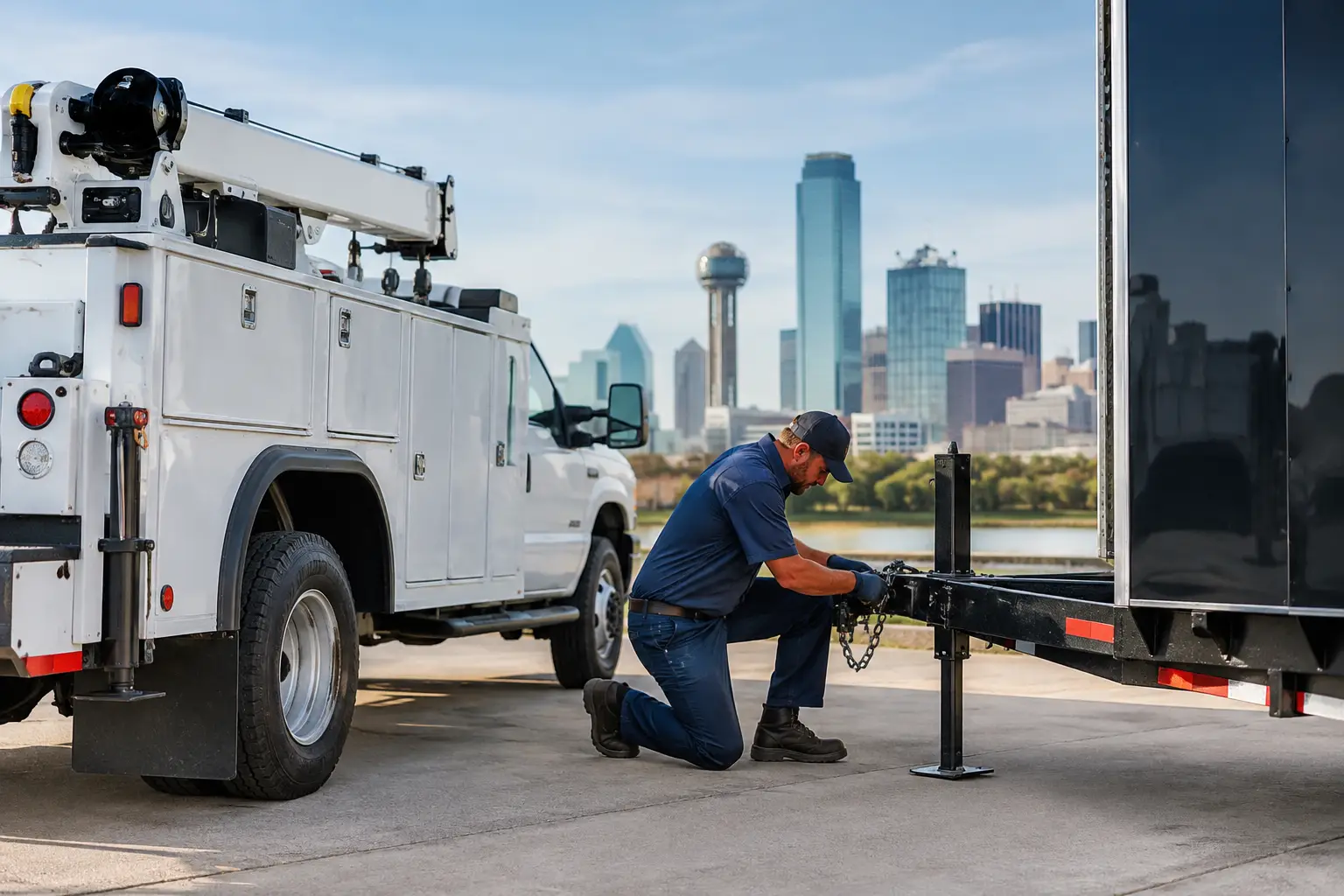
A trailer failure outside Dallas can turn one missed appointment into a delayed load, an idle driver, and a customer asking where the freight is. This Dallas trailer repair guide is built for the decisions that matter at the roadside, a receiver, a jobsite, or a yard: what to inspect first, when the trailer must stay parked, and when a mobile technician can get equipment moving faster than a tow to a shop.
Start with safety, not the delivery window
The pressure to keep moving is real, especially when a load is time-sensitive. But some trailer defects create an immediate safety or compliance problem. If brakes are not applying correctly, a wheel end is hot, a tire has failed, lights are out at night, or the trailer is structurally damaged, stop and secure the unit before considering the schedule.
Set warning devices as required, move to a safe location if the trailer can be moved without increasing risk, and notify dispatch or the customer early. A clear update is better than a driver trying to manage a defect alone in an unsafe location. If there is cargo shifting, a suspected hazmat issue, smoke, or a fuel-related hazard, follow company emergency procedures before arranging repair.
A good field diagnosis starts with the basics: what changed, when did it begin, and what can the driver see, hear, or smell? Those details help a repair provider arrive prepared instead of spending valuable time ruling out obvious causes.
The trailer problems that most often stop a load
Trailer faults do not all carry the same urgency. A damaged mudflap may be manageable until the next stop. A locked brake or failed air supply is not. Knowing the difference helps dispatch make the right call.
Air brake and suspension faults
Air leaks are among the most common reasons trailers become immobile. A loud leak near a gladhand, damaged air line, broken fitting, or leaking brake chamber can prevent the system from building or holding pressure. Drivers may also report brakes dragging, a trailer that will not release, or an air suspension that will not raise.
Do not assume an air issue is limited to a hose. The problem may involve a valve, chamber, spring brake, gladhand seal, or damaged line routing. A technician needs to inspect the system under pressure and confirm the repair holds before the trailer returns to service.
Suspension damage also deserves quick attention. A broken leaf spring, damaged airbag, loose component, or suspension that is sitting unevenly can affect handling, tire wear, and cargo stability. Continuing to run can turn a repairable component failure into axle, tire, or structural damage.
Tires, wheels, and wheel ends
A flat tire is visible. A failing wheel end often is not until it becomes serious. Watch for burning odors, grease on the wheel, smoke, unusual heat, vibration, or a hub that appears damaged. Never touch a suspected hot hub with bare hands. Heat can point to bearing failure, brake drag, or a lubrication problem.
A roadside tire replacement may get the trailer rolling, but it is not always the full answer. If the tire failed because of a bent wheel, loose hardware, alignment issue, rubbing component, or brake problem, the replacement tire can fail too. Ask for the cause to be checked, not just the symptom.
Electrical and lighting defects
Brake lights, turn signals, clearance lights, ABS warnings, and trailer connections are small components with large consequences. Lighting problems can create an inspection issue, increase collision risk, and make a trailer unsafe after dark or in poor weather.
Start by checking the tractor-trailer connection, plug condition, cable damage, and obvious blown fuses. If the issue remains, mobile diagnosis can trace power, grounds, damaged wiring, connectors, and failed lamps. Avoid improvised wiring repairs that expose bare conductors or create unreliable connections. A short-term patch can become a larger electrical failure down the road.
Doors, landing gear, and cargo-security failures
A trailer may be mechanically able to roll but still unable to haul safely. Damaged door hardware, broken hinges, faulty latches, torn securement points, or landing gear that will not crank can stop loading and unloading operations.
Landing gear deserves particular care. If it is bent, unstable, difficult to operate, or damaged from a drop, do not keep forcing the crank. The trailer needs to be supported correctly before repair begins. This is a job where the wrong move can injure someone or damage the trailer further.
A practical Dallas trailer repair checklist
Before requesting service, gather the information a field technician and dispatcher need to respond efficiently. Have the trailer number, make and type, exact location, nearest cross street or facility name, and a reliable driver contact. Describe whether the trailer is loaded, the cargo type, and whether it is safe to access.
Also report warning lights, air pressure behavior, tire size if known, visible damage, and whether the trailer can be moved. Photos can help when they are safe to take, particularly for tire, suspension, lighting, door, and line damage. They do not replace an inspection, but they can help identify likely parts and tools before the technician arrives.
Be specific about the operational goal. Sometimes the right repair is getting a loaded trailer safely to the receiver. Other times the trailer must return to full roadworthy condition before it moves at all. The answer depends on the defect, load, distance, route, and safety requirements.
When mobile repair is the right move
A fixed shop can make sense for major rebuilds, extensive body work, or repairs that require specialized equipment and a long bay stay. But towing a disabled trailer can add cost, delay, and another coordination problem, especially when it is loaded or stuck at a customer location.
Mobile trailer repair is often the better first response for common field failures such as air leaks, brake issues, lighting repairs, tire and wheel-end concerns, suspension components, landing gear problems, and trailer electrical diagnosis. A qualified technician can assess the defect where it happened, complete many repairs on site, and tell you clearly when the trailer needs a shop-level repair instead.
For operators working around Dallas, that location-based response matters. A breakdown does not wait until the trailer is near a repair facility. It happens at a warehouse gate, on a jobsite, in a yard, or on the side of the road. MTG Truck Shops provides 24/7 mobile truck and trailer repair so the repair process can begin where the equipment is parked.
Avoid repeat failures after the emergency repair
Getting back on the road is the first objective. Preventing the same issue from happening again is what protects the next load. After an emergency repair, document the failed part, the repair performed, and any related condition the technician found. Share that information with maintenance so the rest of the fleet can be checked if the failure may be systemic.
For example, repeated air line failures may point to poor routing or chafing. Frequent lighting faults may indicate water intrusion or damaged harnesses. Uneven tire wear may signal suspension wear, alignment issues, or loading patterns. A wheel-end event requires attention to the cause, not simply a new seal or tire.
Drivers can help catch defects earlier with consistent pre-trip and post-trip inspections. Look for leaks, loose hardware, worn tires, cracked lights, damaged lines, missing reflectors, door problems, and anything that appears different from the prior stop. A two-minute observation in the yard can prevent a roadside delay later that day.
Make the next call faster
Trailer downtime is rarely just a maintenance issue. It affects driver hours, appointment windows, equipment availability, cargo commitments, and operating cost. The fastest path back is usually a calm, accurate report followed by the right repair response - not guessing, forcing a damaged component, or trying to limp unsafe equipment to a shop.
Keep a mobile repair contact available to drivers and dispatch, and make sure every operator knows what details to report when a trailer fails. When the defect happens, protect the driver, secure the load, and get qualified help to the trailer before downtime spreads through the rest of the operation.