
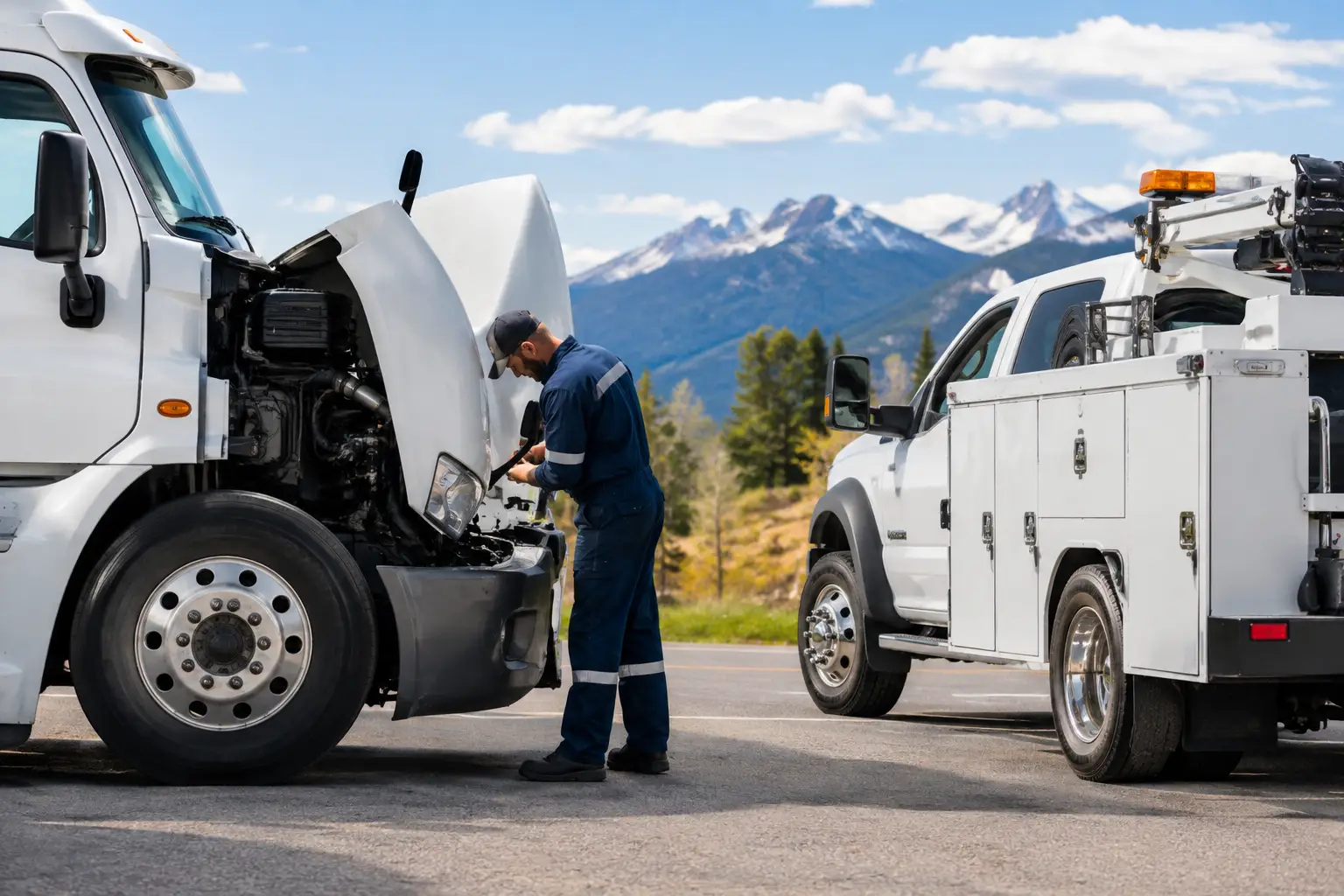
A loaded trailer on the shoulder outside Denver is not a minor delay. It can put a driver at risk, disrupt a receiver appointment, tie up dispatch, and turn a repairable issue into hours of lost revenue. This Denver roadside truck service guide covers the actions that matter most when a commercial truck or trailer goes down: secure the scene, identify the problem clearly, and get the right mobile repair response moving.
Start With Scene Safety, Not Diagnosis
The first decision is not whether the truck can make it another mile. It is whether the current location is safe enough to assess the problem. Move the unit as far from traffic as conditions allow, activate hazard lights, and set out warning devices according to applicable requirements. If the truck is blocking a lane, stopped near a blind curve, or sitting on a narrow shoulder, the urgency of the response increases.
Drivers should avoid working under a truck or trailer on the roadside. A low tire, loose connection, air leak, or lighting problem may look straightforward, but traffic, unstable ground, and limited visibility change the risk. If there is smoke, fire, a fuel leak, a damaged electrical connection, or a suspected brake issue, shut the vehicle down and keep people clear until help arrives.
Weather matters around Denver. Snow, high winds, sudden temperature changes, and poor visibility can make an otherwise manageable roadside repair more difficult. Tell dispatch or the repair provider about road conditions, shoulder width, and whether the unit is accessible from the service side. That information helps send the right technician, tools, and parts support.
Give the Mobile Technician a Useful Breakdown Report
A vague report creates avoidable delay. “Truck won’t move” may describe a mechanical fault, an air system problem, a transmission issue, a brake condition, or a trailer-related failure. A clear report helps a mobile technician prepare before arriving.
Start with the exact location. Provide the highway, direction of travel, nearest mile marker or exit, cross street if applicable, and whether the truck is at a truck stop, customer yard, construction site, parking area, or roadside shoulder. GPS coordinates are useful when the location is difficult to describe, especially after dark or in a large industrial area.
Then explain what happened immediately before the truck stopped. Did the engine lose power? Did an air warning come on? Is there a visible fluid leak? Did the trailer lights fail? Is a tire damaged? Did the driver hear grinding, banging, or a continuous air leak? Include dash warning lights and any fault codes available from the vehicle display.
Have these details ready when calling for service:
- Truck make, model, year, and unit number
- Trailer type and trailer number, if the issue involves the trailer
- Engine, wheel, axle, brake, electrical, or air-system symptoms
- Whether the truck is loaded and the nature of the load
- Safety concerns, access limits, or signs that towing may be required
A good report does not require a driver to diagnose the truck. It simply gives the repair provider a reliable starting point. The goal is to avoid sending a technician into the field without the information needed to address the likely issue.
Know What Mobile Roadside Service Can Handle
Many roadside events do not require a tow to a fixed shop. Mobile truck and trailer repair is often the practical first response for faults that can be inspected, diagnosed, and repaired where the equipment sits. That can reduce towing costs, protect the delivery schedule, and get a driver back on the road without waiting for shop availability.
Common field-service work may include air leaks, brake chamber and hose issues, lighting and wiring repairs, battery or charging-system problems, starter concerns, coolant leaks, belts, hoses, tire-related support, and trailer defects. Technicians can also address many issues involving landing gear, doors, suspension components, electrical connections, and trailer air systems.
The answer depends on the damage. A major collision, severe structural issue, internal engine failure, extensive transmission damage, or a condition that makes the unit unsafe to operate may require towing or a full-service facility. A dependable roadside provider should say so directly. The priority is not forcing a roadside repair. It is making the correct repair decision quickly and safely.
For a trailer issue, be specific about whether the problem affects legal operation. Failed marker lights, damaged mudflaps, air leaks, brake trouble, loose hardware, a door that will not secure, or landing gear problems can all stop a load even when the tractor itself is running. Trailer repairs deserve the same urgency as engine-related breakdowns because freight does not move until the entire combination is safe and compliant.
Protect the Delivery While Repairs Are Underway
Once service is dispatched, communication becomes part of the repair plan. The driver, dispatcher, and customer should work from the same basic facts: current location, load status, repair provider ETA if available, and whether the equipment is likely to move after service.
Do not promise a delivery time before the technician has assessed the failure. Early estimates are useful for planning, but they are not a confirmed return-to-service time. A simple update to the receiver or broker can prevent a missed appointment from becoming a larger relationship problem. State that the unit is down, roadside assistance is in progress, and another update will follow after diagnosis.
Fleet managers should also confirm any load-specific requirements. Refrigerated freight, hazardous materials, time-sensitive construction equipment, and loads with appointment restrictions may require a backup plan sooner than a standard dry-van shipment. If a replacement tractor, trailer, or driver may be needed, start evaluating that option while the technician is en route rather than waiting until the repair outcome is known.
Avoid the Decisions That Extend Downtime
The most expensive roadside mistakes often happen before a technician arrives. Running an engine with an active low-oil-pressure warning, attempting to drive with a known air-brake problem, or repeatedly cranking a truck that will not start can worsen the original fault. A driver should report what happened and follow safe operating judgment, not keep testing the equipment until a small issue becomes a major repair.
Another common delay is splitting the service call across too many parties. If dispatch calls one provider, the driver calls another, and a broker starts searching for a tow, nobody has a clear record of who is responding. Assign one point of contact to coordinate service and keep the driver informed. That reduces duplicate calls and allows the technician to get accurate information.
It also helps to keep maintenance records available. Recent repairs, recurring fault codes, parts replacements, and warranty information can save diagnostic time. If the truck recently had work performed on the same system, tell the technician. That does not prove the cause, but it can point the inspection in the right direction.
Plan for Denver Conditions Before a Breakdown
Roadside service is faster when the driver can be found, accessed, and serviced safely. Before running Denver-area routes, make sure unit numbers are visible, drivers know how to share their location, and dispatch has current truck and trailer information. Keep basic emergency equipment in the cab and verify that warning devices are in usable condition.
Denver traffic corridors, mountain approaches, industrial areas, and customer yards all present different access challenges. A repair provider may need gate instructions, site contacts, parking-lot directions, or approval to enter a secured facility. Providing that information upfront helps prevent a technician from arriving nearby but losing time trying to reach the unit.
For fleet operations, review repeated roadside calls by unit and issue type. A recurring trailer-light failure, air leak, battery issue, or brake concern may indicate that a planned inspection is needed. Emergency repair gets equipment moving again. Preventive attention helps keep the next breakdown from happening on a loaded run.
Call for Service When the Unit Cannot Safely Move
When a truck or trailer is down, speed matters, but useful information and safe decisions matter just as much. MTG Truck Shops provides 24/7 mobile commercial truck and trailer repair in Denver and other service areas, bringing technicians to the breakdown location instead of making disabled equipment travel to a shop.
Keep the driver safe, keep dispatch informed, and report the symptoms as clearly as possible. The right roadside response can turn a stopped truck into a controlled repair event instead of a missed load, an unnecessary tow, and a long day of downtime.