
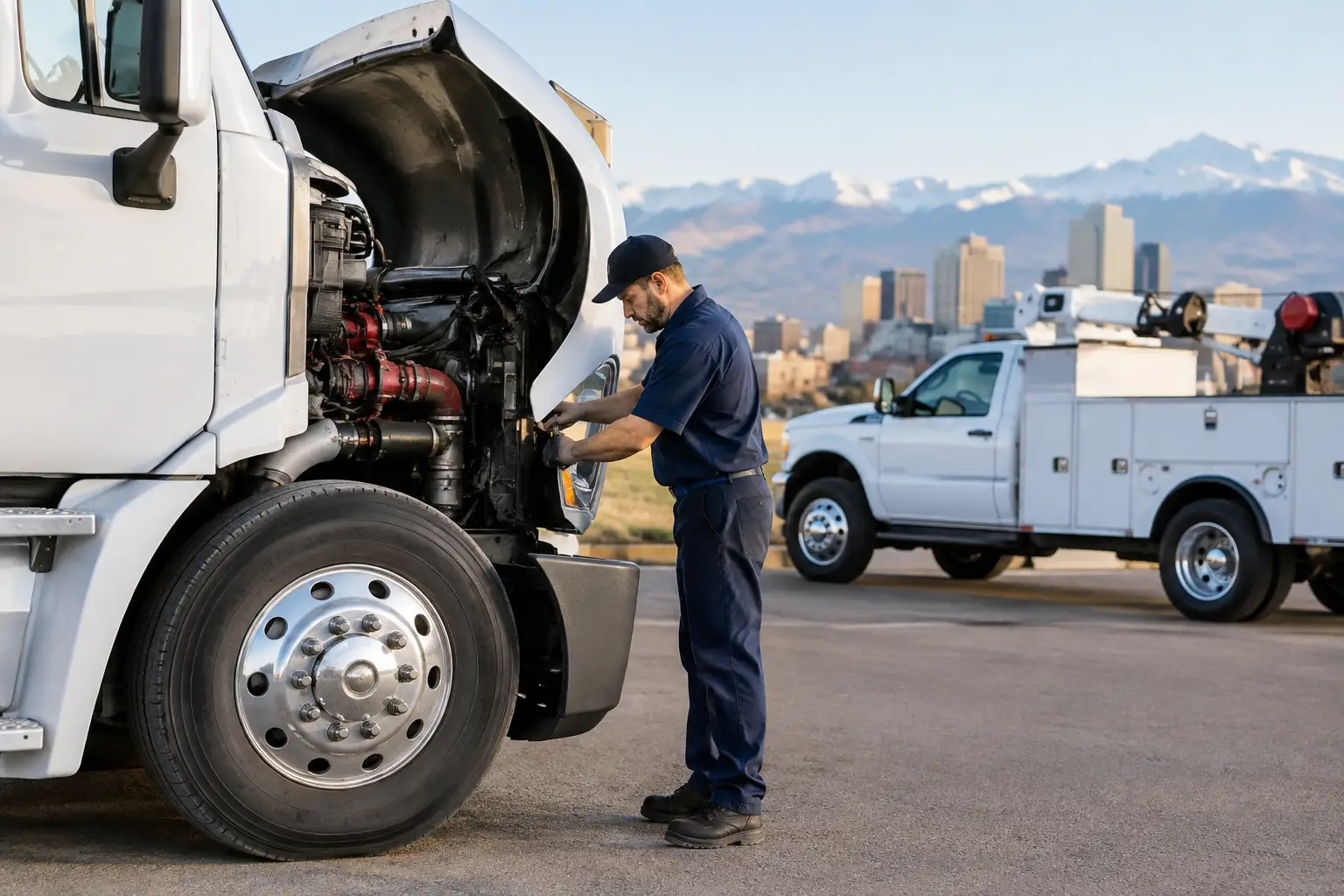
A dead truck on I-70, a trailer issue at a Denver receiver, or an air leak at a jobsite can change the entire day in minutes. Denver truck repair is not just about fixing a mechanical problem. It is about protecting the driver, the load, the delivery schedule, and the revenue tied to that equipment.
When a commercial truck or trailer goes down, the best next step depends on the failure, the location, and whether the unit can be safely moved. Waiting until a shop opens or attempting to limp a damaged truck across town can turn a manageable repair into a larger delay. Mobile repair brings the technician, tools, and parts capability to the truck so diagnosis can begin where the problem happened.
Denver Truck Repair Starts With a Safe Stop
The first priority is getting the driver and equipment into the safest position available. If the truck is on the shoulder, activate warning devices, use hazard lights, and follow company and DOT safety procedures. Do not keep driving simply because the truck can still move. A warning light, overheating condition, brake concern, steering issue, or low air pressure can become a roadside emergency quickly.
Once the unit is secure, the driver should give dispatch or the repair provider a clear picture of the problem. The more accurate the information, the faster a mobile technician can arrive prepared to diagnose it. A report of “truck won’t run” is a starting point. A report that includes the make, model, engine, warning lights, symptoms, location, and whether the truck is loaded provides a much better path to repair.
If freight is temperature-sensitive, high-value, or on a hard appointment, say so immediately. That does not make every repair faster, but it helps everyone make the right operational decision. In some cases, the truck can be repaired on site. In others, the trailer may need to be moved, freight may need protection, or a tractor swap may be the better choice.
Common Failures That Need Mobile Service
Commercial equipment works under heavy load, long hours, weather exposure, and constant vibration. Many breakdowns occur without much warning, especially when a minor issue has been building between inspections. Mobile truck and trailer repair is often the practical answer for problems that can be diagnosed and corrected in the field.
Electrical issues are a frequent cause of lost time. A no-start condition may come from weak batteries, corroded connections, charging-system failure, damaged wiring, or a starter problem. Trailer lighting failures can also stop a load, particularly when brake lights, turn signals, or marker lights are not functioning properly. These issues need more than a quick visual check. A technician has to test the system, locate the fault, and confirm that the repair holds.
Air-system problems are another major source of road calls. Air leaks, damaged lines, failing valves, or compressor concerns can affect brakes, suspension, and the truck’s ability to remain operational. A driver should never treat a brake-related air loss as a minor inconvenience. If air pressure will not build or hold, the unit needs prompt attention before it moves again.
Cooling-system failures demand the same caution. Overheating can result from a hose leak, coolant loss, belt issue, fan problem, radiator damage, or another mechanical fault. Continuing to operate an overheating truck risks severe engine damage. Pulling over early is often the decision that saves the engine and the load schedule.
Trailer defects can be just as costly as tractor failures. Damaged landing gear, tire problems, air leaks, brake issues, broken door hardware, lighting faults, and suspension concerns can keep a trailer from being legally or safely moved. A mobile technician can assess whether the trailer can be repaired at the location or whether it needs additional handling before dispatch can release it.
What to Have Ready When You Call
A repair call moves faster when the driver or dispatcher can provide the details that affect diagnosis, access, and parts. Before calling for mobile service, gather the following information if it is safe to do so:
- Exact location, including highway direction, exit number, yard, receiver, jobsite, or cross streets
- Truck and trailer make, model, year, unit number, and VIN when available
- A clear description of the symptoms, dash warnings, leaks, unusual sounds, or visible damage
- Whether the truck is loaded, what type of freight is involved, and any delivery deadline
- A callback number for the driver or dispatcher who can authorize repair decisions
Photos and short videos can also help when they clearly show a leak, damaged component, warning display, or trailer issue. They do not replace a diagnosis, but they can help the technician arrive with a better understanding of the situation.
When On-Site Repair Makes Sense
A mobile repair call is especially useful when the truck is disabled on the roadside, parked at a customer facility, staged in a yard, or stopped at a construction location. It eliminates the first delay in the process: waiting for a tow and then waiting again for a shop to inspect the equipment.
On-site repair often makes sense for electrical troubleshooting, battery and starting issues, air-line repairs, cooling-system concerns, tire-related service coordination, brake adjustments, minor component replacement, trailer repairs, and many no-start conditions. The exact repair depends on access, parts availability, weather, and the condition of the vehicle. A field repair team should be direct about what can be safely completed where the truck sits.
There are times when towing or a shop repair is necessary. Major engine damage, transmission failure, extensive collision damage, serious frame concerns, or repairs that require specialized equipment may not be practical in the field. That is not a failed service call. A proper diagnosis can prevent wasted hours and help the fleet make the right next move rather than guessing.
Avoid the Decisions That Extend Downtime
The most expensive breakdowns are often made worse by delay. Drivers may wait too long to report a warning light because they hope it will clear. Dispatch may send another truck before understanding whether the original unit can be repaired quickly. A fleet may authorize a tow before checking whether a qualified mobile technician can reach the location first.
Every situation is different, but the decision should be based on safety and operational facts. Can the truck remain where it is safely? Is the load at risk? Is the issue likely repairable on site? Are parts available? Does the driver have enough information to describe the problem accurately? Answering those questions early helps prevent duplicate calls, unnecessary towing, and missed communication with the customer.
Do not authorize repairs based only on a vague description if the technician has not inspected the unit. At the same time, do not demand a remote diagnosis that ignores what the truck is doing in real conditions. Good repair decisions come from a clear symptom report, an on-site inspection, and honest communication about repair options.
Why 24/7 Mobile Coverage Matters in Denver
Denver-area freight does not stop at normal business hours. Trucks move through the metro area before dawn, across I-25 and I-70 overnight, and into yards, warehouses, construction sites, and delivery locations throughout the day. A breakdown at 2 a.m. can be just as disruptive as one at 2 p.m., and sometimes more difficult because replacement equipment, towing, and shop access are limited.
That is why a 24/7 mobile response matters. The goal is not to make promises about every repair before the truck is inspected. The goal is to start the process immediately, meet the equipment where it is, and give the driver or fleet a real answer. MTG Truck Shops provides mobile commercial truck and trailer repair in Denver and surrounding service areas with that practical approach: We Come to You.
For owner-operators, that can mean avoiding a full day of lost work over a repair that can be handled in the field. For fleet managers and dispatchers, it means a clearer path to getting a unit diagnosed, repaired, reassigned, or moved without leaving a driver stranded with no plan.
Keep the Next Breakdown From Becoming a Major Delay
Roadside failures cannot be eliminated completely, but preparation reduces the time lost when one occurs. Keep unit information current, make sure drivers know who to call, and require early reporting of warning lights, air leaks, charging concerns, and trailer defects. Small problems are easier to schedule. Large problems need fast, organized action.
When a truck or trailer stops moving in Denver, focus on the next right step: secure the unit, protect the load, report accurate symptoms, and get qualified mobile help headed to the location. The faster repair begins, the sooner your equipment can get back to doing its job.