
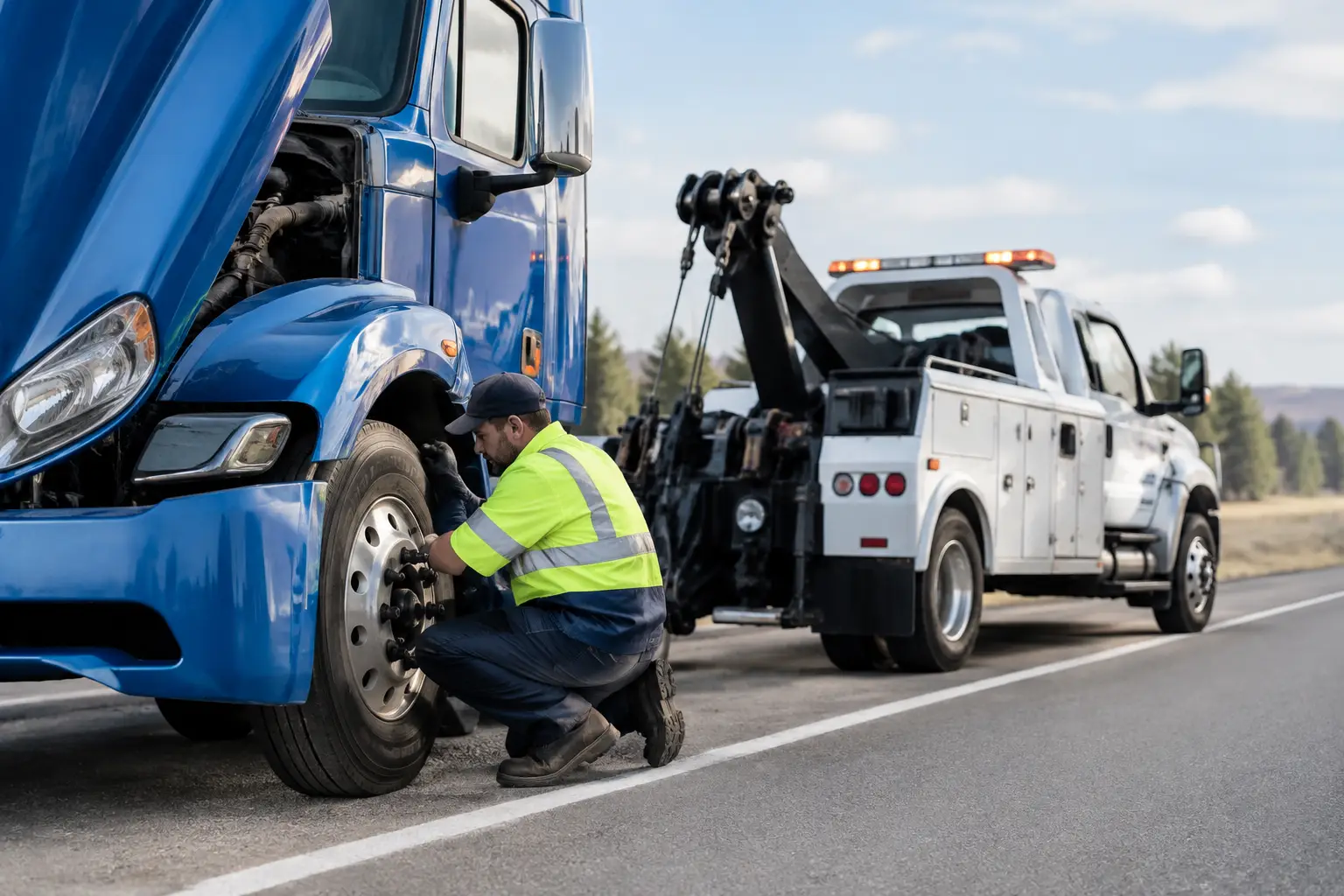
A loaded trailer on the shoulder, a driver stopped at a customer site, or a truck that will not restart at a fuel stop all create the same immediate question: does roadside service prevent towing? Often, yes. A qualified mobile truck and trailer technician can diagnose and repair many failures where the equipment sits, saving the time, cost, and scheduling disruption of a heavy-duty tow. But roadside service is not a promise that every truck can safely leave under its own power.
The right decision comes down to the failure, the truck or trailer condition, the location, and whether a field repair can return the unit to safe operating condition. For a dispatcher or owner-operator, the goal is not simply to avoid a tow. It is to get the equipment repaired safely with the least possible downtime.
When Roadside Service Can Prevent Towing
Mobile repair is most effective when the problem can be diagnosed, repaired, and tested without moving the truck or trailer to a shop. Many breakdowns fall into that category, especially when the vehicle is otherwise structurally sound and safely positioned.
A no-start condition may be caused by weak batteries, loose or corroded connections, a failed starter, charging-system trouble, or an electrical issue that can be found at the scene. Air-system problems may come from a damaged air line, fitting, valve, or leak that a technician can repair and pressure-test. Lighting faults, trailer electrical issues, damaged glad hands, brake adjustments, and minor wiring repairs can also be handled in the field when the required parts are available.
Tire-related calls are another common example. A road service repair or replacement may eliminate the need for towing if the wheel-end and surrounding components have not been damaged. Likewise, a trailer with a door, latch, landing gear, lighting, air, or connection problem may be repairable at a yard, jobsite, dock, or roadside location.
The biggest advantage is that diagnosis starts where the failure happens. A tow does not diagnose the issue or restore the truck to service. It only moves the truck. If a mobile technician can correct the fault on site, your driver can avoid waiting for a tow, a shop bay, and a second round of diagnosis.
What Roadside Service Cannot Safely Fix
Some situations require towing because the truck or trailer cannot be made safe, legal, or reliable at the breakdown location. Trying to force a field repair in those cases can increase damage, create a roadside hazard, or lead to a second failure a few miles later.
Major engine damage is a common reason to tow. Low oil pressure, severe overheating, internal engine noise, coolant contamination, or a truck that has lost critical fluids can point to a problem that needs shop-level inspection. Continuing to run the engine may turn a repairable problem into a full engine replacement.
Transmission and driveline failures can also exceed what should be repaired at the roadside. If the truck will not move, has a suspected clutch failure, has thrown a driveshaft, or shows signs of internal transmission damage, the equipment may need controlled transport to a repair facility. The same applies to damaged axles, steering components, suspension mounts, frame rails, or wheel-end assemblies.
A trailer may need towing or specialized recovery after a collision, rollover, major cargo shift, bent structural member, severe brake damage, or damaged landing gear that cannot support safe movement. If the truck or trailer is blocking traffic, sitting in an unsafe area, or involved in an incident with law enforcement or recovery requirements, site conditions may make towing necessary even if the mechanical repair itself is straightforward.
The First Call Should Focus on Diagnosis
Roadside service prevents unnecessary towing when the provider receives accurate information before dispatch. The better the first report, the better the chance that the technician arrives with the right tools, parts, and expectations.
When you call for mobile truck or trailer repair, share the unit number, exact location, tractor and trailer type, symptoms, warning lights, visible leaks, and whether the truck can build air or move under its own power. Let the dispatcher know if the unit is loaded, if there is hazardous cargo, and whether the driver is in a safe place. Photos can help identify visible damage, tire condition, broken lines, or connection issues before the technician is on site.
Do not assume a truck needs a tow just because it will not start or a trailer has a brake warning. At the same time, do not ask a driver to limp equipment to a shop when there is a serious leak, steering concern, smoke, overheating, unstable load, or major driveline noise. A fast diagnosis is more useful than guessing.
Field Repair Depends on Access and Parts
Even a repairable issue may not be completed at the roadside if the work area is unsafe or inaccessible. A narrow shoulder, active traffic lane, severe weather, deep mud, or a location without enough room to work can limit what a technician can do safely. In those cases, moving the equipment a short distance through recovery or towing may be the practical option.
Parts availability matters too. Mobile technicians carry common repair items and diagnostic equipment, but no service vehicle carries every component for every engine, truck, or trailer configuration. A failed sensor or damaged hose may be fixed quickly. A specialized aftertreatment component, uncommon electrical module, or major hard part may need to be sourced or installed at a shop.
That is not a failure of roadside service. It is the correct operational call when the repair requires a lift, more space, specialized equipment, or a controlled inspection environment.
How Mobile Repair Reduces Downtime Even When a Tow Is Needed
Roadside service still adds value when towing becomes necessary. A technician can assess the condition, help identify the likely failure, secure loose components when appropriate, and determine whether the truck should be towed, recovered, or transported with special handling. This prevents the wrong type of tow from causing additional damage.
For fleets, that early assessment also helps dispatch make better decisions. You can notify the receiving shop, plan trailer coverage, arrange cargo transfer if needed, and keep the driver from waiting without a clear repair path. A technician may be able to separate a trailer issue from a tractor issue, allowing one part of the equipment to continue moving while the disabled unit is handled correctly.
The operational benefit is not just fewer tows. It is fewer blind decisions, fewer wasted hours, and less avoidable disruption to the load.
Roadside Service vs. Towing: The Cost Question
A heavy-duty tow can be expensive, especially outside normal business hours or when recovery equipment is required. There may also be mileage charges, hook-up charges, storage costs, shop wait time, and lost revenue from a missed delivery or idle driver. Those costs make mobile repair a strong first option for many mechanical and trailer defects.
Still, the cheapest immediate choice is not always the lowest-cost outcome. If a truck has symptoms of major mechanical damage, paying for a roadside patch or attempting to drive it farther can lead to larger repairs, safety violations, or a breakdown in a worse location. The correct choice is the one that protects the driver, cargo, equipment, and delivery schedule as much as possible.
What Drivers Should Do Before Help Arrives
Get the truck or trailer as far from traffic as conditions safely allow, activate hazard lights, and use required warning devices. Do not crawl under the vehicle, release brakes, or attempt a temporary repair near moving traffic unless you are trained, equipped, and in a safe work area.
Shut the engine down if there is smoke, fire risk, significant oil or coolant loss, overheating, or unusual mechanical noise. If air pressure will not build, the brakes are not operating correctly, steering is affected, or a wheel-end is hot, treat the unit as unsafe to move. Protect the scene first, then provide the repair provider with clear details.
For truck and trailer operators in Green River, Rock Springs, Cheyenne, Colorado, or Texas service areas, MTG Truck Shops provides 24/7 mobile response built around a simple operating promise: We Come to You. The goal is to diagnose the problem where it happened and repair what can be repaired there.
When equipment goes down, ask for a mobile assessment before assuming a tow is unavoidable. A quick, accurate diagnosis can be the difference between a short roadside repair and a long delay at the next shop.