
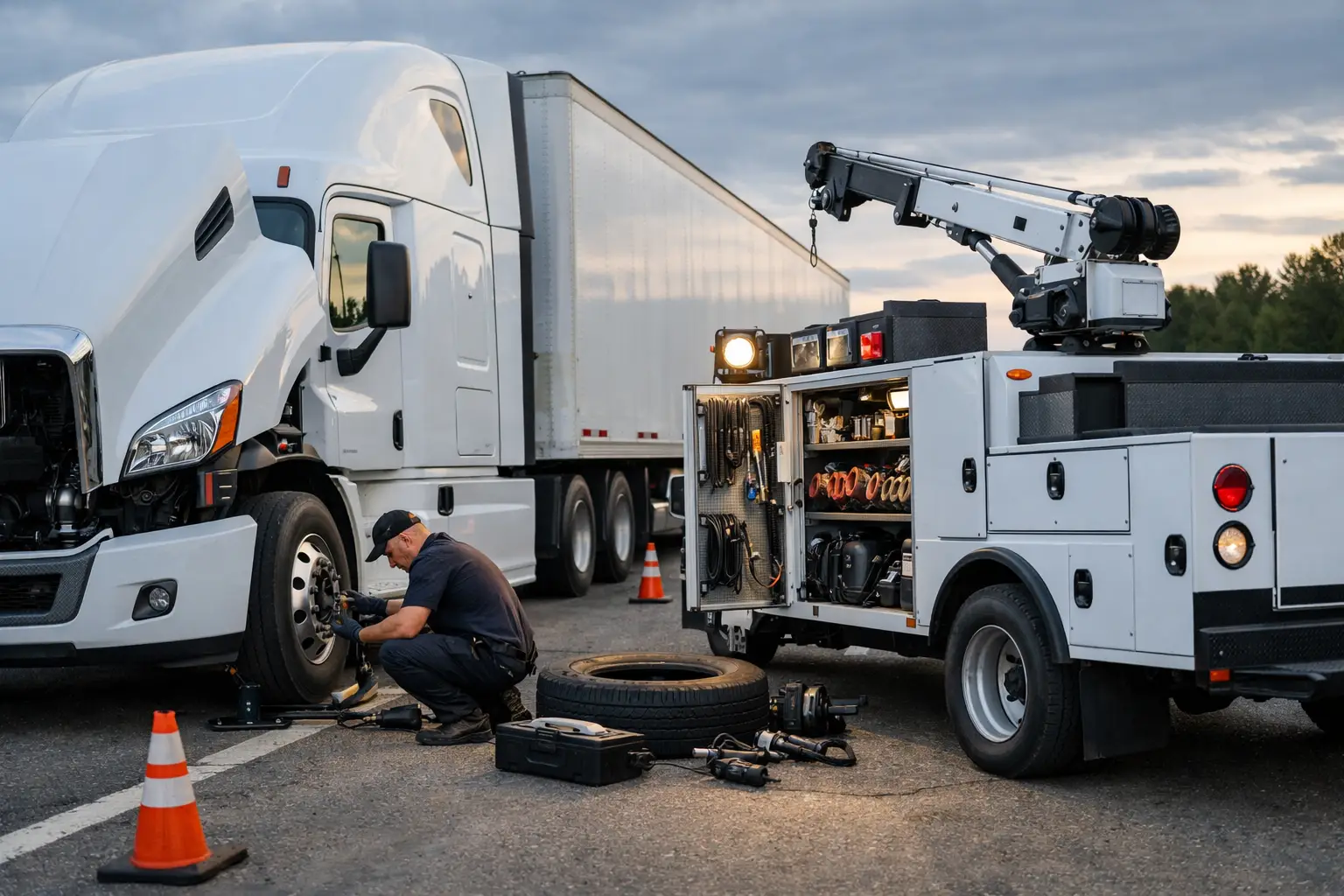
A warning light on I-80, a no-start at a receiver, or a trailer brake problem at a jobsite can stop the entire operation. Emergency roadside truck repair gives drivers, dispatchers, and fleet managers a way to get qualified help where the equipment sits instead of losing more time arranging a tow and waiting for a shop opening.
For commercial equipment, every hour out of service affects more than the truck. It can disrupt delivery appointments, driver hours, customer communication, load security, and the next dispatch. The right response is not always the biggest repair. It is the fastest safe repair that gets the truck or trailer moving again - or provides a clear diagnosis so the operation can make the next decision without guesswork.
When to Call for Emergency Roadside Truck Repair
Roadside service makes sense when the issue can be inspected, diagnosed, and repaired safely in the field. Many breakdowns do not require moving the truck before work begins. A mobile technician can arrive with tools, diagnostic equipment, and common repair parts to address the immediate problem at your location.
Common calls include no-start conditions, dead batteries, charging-system failures, air leaks, brake issues, lighting faults, coolant leaks, fuel delivery problems, damaged hoses, loose connections, and trailer defects. Tire-related issues may also require quick coordination when the equipment cannot safely continue.
The decision depends on the failure. A minor air leak or electrical connection may be resolved roadside. A major engine failure, serious collision damage, unsafe frame condition, or repair requiring specialized shop equipment may still call for towing. Even then, an on-site diagnosis can prevent the wrong tow, confirm what failed, and help dispatch choose the right repair destination.
The First Minutes After a Truck or Trailer Breaks Down
The driver’s first job is safety, not troubleshooting. Get the vehicle as far from moving traffic as conditions allow, activate warning devices, secure the load when necessary, and follow company and roadway procedures. Do not crawl under equipment on an active shoulder or attempt a repair that creates more risk.
Once the scene is secure, give dispatch or the mobile repair provider useful information. The faster the technician understands the situation, the better prepared they can be on arrival. Share the truck and trailer unit numbers, exact location or nearest mile marker, vehicle make and model, engine or fault codes, symptoms, whether the unit is loaded, and any visible leaks or damage.
Photos can help, especially for trailer damage, hose failures, warning lights, and air-system concerns. A driver does not need to diagnose the truck. Clear details about what happened before the breakdown are usually more valuable than a guess at the cause.
What Mobile Truck Repair Can Handle on Site
A capable mobile service is built around field repair, not just a quick look and a recommendation to tow. The technician should arrive ready to inspect the problem, test systems, make practical repairs, and verify that the truck or trailer can return to service safely.
For tractors, roadside work often involves electrical diagnosis, batteries and connections, alternators, starters, air-system repairs, brake components, cooling-system issues, belts, hoses, clamps, and basic engine-related faults. Modern trucks can produce several fault codes from one underlying issue, so the diagnostic step matters. Replacing parts without confirming the cause can turn a short delay into a repeat breakdown.
Trailer service is just as critical. A trailer with inoperative lights, damaged air lines, brake problems, landing gear concerns, broken door hardware, or other defects may be unable to continue legally or safely. For fleets hauling equipment or time-sensitive freight, getting the trailer repaired at the customer site can avoid unloading, transferring freight, or bringing in another unit unnecessarily.
Not every repair belongs on the roadside. Mobile technicians work within safe site conditions, available parts, and the scope of the damage. A professional provider will explain when a temporary repair can get equipment to a safe location, when a permanent repair is appropriate on site, and when the unit should be removed from service.
Why Response Time Is Only Part of the Equation
Fast arrival matters, but it is not the only measure of good emergency service. The real goal is reducing total downtime from the moment the truck stops until it is ready to work again. That includes the time spent identifying the failure, obtaining the needed parts, completing the repair, testing the system, and communicating the status to dispatch.
A low service-call price can become expensive if it produces no diagnosis, no repair plan, or another breakdown 20 miles later. On the other hand, not every situation justifies a major roadside repair. If a component failure points to deeper shop work, it may be smarter to stabilize the truck, protect the load, and plan the next move before additional damage occurs.
For fleet managers, the best emergency roadside truck repair partner is one that understands the operating decision behind the call. You need accurate information: Can the driver continue? Is the trailer safe? What parts are needed? Is a tow unavoidable? What is the expected repair path? Direct answers help dispatch manage customers, drivers, replacement equipment, and delivery windows.
What to Keep in Every Truck for Faster Service
Prepared drivers help technicians work faster. Keep current unit information available in the cab, including VIN details, equipment numbers, maintenance history when practical, and the fleet’s preferred repair authorization process. Drivers should also know how to report fault codes and identify their exact location.
A basic emergency kit should include approved warning devices, a charged phone and charger, flashlight, work gloves, high-visibility gear, and documentation for the truck, trailer, and cargo. These items do not replace a technician, but they make the roadside scene safer and improve communication while help is on the way.
For owner-operators, it also helps to keep a record of recently replaced parts and recurring issues. If a truck has had repeated battery drains, air pressure loss, or cooling-system problems, tell the technician. That history can shorten diagnosis and prevent treating the same symptom over and over.
A 24/7 Mobile Response Built for Commercial Equipment
Breakdowns do not wait for business hours. A truck can fail overnight at a truck stop, before a morning pickup, in a shipper yard, or on a remote route where getting to a fixed shop is not realistic. That is why 24/7 mobile repair is valuable: the repair process begins where the truck or trailer is parked.
MTG Truck Shops provides mobile commercial truck and trailer repair for operators who need service at the breakdown location. Across service areas in Wyoming, Colorado, and Texas, the focus is straightforward: We Come to You. That can reduce towing costs, shorten the delay before diagnosis, and keep a manageable repair from becoming a missed load.
When calling for service, be ready with the location, unit information, symptoms, and a callback number. Ask for an expected arrival window and explain any site-access restrictions, such as a gated yard, customer facility rules, or limited shoulder space. Clear information helps the technician arrive prepared and helps your operation plan around the repair.
The best time to decide who handles an emergency is before the next warning light appears. Keep a dependable mobile repair number available to every driver and dispatcher, then make the call as soon as a safe stop is made. Early action gives you more options to protect the driver, the load, and the next delivery.