
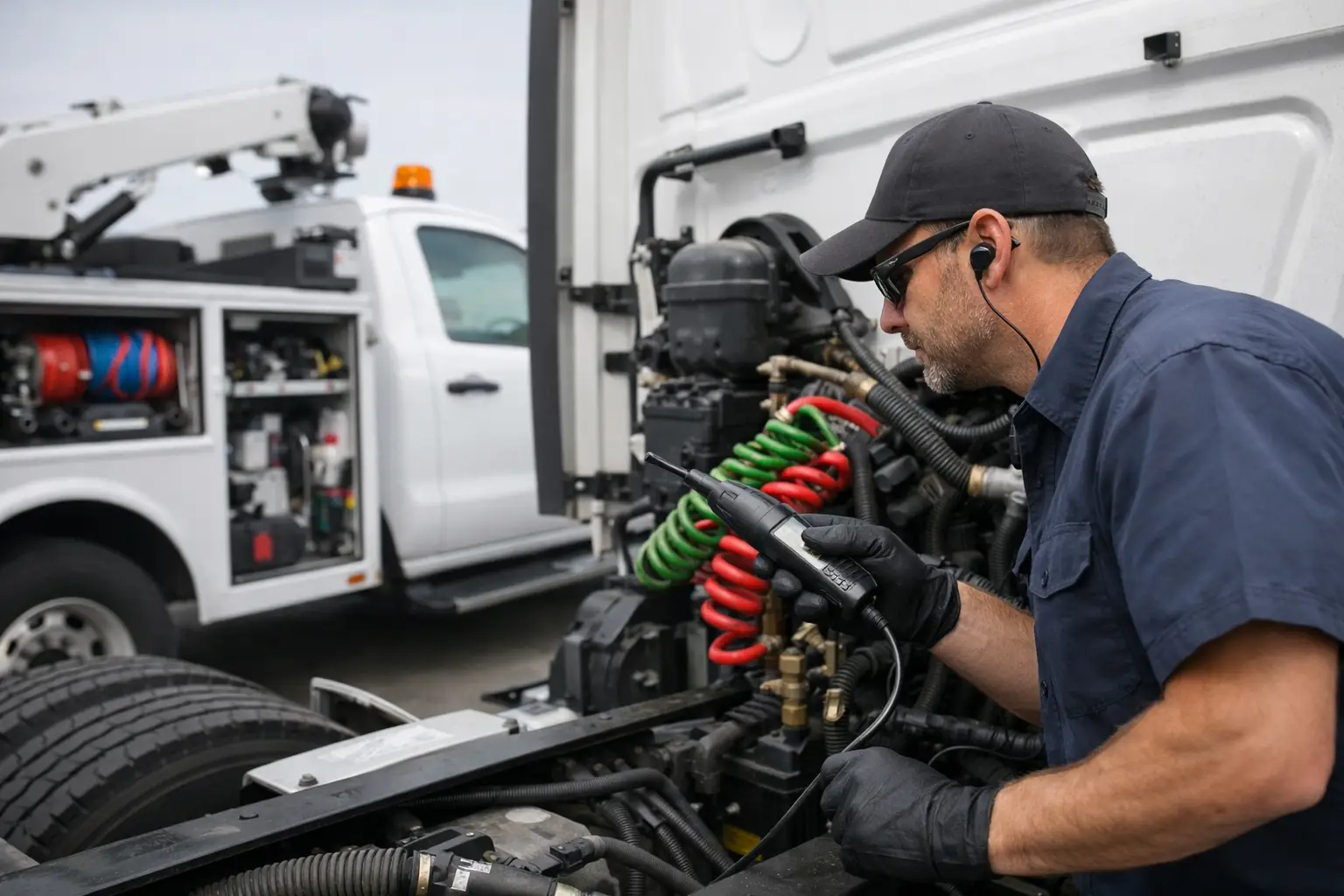
A steady hiss after shutdown is more than an annoyance. On a commercial truck or trailer, it can drain air reservoirs, trigger a low-air warning, delay a delivery, or put the unit out of service. Knowing how to diagnose air leaks helps drivers and fleet teams identify the source quickly, communicate the problem clearly, and make the right call before a small leak becomes roadside downtime.
Air systems are safety-critical. If system pressure will not build, drops rapidly, or the low-air warning is active, do not move the truck until a qualified technician has inspected it. A leak may be in an accessory circuit, but it may also involve the brake system, spring brake circuit, or a failing component that needs immediate repair.
Start With the Symptoms, Not the Guesswork
The location and timing of an air leak provide useful clues. Before reaching for soapy water or replacing fittings, note when you hear the leak and what the truck is doing at the time.
A leak heard while the engine is running may point to the compressor, air dryer, governor, discharge line, or a system that cannot maintain pressure. A leak that begins when the brakes are applied can indicate a brake chamber, relay valve, service line, or connection near an axle. A leak that starts when the parking brakes are released deserves immediate attention because it may involve spring brake plumbing or a valve serving the parking brake circuit.
Also watch the air gauges. A system that builds pressure normally but loses air after shutdown has a different likely cause than one that never reaches normal operating pressure. Note how quickly pressure falls, whether the loss occurs with the brakes released or applied, and whether one tractor or trailer configuration changes the symptom.
For fleet managers and dispatchers, these details save time. Telling a mobile technician that the truck loses 20 psi in five minutes with the engine off and brakes released is far more useful than reporting a general air problem.
How to Diagnose Air Leaks Safely
Park on level ground, secure the vehicle, and keep clear of wheels and suspension components. Do not crawl under a truck supported only by air suspension or rely on parking brakes if you suspect the air system is failing. Chock the wheels and follow your company’s lockout and inspection procedures.
Build the system to normal governed pressure first, typically around 120 to 130 psi depending on the equipment. Shut off the engine and listen in a quiet area. Open the hood, walk around the tractor, and inspect the trailer connection area. A major leak is often audible without tools.
For smaller leaks, apply a soap-and-water solution to suspected connections. Bubbles that grow or continue forming identify escaping air. Commercial leak-detection solution works well, but a basic mix of water and dish soap can help in the field. Avoid spraying electrical connectors, hot exhaust components, or areas where fluid could create a slip hazard.
Do not confuse normal air dryer purging with a constant leak. The air dryer may release a brief, strong blast of air when the governor cycles. That purge should stop. A continuous hiss at the dryer, or frequent purging while the truck is parked, can indicate a dryer valve issue, a governor problem, or a compressor system fault.
Check the Most Common Leak Points
Most truck air leaks occur at wear points, connection points, and components exposed to road debris. Start with the areas that are easiest to access and most likely to fail.
Air Lines, Fittings, and Glad Hands
Inspect nylon air lines for abrasion, cuts, kinks, and damage where they pass through clamps or rub against the frame. In cold weather, older lines can become brittle. A line may look acceptable until it flexes during a turn, suspension movement, or trailer articulation.
Check push-to-connect fittings, threaded fittings, and unions for bubbling. A fitting may leak because the line was not cut square, the tube is scored, or the internal seal has worn out. Tightening a fitting is not always the fix. Over-tightening can damage threads or crack a fitting, especially on older components.
At the tractor-trailer connection, inspect glad hand seals and couplers. Torn seals, dirty sealing surfaces, weak coupler tension, and damaged hoses can all create leaks. If the leak changes when the trailer is connected, disconnected, or turned, focus on the service and emergency lines, glad hands, and trailer plumbing.
Brake Chambers and Brake Valves
Listen near each brake chamber with the parking brakes set and released as conditions allow. A leaking service brake chamber may hiss from its vent when the service brakes are applied. A damaged diaphragm can affect braking performance and requires prompt repair.
Check relay valves, quick-release valves, leveling valves, and ABS-related air connections. These valves can leak through an exhaust port when an internal seal fails. The sound may seem to come from the valve itself, but the underlying issue can depend on whether the service brakes, parking brakes, or trailer supply are applied.
Never place hands near moving brake components while someone applies or releases brakes. Keep communication clear if another person is in the cab, and keep everyone out from under the vehicle unless it is properly supported.
Air Tanks, Drain Valves, and Pressure Protection Components
Air reservoirs can corrode, particularly around straps, seams, drain fittings, and low points where moisture collects. Look for rust, damage, and leaks around drain valves. A drain valve that will not close fully can cause a slow but persistent loss of pressure.
Pressure protection valves and check valves can also cause confusing symptoms. These components control how air is distributed between primary, secondary, accessory, and trailer circuits. When one fails, the truck may seem to lose air from an unrelated area or fail to supply a specific circuit correctly.
Compressor, Governor, and Air Dryer
When pressure will not build, inspect the supply side of the system. Listen around the compressor discharge line, air dryer, governor, and related fittings. A failed governor can cause abnormal compressor cycling or continuous dryer behavior. A restriction, worn compressor, or major discharge-side leak can keep the system from reaching operating pressure.
This part of the diagnosis is not a roadside guessing game. Compressor and dryer repairs may require specialized parts, correct torque procedures, and verification that the system is charging and purging correctly afterward.
Test the Leak Under the Right Conditions
An air leak may only appear under load. After checking the system with the engine off, test it in several operating positions while following safe inspection procedures. Observe pressure loss with the parking brakes applied, then with them released if the vehicle is properly secured. Apply and release the service brakes and listen for a change.
If the truck has a trailer, test tractor and trailer circuits separately when possible. A trailer leak can empty the tractor system or make a tractor problem appear worse. Conversely, a tractor with a leaking supply line or damaged glad hand seal can prevent the trailer from charging correctly.
Document what changes. Does the hiss begin only when the yellow parking brake knob is pushed in? Does air loss increase each time the foot brake is applied? Does the system hold pressure until the trailer is connected? Those answers narrow the repair significantly.
When a Field Repair Is the Better Move
Some issues, such as a visibly damaged glad hand seal, may be straightforward. Others require a trained technician because the air system directly affects braking and vehicle control. Call for service if pressure drops quickly, the low-air warning stays on, spring brakes will not release, a brake chamber is leaking, or you cannot identify the source safely.
For trucks and trailers stopped in Green River, Rock Springs, Cheyenne, Fort Collins, Denver, Dallas-Fort Worth, or surrounding service areas, MTG Truck Shops provides 24/7 mobile truck and trailer repair. A technician can come to the breakdown location, isolate the leak, and repair the failed line, fitting, valve, chamber, or air-system component without adding a tow to the delay.
A small hiss is easy to ignore when freight needs to move. Treat it as an early warning instead. Finding the source while the truck can still build and hold safe air pressure gives you a better chance of making the repair on your schedule, not after the unit is stranded.