
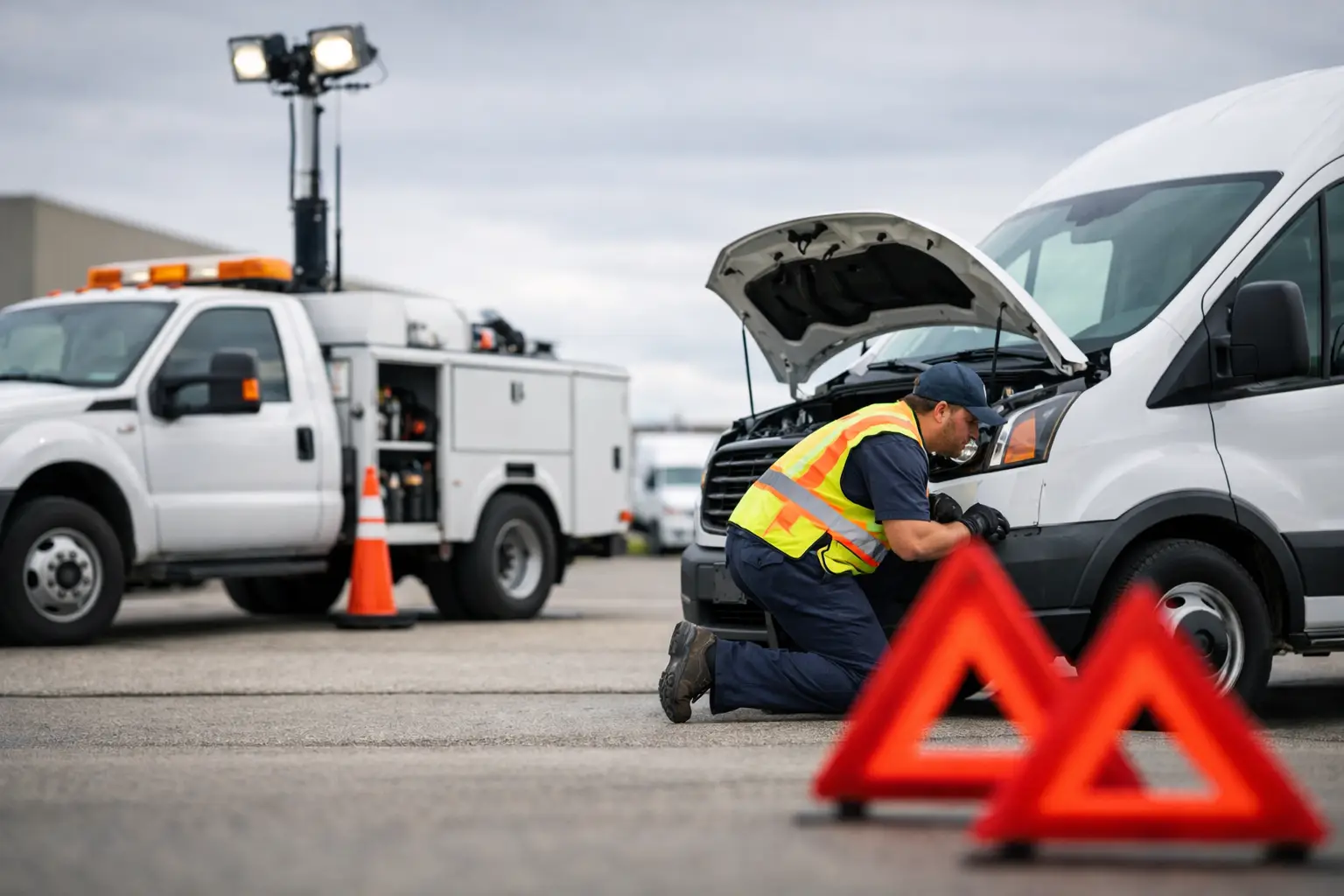
A truck parked on the shoulder with a loaded trailer is not just a maintenance problem. It is a missed appointment, a driver exposed to roadside risk, freight that may be time-sensitive, and a dispatcher trying to rebuild the day’s schedule. Knowing how to prepare for fleet emergencies before the call comes in gives your team a faster, safer way to respond.
The goal is not to prevent every breakdown. Components fail, road hazards happen, and trailer damage can occur far from a terminal. The goal is to reduce confusion, protect the driver, and get the right repair help to the right location without wasting hours on avoidable back-and-forth.
Build a Fleet Emergency Plan Drivers Can Use
An emergency plan only works if a driver can follow it under pressure. A long policy document stored in an office will not help at 2 a.m. on a rural route or at a customer jobsite. Give every driver a simple procedure that covers safety, communication, equipment information, and repair authorization.
Start with the first five minutes. Drivers should know when to safely pull over, activate hazard lights, set warning devices as required, and assess whether the truck or trailer can remain where it is. A tire failure, air leak, electrical issue, brake concern, or damaged trailer door may call for different decisions. Drivers should never be expected to diagnose a serious mechanical or safety problem on their own.
Next, establish who gets contacted first. For some fleets, that is dispatch. For others, it is a maintenance manager or after-hours duty phone. The key is to avoid a chain of calls that delays action. The person receiving the report should have the authority to approve roadside repair, arrange a mobile technician, or make the call to tow when repair on site is not appropriate.
Require Clear Information on Every Breakdown Call
A repair provider can respond faster when the driver supplies useful information immediately. Train drivers to report the truck number, trailer number, unit type, exact location, direction of travel, load status, and a concise description of what happened.
“Truck broke down” creates follow-up questions. “Unit 214 with a loaded reefer trailer is parked at the eastbound rest area near mile marker 86. The engine cranks but will not start, and there is no visible fluid leak” gives dispatch and the technician a workable starting point.
Photos and short videos can help when it is safe to take them. A photo of a damaged air line, a warning-light display, a tire issue, or trailer impact damage may help a technician arrive with the right parts and tools. Do not ask drivers to work around moving traffic or crawl under equipment to get a better image.
Keep Vehicle and Service Information Ready
Every minute spent searching for a VIN, tire size, warranty detail, or service contact extends downtime. Store essential fleet information in a format dispatchers and drivers can access after hours. Paper copies still have value when a phone is damaged, dead, or out of service range.
Your emergency file should include current unit and trailer numbers, VINs, license plates, equipment specifications, insurance information, maintenance history, and any preferred repair authorization process. If you operate specialized equipment such as reefers, liftgates, hydraulic trailers, or construction transport trailers, document the details that a field technician will need before arriving.
Keep a current list of mobile truck and trailer repair contacts for the lanes your fleet runs most often. A fixed-location shop may be the right choice for major repairs, diagnostics that require specialized equipment, or work that cannot safely be completed roadside. But for many no-start conditions, air system failures, lighting problems, tire issues, trailer defects, and minor mechanical repairs, a mobile provider can remove the delay and expense of towing disabled equipment to a shop.
For fleets operating through Wyoming, Colorado, or Texas service corridors, verify ahead of time which providers offer 24/7 response and field repair coverage. Do not wait until a driver is stranded to find out whether a provider can reach that location or handle both truck and trailer work.
Inspect the Problems That Stop Freight Movement
Preventive maintenance does not eliminate emergencies, but it changes the odds. The best inspection program focuses on issues that can take a unit out of service or create an immediate safety concern.
Drivers should complete pre-trip and post-trip inspections consistently, then report defects before they become roadside events. Maintenance teams need a process for reviewing those reports quickly. A report that sits until the next scheduled service can turn a small air leak into a no-go condition halfway through a run.
Pay close attention to tires, brakes, lights, air lines, electrical connections, batteries, belts, hoses, wheel ends, trailer doors, landing gear, suspension components, and coupling equipment. On trailers, small damage is easy to overlook when schedules are tight. A bent latch, broken marker light, damaged mudflap, loose wiring connection, or failing landing gear can delay a load just as effectively as an engine fault.
Inspection frequency depends on mileage, route conditions, equipment age, load type, and operating environment. A local construction trailer running rough jobsites needs a different inspection focus than a highway tractor making long interstate runs. Use actual breakdown history to identify repeat failures by unit type, component, location, and season.
Stock the Right Emergency Equipment
Drivers need enough equipment to protect themselves and handle basic non-mechanical needs without turning the cab into a parts warehouse. Required safety equipment should be checked regularly, not assumed to be present.
Each unit should have warning devices, a fire extinguisher, high-visibility gear, a charged flashlight, basic first-aid supplies, and tools appropriate to your company policy. Depending on routes and weather, add gloves, rain gear, winter traction supplies, drinking water, blankets, and a phone charging backup.
Do not encourage drivers to make repairs they are not trained or authorized to perform. Carrying spare fuses, bulbs, or basic approved items may be practical for some operations. Attempting brake, air system, electrical, or wheel-end repairs on the roadside without proper training and conditions can make the breakdown worse and increase risk.
Define When to Call Mobile Repair and When to Tow
A prepared fleet does not treat every emergency the same. The response should match the safety risk, fault type, location, available repair access, and delivery commitment.
Mobile repair is often the efficient first option when the equipment is accessible and the issue can be diagnosed and corrected in the field. It can be especially valuable for truck and trailer problems that would otherwise require a tow simply to reach a shop. A qualified mobile technician comes to the unit, evaluates the defect, and can often return it to service where it sits.
Towing may be necessary when there is collision damage, a major drivetrain failure, unsafe roadway positioning, severe structural damage, or a repair that requires shop equipment. The trade-off is cost and time. Towing a tractor and trailer can be expensive, and it may complicate freight transfer. That is why your plan should make the decision early, based on facts rather than frustration.
Give dispatchers clear approval limits. They should know when they can authorize a mobile call immediately, when they must notify management, and when cargo, insurance, or safety teams need to be involved. Unclear authority is one of the most common reasons a manageable service call becomes an extended delay.
Practice Communication Before the Emergency
Dispatch, maintenance, drivers, and customers all need different information. Drivers need immediate instructions. Repair technicians need the location and defect details. Customers need realistic delivery updates, not optimistic guesses. A single point of contact should manage the repair status so drivers are not repeatedly pulled into calls while trying to stay safe.
After every significant breakdown, review what happened. Look at the initial report, response time, repair outcome, parts availability, towing decision, and delivery impact. If the same type of failure appears repeatedly, adjust your inspection schedule, driver training, spare-unit planning, or maintenance process.
The strongest emergency plans are practical enough to use on a bad night, not just impressive in a binder. Put the right contacts in place, train drivers on a simple reporting process, keep equipment records available, and choose field repair support before you need it. When a truck or trailer goes down, fast, organized action is what keeps one repair from becoming a lost day.