
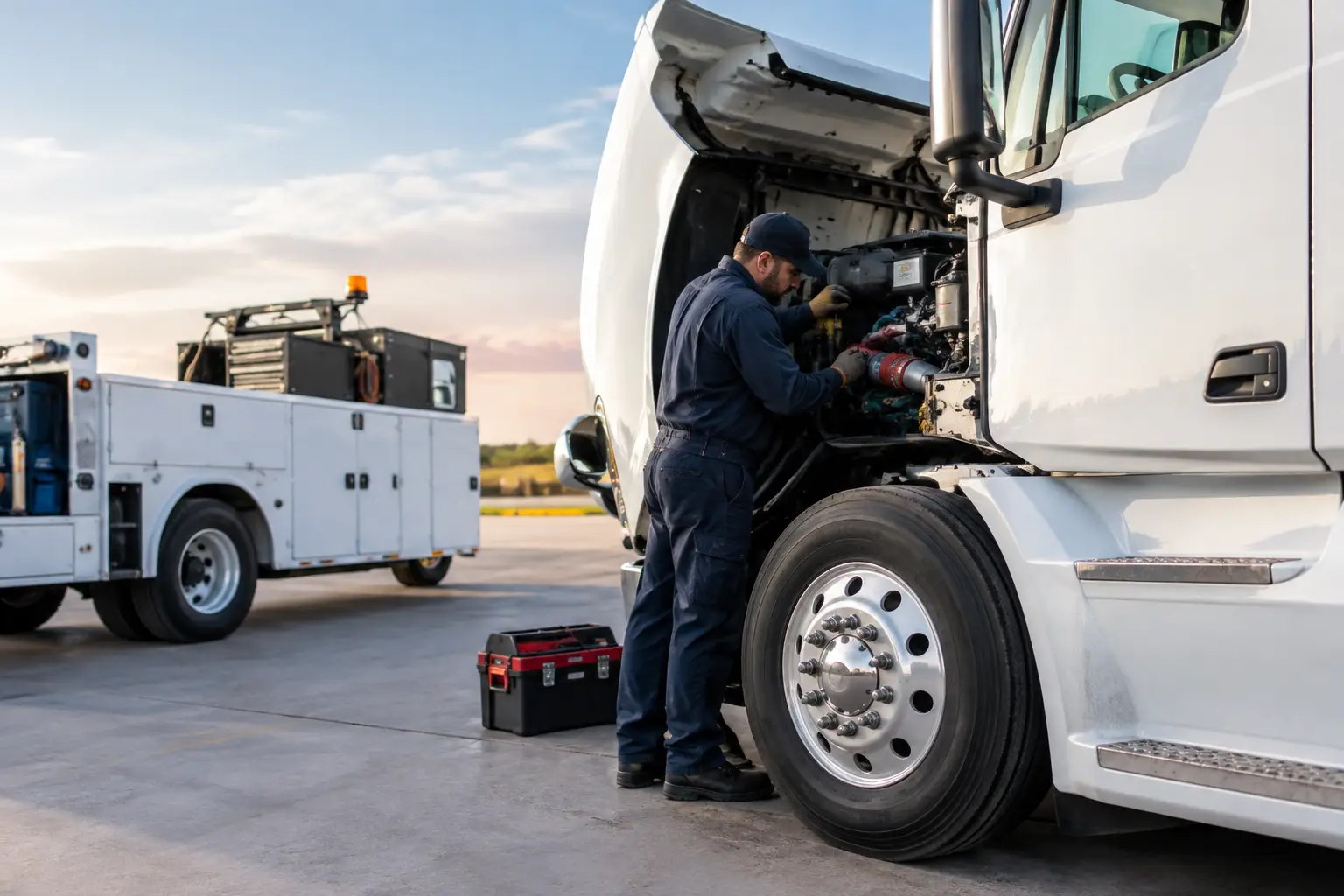
A truck that will not move is more than a repair bill. It can mean a missed delivery window, an idle driver, a stranded trailer, a frustrated customer, and a load that has to be rescheduled. For fleets and owner-operators, the question is not whether equipment will eventually need attention. The question is how to prevent truck downtime before a small defect becomes a roadside failure.
The most effective approach combines consistent inspections, fast driver communication, scheduled maintenance, and a repair plan that works when the truck is nowhere near a shop. Equipment fails in the field. Your response plan needs to work there, too.
How to Prevent Truck Downtime Before It Starts
Preventive maintenance is the foundation of uptime, but it only works when it is tied to the way your trucks actually operate. A tractor running regional routes in changing weather has different wear patterns than a truck pulling heavy construction equipment or a trailer making frequent city stops.
Start with service intervals based on mileage, engine hours, load weight, route conditions, and the manufacturer's recommendations. Do not wait for a dashboard warning light or a failed roadside inspection to make maintenance a priority. By then, a manageable repair may have already become an urgent one.
Build maintenance time into the operating schedule. Taking a truck out of service for a planned inspection is inconvenient, but it is usually far less costly than losing it unexpectedly during a loaded run. Planned work lets you schedule drivers, source parts, and address related wear items before they create another failure.
Make Daily Inspections Useful
Pre-trip and post-trip inspections are not paperwork exercises. They are the first chance to catch problems while the truck is still at the yard, terminal, jobsite, or delivery location.
Drivers should look beyond obvious tire and light checks. Encourage them to report new noises, vibration, sluggish starting, air leaks, fluid spots, uneven braking, steering pull, exhaust concerns, and changes in trailer handling. A small air leak, for example, may not stop a truck immediately, but it can turn into a brake-system issue at the worst possible time.
Trailer inspections deserve the same attention as the power unit. Check tires, brakes, lights, wiring, suspension, landing gear, couplers, doors, liftgates, and cargo securement points. A trailer defect can stop a load just as completely as an engine problem.
The key is speed. Drivers need a clear way to report defects immediately, with enough detail for maintenance staff or a mobile technician to understand the situation. A vague note that says “truck has an issue” costs time. A report that identifies the unit number, location, symptoms, warning lights, and whether the truck can move safely gives the repair process a head start.
Address Small Problems Before They Become Breakdowns
Downtime often starts with a warning that was easy to ignore. A recurring low-air alert, slow crank, damaged electrical connector, tire losing pressure, or intermittent trailer light may allow the truck to keep moving for a while. That does not make it a low-priority issue.
Set clear repair thresholds. If a defect affects safety, DOT compliance, braking, steering, tires, lights, load security, or the vehicle's ability to operate reliably, get it evaluated right away. It is better to make a controlled repair decision than to have the truck make that decision for you on the shoulder or at a customer site.
This does not mean every concern requires a full shop visit. Some repairs are straightforward and can be handled where the equipment sits. Mobile service can be especially useful for electrical issues, air-system leaks, tire-related concerns, lighting defects, trailer problems, no-start conditions, and other field repairs. The right repair method depends on the fault, available parts, safety conditions, and whether a full diagnostic process is required.
Protect the Systems That Cause the Most Lost Time
A focused maintenance program pays close attention to the components most likely to create an unplanned stop. These are not always the most expensive parts, but they are often the ones that turn a normal run into a recovery operation.
Pay particular attention to these areas:
- Tires and wheel ends, including pressure, tread wear, sidewall damage, loose hardware, and bearing concerns.
- Air brakes and air systems, including hoses, fittings, chambers, valves, tanks, and leaks that reduce system pressure.
- Electrical systems, including batteries, alternators, starter circuits, wiring, connectors, lighting, and trailer plugs.
- Cooling and engine support systems, including belts, hoses, clamps, coolant levels, fan operation, and leaks.
- Trailer equipment, including brakes, suspension, landing gear, doors, lights, ABS wiring, and connections to the tractor.
These checks are not a substitute for manufacturer service requirements. They are a practical way to identify the failures that most often interrupt a route, delay a load, or force a tow.
Watch the Data, but Listen to the Driver
Telematics, fault-code monitoring, maintenance software, and inspection records can help fleets spot patterns. Repeated battery replacements, recurring trailer light failures, frequent air leaks, or tire wear on the same axle may point to a root cause that needs more than a quick fix.
Still, data does not replace the driver. The person operating the truck may notice a vibration or handling change before a system records a fault. Treat driver reports as operational information, not complaints. When drivers see that reported problems are addressed promptly, they are more likely to speak up early.
Keep Parts and Repair Decisions Moving
A truck can remain down even after the problem is diagnosed if no one can authorize work, locate parts, or decide whether the unit should be repaired in place. Those delays are preventable.
For fleets, establish approval limits and after-hours contacts before a breakdown occurs. Dispatchers, drivers, maintenance personnel, and repair providers should know who can approve diagnostics, parts, and repairs. A technician waiting for authorization is not the same as a truck being repaired.
Keep commonly needed supplies available when it makes financial sense. This may include lamps, fuses, connectors, hoses, clamps, filters, belts, batteries, and trailer electrical components. Stocking every possible part is unrealistic, especially for smaller operations. The better approach is to review past repairs and keep the items that repeatedly cause avoidable delays.
For owner-operators, maintain a current record of the truck and trailer specifications, recent repairs, warranty information, tire sizes, and key part numbers. Having accurate unit information ready can reduce diagnostic time when you need help away from home.
Have a Roadside and Jobsite Repair Plan
Even well-maintained equipment can fail. Road debris, sudden electrical faults, extreme temperatures, damaged hoses, and trailer issues do not always give advance notice. Preventing downtime also means reducing the time lost after an unexpected problem occurs.
Your response plan should answer a few practical questions: Who does the driver call first? What information should they provide? Can the truck be moved safely? Is the trailer loaded, and does the load require special handling? Is there a safe location for repair? What happens if the issue cannot be repaired on-site?
A mobile repair provider is valuable because diagnosis and service can begin at the truck's location. That can avoid the added delay and cost of towing a disabled unit to a fixed shop for problems that can be repaired in the field. It also helps when a trailer defect is found at a customer location, construction site, truck stop, or staging area.
For operators working in Wyoming, Colorado, or Texas service areas, MTG Truck Shops provides 24/7 mobile truck and trailer repair. We Come to You, so the repair process can start where the equipment is down.
Measure Downtime So You Can Reduce It
If downtime is not measured, it is difficult to know which repairs, routes, units, or operating habits are costing the most. Track the reason for each out-of-service event, the location, repair time, towing need, parts delay, and missed-load impact.
Review the results regularly. If one truck repeatedly has electrical trouble, repeated roadside calls may be masking a deeper wiring or charging-system issue. If trailers are failing inspections for the same lighting or brake concerns, adjust the inspection process and repair standard. The goal is not simply to close repair tickets. It is to stop repeat failures from taking equipment out of service again.
The most reliable fleets do not assume downtime is unavoidable. They inspect with purpose, act on early warnings, make repair decisions quickly, and have dependable field support ready when plans change. Keep the truck moving when it is safe to move, and get qualified help to the truck when it is not.