
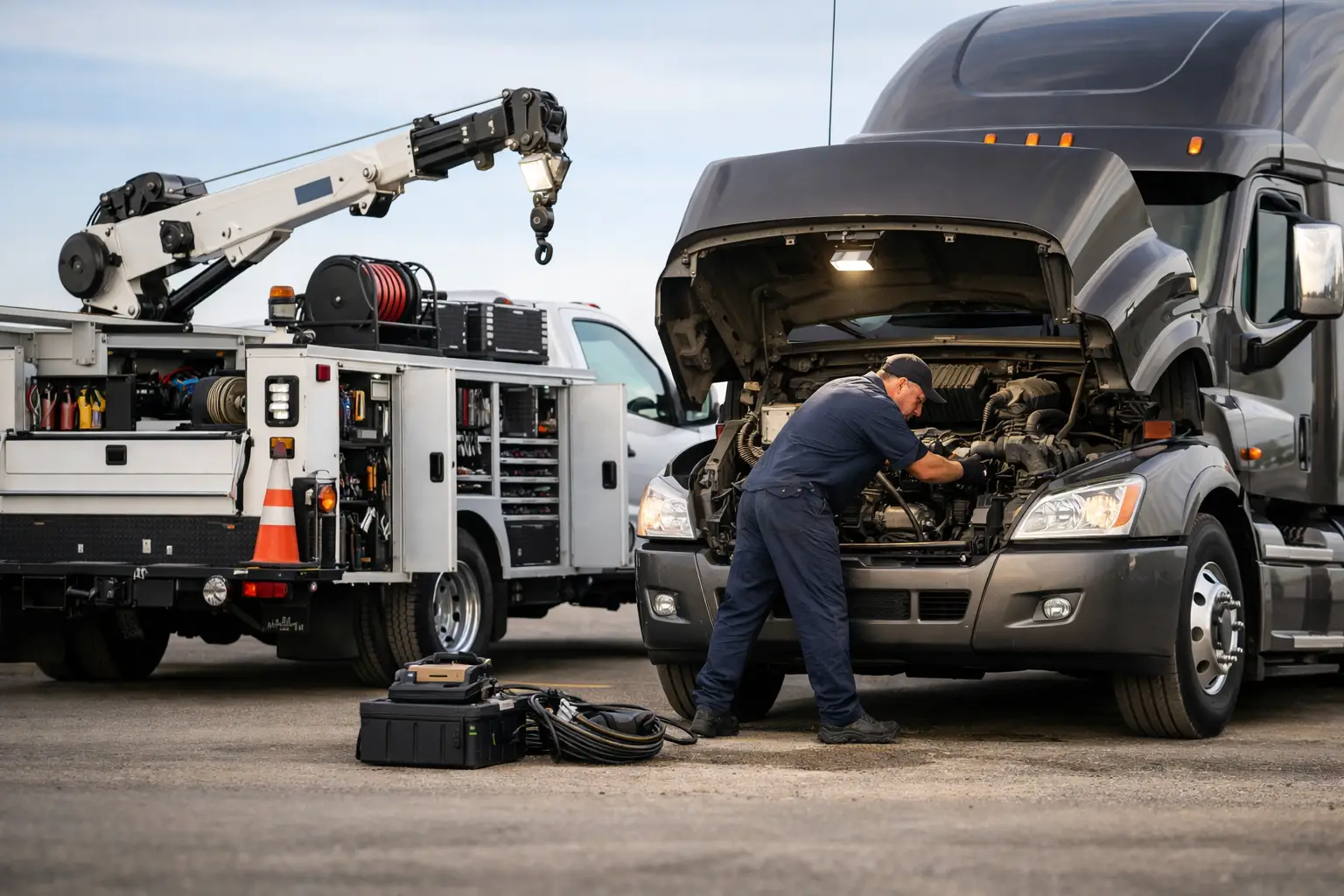
A warning light, air leak, no-start condition, or trailer issue can turn a normal run into a missed appointment fast. When you search for a mobile truck mechanic near me, you are not looking for a future shop appointment. You need a qualified technician dispatched to where the truck or trailer is sitting, with the tools to diagnose the problem and get the equipment moving again.
For drivers, dispatchers, and fleet managers, the right response protects more than a delivery window. It helps avoid towing costs, unproductive driver hours, freight delays, customer calls, and a truck or trailer sitting exposed on the roadside or at a jobsite.
When You Need a Mobile Truck Mechanic Near Me
Mobile repair makes the most sense when moving the equipment to a shop is unsafe, impractical, or simply too expensive in lost time. A truck that will not start at a customer location, a trailer with lighting trouble at a distribution yard, or an air system leak at a truck stop may be repairable where it sits.
This is especially true outside normal business hours. A breakdown does not wait for a weekday opening time, and neither should your repair plan. A 24/7 mobile response gives drivers and operations teams a way to address urgent truck and trailer defects at night, on weekends, and during holiday freight schedules.
The goal is straightforward: send a technician to the equipment, identify the failure, make the needed repair when conditions allow, and reduce the time that revenue-producing equipment is out of service.
What a Field Technician Can Handle
Not every repair can be completed roadside. Major internal engine damage, extensive collision damage, or work requiring specialized shop equipment may still call for a facility or tow. But many of the failures that stop a commercial unit can be diagnosed and repaired in the field.
A mobile truck and trailer technician may address no-start issues, batteries and charging concerns, air leaks, brake-related defects, lighting and electrical problems, hoses, belts, wheel-end concerns, minor fuel system issues, and common trailer repairs. The exact repair depends on the equipment, available parts, safe working conditions, and the cause of the failure.
Trailer problems deserve the same urgency as tractor problems. A damaged air line, failed light, brake issue, door concern, or suspension defect can prevent a loaded trailer from moving legally or safely. If the tractor is ready but the trailer is not, the load is still delayed.
A competent mobile service provider starts with diagnosis rather than guessing. That matters because replacing a part without confirming the root cause can cost more time than the original breakdown. Clear communication about what failed, what can be repaired on-site, and what may require follow-up gives the driver and dispatcher a practical path forward.
Give the Dispatcher the Right Information
The fastest service call begins before the technician rolls. When you contact a mobile repair provider, give a precise location and explain whether the unit is on a public roadside, at a truck stop, at a customer facility, in a yard, or at a jobsite. Include gate instructions, parking details, or any access restrictions that could delay arrival.
Be ready with the truck or trailer make, model, year, unit number, and a short description of the problem. Say what happened before the issue began. For example, note whether the truck shut down while driving, whether it cranks but will not start, whether an air leak is audible, or whether a warning light came on.
It also helps to provide the driver’s callback number, the load status, and any deadline that affects the repair decision. A technician does not need a long story. Accurate details allow the service team to prepare for the call and bring the most relevant equipment and parts.
If the vehicle is in an unsafe location, address safety first. Use warning devices as required, follow company procedures, and do not attempt repairs in active traffic or under equipment that is not properly secured. A faster repair is never worth creating a second emergency.
Mobile Repair Versus a Tow to the Shop
A tow is sometimes necessary, but it should not be the automatic first move. Towing a commercial truck or trailer can add significant cost and can create its own scheduling problems. Once the unit reaches a shop, it may still wait for inspection, a service bay, or parts.
Mobile repair changes the order of events. Diagnosis begins at your location, often eliminating the tow when the issue is within the scope of a field repair. That can be the difference between getting back on the road the same day and losing a full shift or more.
There are trade-offs. A fixed shop has lifts, larger inventories, and equipment for complex repairs. A mobile technician has the advantage of coming directly to the disabled unit. For common breakdowns and trailer defects, that convenience can save substantial downtime. For major repairs, a field diagnosis can still prevent wasted time by confirming exactly why the unit needs to go to a shop.
What 24/7 Availability Means for Operations
For an owner-operator, every hour parked can affect the next load and the week’s revenue. For a fleet, one disabled unit can force dispatch changes, driver reassignment, missed pickup windows, and customer escalations. The repair itself matters, but response availability matters too.
A 24/7 mobile provider is built for the time when scheduled maintenance support is unavailable. That does not mean every repair has the same completion time. Weather, traffic, location, part availability, access to the vehicle, and the severity of the problem all affect the job. It means you have a repair option when the truck or trailer cannot wait until morning.
MTG Truck Shops provides mobile commercial truck and trailer repair with a simple operating promise: We Come to You. For equipment down in Green River, Rock Springs, Cheyenne, the Colorado Front Range, or select Texas service areas, field service can help keep a repair decision focused on uptime instead of towing logistics.
Choose a Provider That Understands Commercial Equipment
A passenger vehicle repair service is not always prepared for commercial truck and trailer work. Commercial units have different systems, operating demands, safety requirements, and downtime costs. Look for a provider that works specifically with trucks and trailers and understands that a roadside repair call affects an entire operation.
Response should be paired with communication. Drivers need to know who is coming and what to do while they wait. Dispatch needs an update that supports load planning. Fleet managers need a clear picture of the diagnosis, recommended repair, and whether the unit can return to service safely.
Price matters, but the lowest call-out price is not always the lowest total cost. Consider the cost of a tow, lost driving time, missed delivery commitments, and an extended wait for a shop bay. A mobile repair that resolves the issue at the truck can often reduce the larger expense: downtime.
Keep the Next Breakdown From Becoming a Major Delay
Some breakdowns cannot be avoided, but preparation improves the response. Keep unit numbers, vehicle details, and driver contact information current. Make sure drivers know the company procedure for reporting a defect and sharing a precise location. If trailers rotate frequently, make trailer identification easy to confirm during a service call.
Preventive inspections also matter. Small air leaks, worn hoses, weak batteries, damaged wiring, and trailer lighting concerns are easier to address before they become a roadside stop. That said, a maintenance program does not eliminate the need for emergency support. Equipment works in heat, cold, traffic, yards, construction sites, and long overnight runs. Failures still happen.
When they do, focus on the next useful step: secure the equipment, report the symptoms clearly, and call for mobile truck and trailer repair. The best repair partner is the one that can meet your truck where the problem happened and help move your operation forward.