
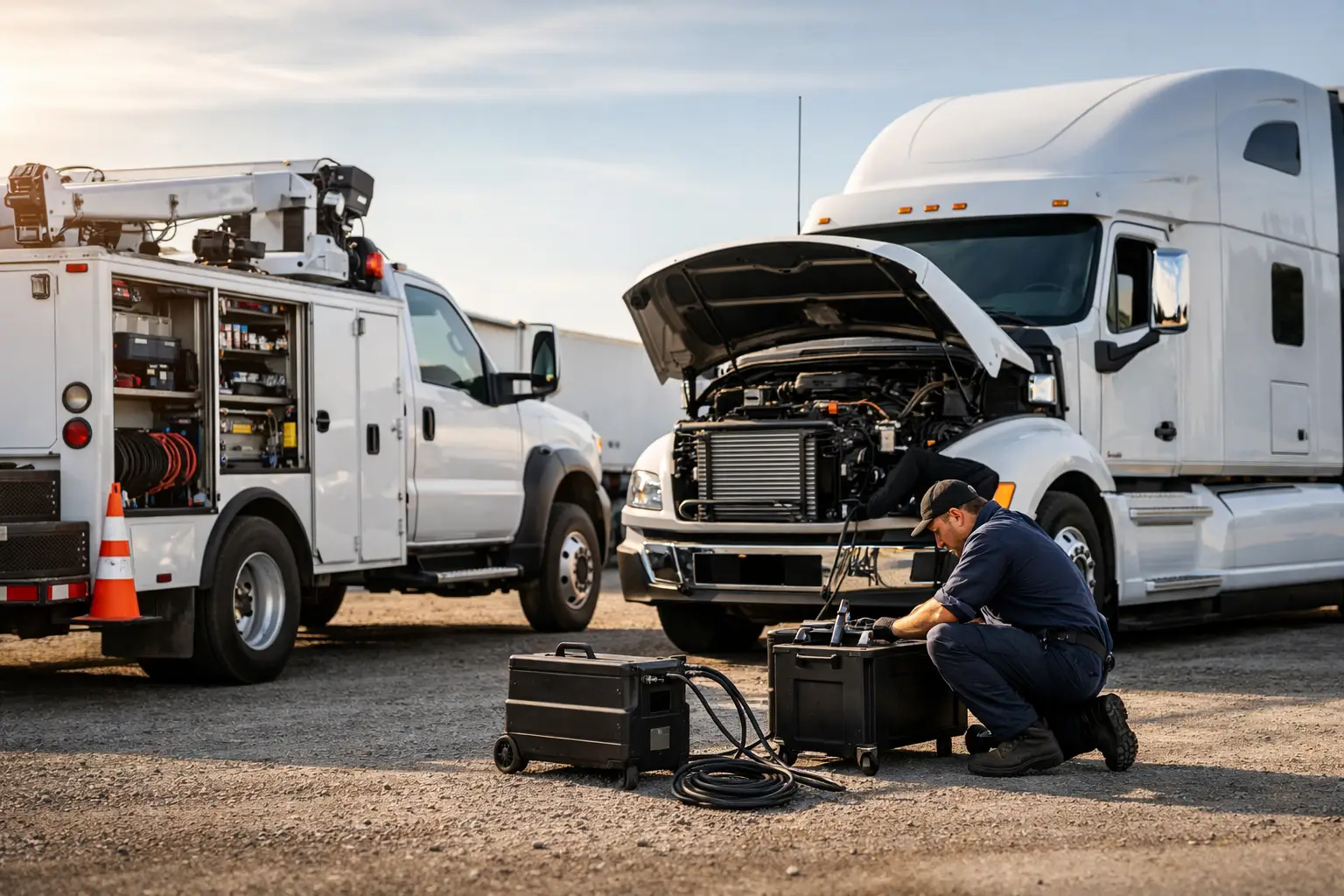
A truck that will not build air, a trailer with a damaged light, or a no-start at a delivery stop can put an entire load plan at risk. Onsite commercial vehicle services bring the repair response to the truck, trailer, yard, jobsite, or roadside location where the problem happened - so diagnosis can start without waiting on a tow or a shop opening.
For drivers, dispatchers, and fleet managers, the goal is simple: get safe, revenue-producing equipment moving again as quickly as the repair allows. Mobile service is not the answer to every failure, but it is often the fastest first move when downtime is already costing money.
Why onsite commercial vehicle services matter
A disabled commercial vehicle creates more than a mechanical problem. It can hold up a driver, shift delivery windows, disrupt the next pickup, create detention exposure, and leave dispatch scrambling for another unit. If the truck or trailer must be towed before anyone can inspect it, the clock keeps running through every handoff.
Onsite service removes that first delay. A technician arrives where the equipment is located, evaluates the issue, and performs field-appropriate repairs. That may mean correcting an air system problem, replacing a failed component, addressing electrical faults, repairing a trailer issue, or determining whether the unit needs a more involved repair at a facility.
The practical value is not just convenience. It is control. A driver gets an answer, dispatch gets a clearer status, and the equipment either returns to service or moves forward with a defined repair plan.
When mobile truck and trailer repair is the right call
Mobile repair is especially useful when the vehicle is stuck somewhere it should not be: on the roadside, at a shipper, in a receiver's lot, at a fuel stop, in a yard, or at a construction site. It also makes sense when the repair is likely manageable in the field and towing would add time and expense without improving the outcome.
Common calls include air leaks, brake concerns, electrical issues, lighting defects, battery and charging problems, no-start conditions, tire-related concerns, minor fuel system issues, and trailer repairs. A trailer with a broken light, a damaged connection, or a brake issue can be just as disruptive as a truck failure when freight has to move.
There are limits. Major engine failures, significant collision damage, internal transmission work, or repairs requiring specialized equipment may need a shop. A good mobile provider does not treat every problem as a roadside fix. The immediate advantage is that a technician can assess the situation on site, make safe repairs when possible, and prevent wasted time guessing about the next step.
The tow-versus-repair decision
Towing is sometimes necessary, but it should be a decision based on the actual failure, not an automatic response. Before arranging a tow, consider whether the truck or trailer can be diagnosed where it sits, whether the needed parts are available, and whether the repair can be completed safely in the field.
If a mobile repair resolves the issue, you may avoid towing costs, shop intake delays, and the added risk of moving disabled equipment. If the unit does require a shop, an onsite diagnosis still helps. You can send it to the right place with a known issue instead of paying for transport before anyone has identified the problem.
What to have ready before you call
The fastest service calls start with useful information. A clear location matters first. Give the exact address when possible, the nearest cross streets or highway marker if you are roadside, and details about access restrictions at a yard, loading dock, or jobsite.
Describe the equipment accurately. Have the truck number, trailer number, make and model, and any relevant unit or VIN information available. Explain what happened before the failure, what warning lights are on, whether the unit is loaded, and whether the driver can safely remain with the equipment.
It also helps to state the operational urgency. Is there a delivery appointment within the hour? Is the trailer loaded with temperature-sensitive freight? Is the vehicle blocking a dock or creating a safety concern? A technician needs the mechanical facts, but dispatch needs to understand the operating situation too.
Do not keep troubleshooting after a condition becomes unsafe. Air pressure loss, brake concerns, smoke, fuel leaks, overheating, or electrical burning odors require caution. Park safely if possible, secure the vehicle, and communicate the condition clearly when requesting help.
A field repair should protect uptime and safety
Fast repair does not mean rushed repair. The right response restores safe operation, verifies the repair, and gives the driver a clear understanding of whether the equipment can return to service. A quick patch that fails ten miles later can cost more than taking the time to address the actual cause.
For fleets, this is why mobile service should be part of a broader uptime plan. Track repeat breakdowns, note recurring trailer defects, and review which routes, loads, or units generate the most calls. The information from emergency repairs can point to preventive maintenance needs before another truck loses a shift.
Owner-operators can use the same approach on a smaller scale. Keep records of what failed, what was repaired, and whether the issue returns. A roadside repair may get you through the immediate situation, but repeated problems deserve a scheduled inspection when the truck can be taken out of service on your terms.
24/7 availability changes the response
Breakdowns do not wait for business hours. A truck can fail during an overnight run, a trailer defect can appear after loading, and a no-start can happen before a morning dispatch. When a repair provider is available 24/7, drivers and dispatchers have a direct response option instead of waiting until the next day.
That matters across active freight corridors and growing service areas such as Wyoming, Colorado, and Texas, where equipment may be far from a familiar shop. The closest fixed-location repair facility is not always the quickest path back to operation. The provider that can come to the equipment may be the better choice.
MTG Truck Shops is built around that field-service need: truck and trailer repair where the problem occurs, day or night. The focus is on assessing the issue, making the repair that can be completed on site, and helping operators make the next decision quickly when a shop repair is required.
Keep the next breakdown from becoming a full-day delay
The best time to identify a mobile repair resource is before a driver is stranded. Dispatch teams should know who to call, what service areas are covered, and what details to collect from the driver. Drivers should know to report symptoms early instead of waiting until a small air leak, warning light, or trailer defect becomes a roadside failure.
When equipment stops, act early, share accurate information, and choose a repair response based on safety and the real condition of the unit. The right onsite help can turn a breakdown from a lost day into a controlled delay - and keep the next load within reach.