
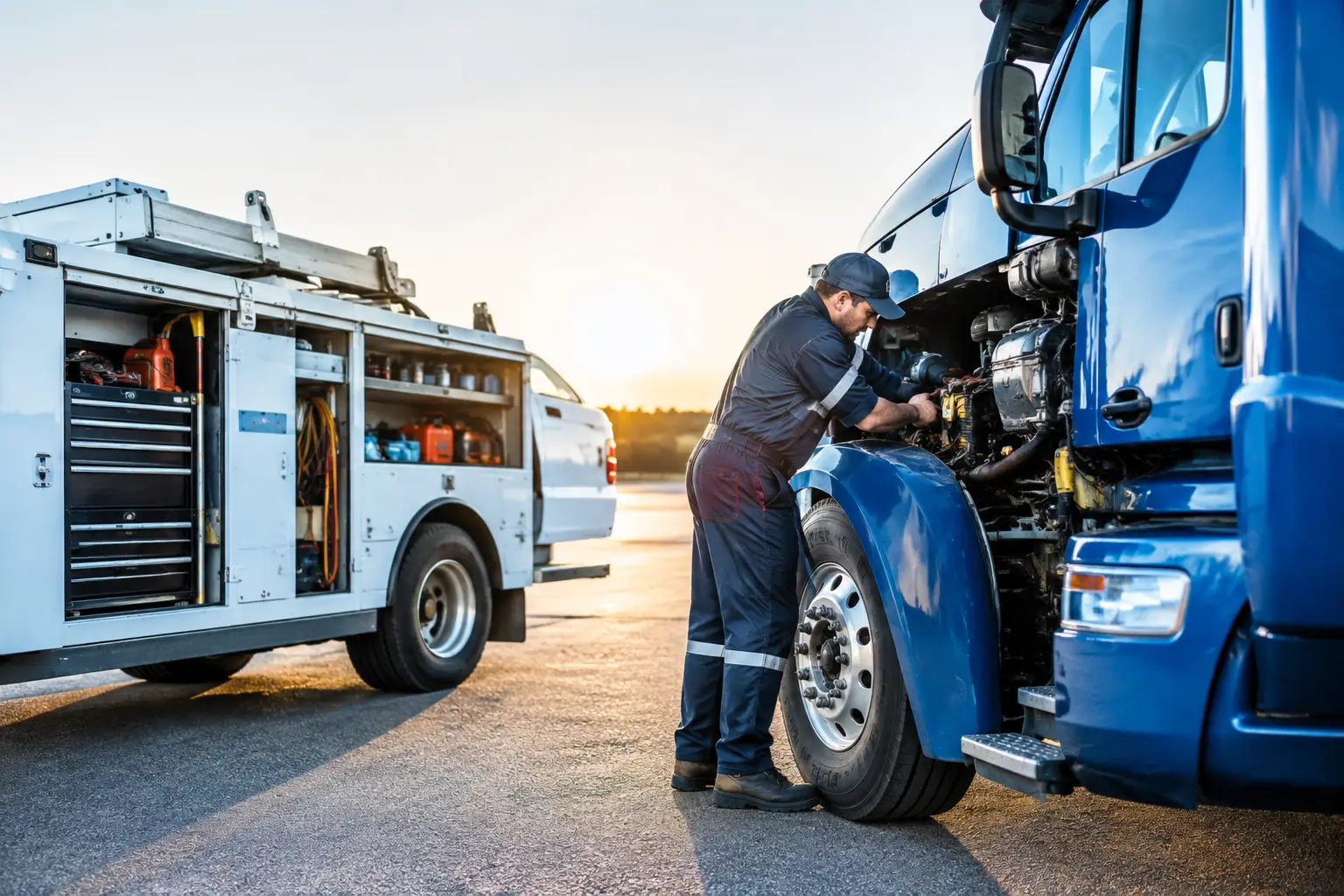
A loaded truck on the shoulder, a trailer with lights out at a jobsite, or an air leak discovered before a delivery creates the same problem: equipment is stopped and the clock is running. Repair dispatch is the process that turns that problem into action by getting the right mobile technician, tools, and parts information to the truck or trailer location as quickly as possible.
For commercial operators, the goal is not simply to schedule a repair. It is to protect uptime. Every hour a truck sits can mean a missed appointment, an unhappy customer, a driver losing productive time, freight that needs to be recovered, and towing charges that may have been avoidable. A well-run mobile repair response starts with clear information and stays focused on one result: getting the equipment safely back in service.
What Repair Dispatch Should Accomplish
A repair dispatch call should do more than put a name on a service list. It should identify the disabled equipment, pinpoint the location, understand the immediate mechanical or trailer issue, and send a technician prepared to diagnose the problem in the field.
That preparation matters. A no-start complaint may involve batteries, starter connections, charging system issues, or damaged wiring. A trailer issue may be a flat tire, failed lighting, brake problem, air leak, damaged door hardware, or suspension concern. The more useful details provided at dispatch, the better the chance that the technician arrives with the equipment and parts needed to make progress on the first visit.
Mobile service is especially valuable when moving the truck creates another problem. Towing a tractor or loaded trailer can be expensive, slow, and difficult to arrange after hours. If a repair can be completed where the truck stopped, the operation avoids an extra handoff and begins the diagnosis sooner.
Information That Speeds Up a Mobile Repair Dispatch
The fastest response begins before the technician is assigned. Drivers, fleet dispatchers, and maintenance teams should have a consistent process for reporting a breakdown. Guessing at location details or describing the problem as "it won't run" can delay the repair before the service truck even leaves.
Start with the exact location. Include the highway and direction of travel, nearest mile marker or exit, cross streets, gate information, jobsite instructions, and a reliable callback number. If the truck is in a truck stop, warehouse lot, customer yard, or roadside pull-off, say so. A mobile technician needs to know not only where the unit is, but whether it can be safely accessed.
Next, provide the unit details. The truck number, trailer number, make, model, year, engine information when available, and license plate information help confirm what is being repaired. If the issue involves a trailer, identify the trailer type and whether it is loaded. A loaded reefer, flatbed, dump trailer, or dry van can create different repair and safety considerations.
Finally, describe what happened before the failure. Did the truck lose power while driving? Did an air warning come on? Is there visible fluid leakage? Did the driver hear a grinding noise, see smoke, or notice that trailer lights failed after connecting? Specific observations help the technician start in the right place. Drivers should never be expected to diagnose the problem, but clear symptoms are useful.
When Roadside Repair Is the Right Call
Many common commercial truck and trailer problems can be diagnosed and repaired on site. Mobile service is often the best option for no-starts, battery and charging concerns, air system leaks, lighting and electrical faults, tire-related issues, minor brake concerns, damaged hoses, loose connections, and many trailer defects.
The decision depends on safety, the extent of damage, parts availability, and whether the equipment can be returned to legal operating condition. A technician may be able to restore air pressure, repair a wiring connection, replace a failed component, or correct a trailer issue without moving the equipment from its location.
There are times when towing or a shop repair is still necessary. Major engine failure, extensive collision damage, a serious structural problem, a transmission issue requiring deeper disassembly, or repairs that cannot be safely performed roadside may take the unit out of service. Good repair dispatch does not promise a field fix no matter what. It sends help quickly, identifies the condition honestly, and helps the customer make the next operational decision with facts.
The Cost of Waiting Until Morning
A breakdown does not become less expensive because it happens after normal business hours. Freight still has a delivery window. Drivers still need support. A truck parked with a preventable problem may lose an entire shift while the carrier waits for a shop to open or tries to locate a tow.
That is why 24/7 availability changes the repair decision. Calling for mobile help at the first sign of a disabling issue can reduce the time between failure and diagnosis. Even when the repair is more involved, an early inspection gives the fleet a clearer picture of what is needed. That allows dispatch to update the customer, find a replacement truck if necessary, protect the load, or plan a tow without wasting hours in uncertainty.
For owner-operators, the impact is just as direct. When the truck is the business, downtime is lost earning capacity. The right response is not always the cheapest-looking option at the moment. It is the option that considers towing, missed loads, driver time, repair duration, and the risk of turning a small issue into a larger one.
How Fleets Can Make Repairs Easier to Dispatch
Fleet managers can reduce confusion during a breakdown by setting expectations before the first emergency call. Drivers should know who to contact, what information to collect, and when to stop operating the equipment. This is particularly important for air brake issues, tire failures, fluid leaks, electrical faults, and anything that affects safe operation.
A basic vehicle information file for each unit also helps. Keep truck and trailer numbers, VINs, engine details, tire sizes, maintenance history, and preferred parts information available to the people handling service calls. The goal is not paperwork for its own sake. It is to avoid losing time when a driver is parked in an unfamiliar location at 2 a.m.
Communication between the driver, fleet dispatcher, and repair provider should stay practical. If the technician needs gate access, a purchase order, approval limits, or confirmation of the load status, provide it early. If the driver moves the truck to a safer nearby location, report the new location immediately. Small communication gaps can create major delays in the field.
What to Expect From a Capable Mobile Repair Provider
A dependable provider should communicate clearly about arrival expectations, assess the problem at the truck or trailer, and explain what can be repaired on site. The technician should work with the operational reality of the situation, whether that means getting a driver back on the road, making a trailer safe to move, or confirming that further repair is required.
Coverage also matters. A provider that understands local highways, industrial areas, customer yards, and truck traffic patterns can respond more effectively. For operators running through Wyoming, Colorado, or Texas service corridors, knowing who can handle truck and trailer issues outside a fixed shop location can save time when plans change fast.
MTG Truck Shops provides 24/7 mobile commercial truck and trailer repair with a simple operating promise: We Come to You. That means help can be dispatched to roadside locations, terminals, job sites, customer facilities, and other places where equipment fails far from a traditional repair bay.
Keep the First Call Focused
When a truck or trailer goes down, the first call should be about action, not a long explanation. Give the location, unit information, symptoms, load status, and callback number. Then keep the driver in a safe position, follow company procedures, and make sure the technician can reach the equipment.
Fast repair dispatch cannot prevent every breakdown. It can prevent a breakdown from becoming an all-day disruption. The sooner the right technician has the right information, the sooner your operation can make its next move.