
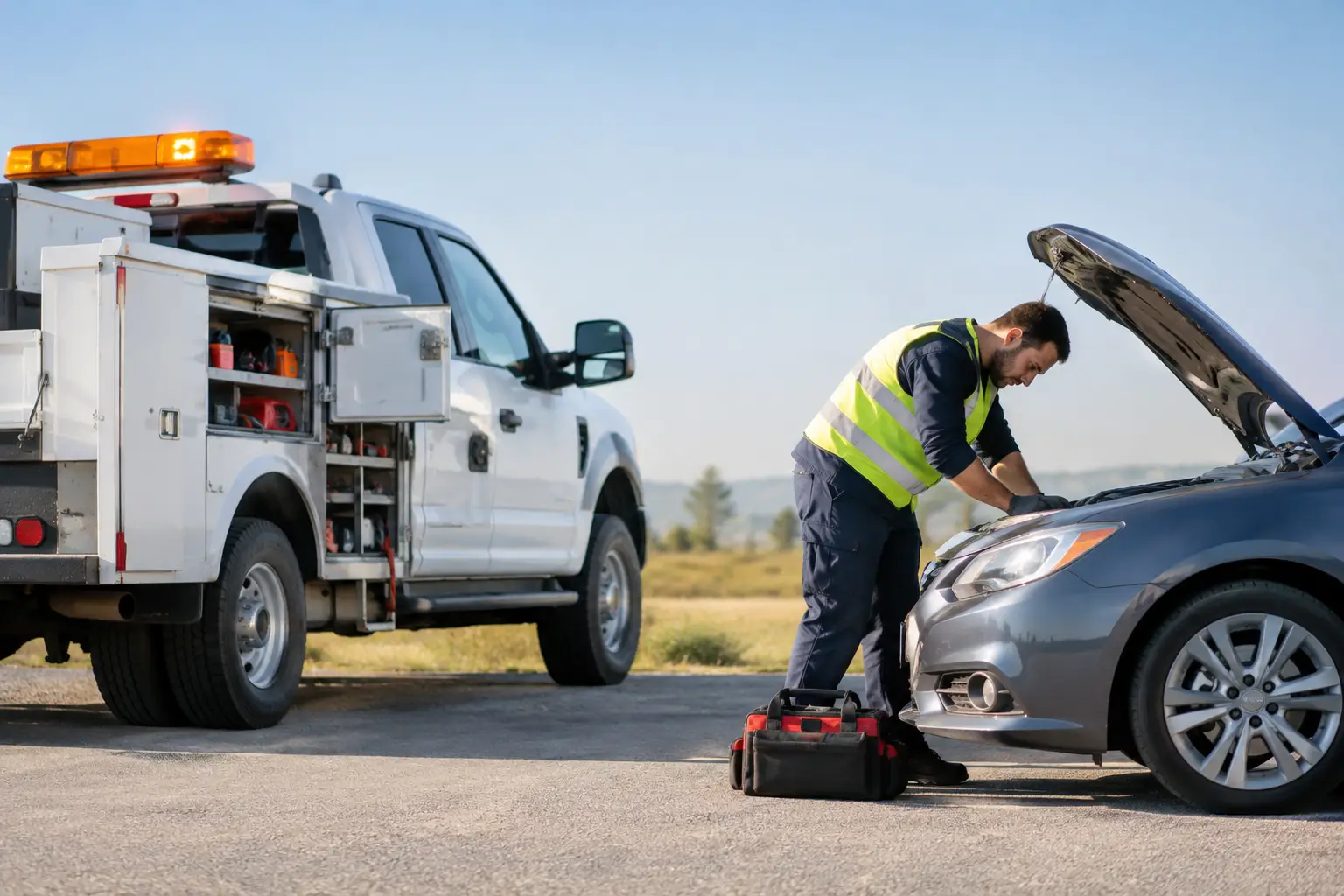
A loaded truck stopped on the shoulder is not just waiting on a repair. It is burning drive time, putting a delivery at risk, and creating a safety concern for the driver. Roadside repair duration can range from a short service call to several hours, but the real question is what has to happen before the equipment can safely return to service.
For commercial trucks and trailers, a useful repair estimate starts with the condition of the vehicle, not a guess made before anyone sees it. A mobile technician can reduce downtime by coming to the truck or trailer, diagnosing the issue on site, and completing repairs that do not require a full shop bay.
What Determines Roadside Repair Duration?
The clock starts before the wrench comes out. Response time, site access, diagnosis, parts availability, and the repair itself all affect how long a unit remains out of operation. Some delays are preventable with clear information from the driver or dispatch. Others depend on the severity of the failure.
A straightforward issue such as a failed light, damaged air line, loose electrical connection, minor air leak, wheel-end concern caught early, or a trailer door problem may be corrected during one mobile visit. A more involved fault, such as major engine damage, transmission failure, extensive brake damage, structural trailer damage, or a problem requiring specialized parts, can take longer and may require towing or follow-up work.
The goal is not to promise the same repair time for every call. The goal is to identify the fault quickly, make a safe repair when field conditions allow, and give the customer a clear next step when they do not.
The Time Breakdown During a Service Call
Dispatch and technician arrival
A 24/7 provider can take the call immediately, but arrival time still depends on technician location, traffic, weather, road conditions, and how remote the disabled unit is. A truck stopped at a busy interchange, a customer yard, or a well-marked truck stop is generally easier to reach than one on an unlit rural road or a jobsite with restricted access.
Accurate dispatch information saves time. The driver should provide the unit number, exact location, direction of travel if on a highway, truck or trailer make and model, and a plain description of the issue. Photos of visible damage, warning lights, tire condition, or leaking components can also help the technician prepare before arrival.
Diagnosis
Diagnosis is often the most important part of roadside repair duration. A warning light can point to multiple causes. An air-pressure problem may be a worn hose, a fitting, a brake chamber issue, a compressor concern, or a leak somewhere farther down the system.
An experienced mobile technician checks the failure rather than replacing parts based on a symptom alone. That process protects the customer from paying for the wrong repair and prevents a truck from leaving only to break down again a few miles later. Fast work matters, but accurate work keeps the load moving.
Parts and repair access
Many common truck and trailer repairs can be completed with mobile tools and stocked service parts. The repair time changes when the correct part must be sourced, when a component is seized or damaged beyond expectations, or when the failed area is difficult to reach safely.
A trailer repair can be quick when the issue is limited to lighting, air lines, a landing gear adjustment, a minor door issue, or another accessible component. It can take longer if damage has spread to wiring, brakes, suspension, crossmembers, or other structural areas. The same applies to tractors: a simple electrical or air-system repair is different from an internal engine or aftertreatment problem.
Safety checks before release
A repair is not finished when the truck starts or the lights come back on. The technician must verify that the affected system operates correctly and that the unit is safe to return to the road. That can include checking air pressure, brake function, electrical operation, fluid leaks, tire condition, or trailer connection points.
Those final checks take time, but they are time well spent. A rushed release can turn one roadside stop into two.
Common Repairs That May Be Completed on Site
Mobile service is especially valuable when the equipment can be repaired where it sits. Field repairs often address issues that do not require lifting the truck in a shop or removing major components. Depending on the condition of the unit and parts availability, a mobile technician may resolve air leaks, lighting faults, electrical connection problems, battery and starting issues, basic brake concerns, damaged hoses, trailer issues, and selected suspension or wheel-end problems.
The key phrase is “depending on.” A roadside technician has to work around traffic, weather, ground conditions, vehicle position, and safe access. A repair that would be simple in a lit shop bay may require a different approach on a narrow shoulder or muddy jobsite.
When a Roadside Repair Takes Longer Than Expected
No driver wants to hear that additional time is needed. Still, an honest assessment is better than a temporary fix that creates a larger failure later. The most common reasons for extended downtime are hidden damage, multiple related faults, delayed parts, unsafe roadside conditions, and repairs that exceed what can be completed reliably in the field.
For example, an air leak may be visible at one fitting, but pressure testing can reveal another damaged line. A trailer light outage may begin as a blown fuse, then lead to damaged wiring or corrosion at a connector. A tire-related event may have damaged a brake line, mud flap bracket, or nearby wiring. The first symptom is not always the whole repair.
Weather also changes the work. High winds, snow, extreme heat, heavy rain, or low visibility can slow diagnosis and limit safe roadside access. In these cases, the right decision may be to move the unit to a safer location before completing the repair.
How Drivers and Dispatchers Can Reduce Downtime
The fastest repair call is usually the best-prepared one. Drivers should pull to the safest available location, activate warning devices, and avoid attempting repairs that create additional risk. Dispatchers can support the driver by confirming the load status, delivery window, repair authorization process, and any customer-site access requirements before the technician arrives.
Have the truck and trailer numbers ready, along with the VIN if requested. Explain whether the unit can move, whether it has air pressure, whether the engine starts, and whether the problem affects brakes, lights, tires, steering, or load security. If the unit is carrying hazardous materials, oversized equipment, temperature-controlled freight, or a time-sensitive load, say so at the start of the call.
It also helps to describe what changed before the breakdown. Did the driver hear air escaping? Did a warning indicator come on? Was there a recent tire failure? Did the trailer lights fail after connecting to a different tractor? Details like these can shorten the diagnostic process.
Mobile Repair Versus Towing to a Shop
Towing is sometimes necessary, especially for major mechanical failures or damage that cannot be safely repaired where the unit stopped. But towing adds its own time and cost: arranging the tow, moving the equipment, waiting for shop intake, and then starting diagnosis after arrival.
Mobile repair avoids that extra step when the issue is suitable for on-site service. For fleets and owner-operators in areas such as Wyoming, Colorado, and Texas, that can matter when the nearest fixed-location shop is miles away or the load cannot afford a long interruption. MTG Truck Shops provides 24/7 mobile truck and trailer repair because the repair process should begin at the breakdown location whenever practical.
The right choice depends on the failure. A good service provider will not force a roadside repair when shop work is the safer option. They will tell you what can be repaired now, what parts are needed, and whether moving the unit is necessary.
Set Expectations Early, Keep Freight Moving
Ask for an update after diagnosis, not just an arrival estimate. Once the technician has inspected the truck or trailer, you can make better decisions about a replacement unit, load transfer, customer communication, or delivery scheduling.
When a truck or trailer goes down, clear information and a capable mobile response do more than shorten the repair clock. They give your driver and dispatch team a workable plan for the next move.