
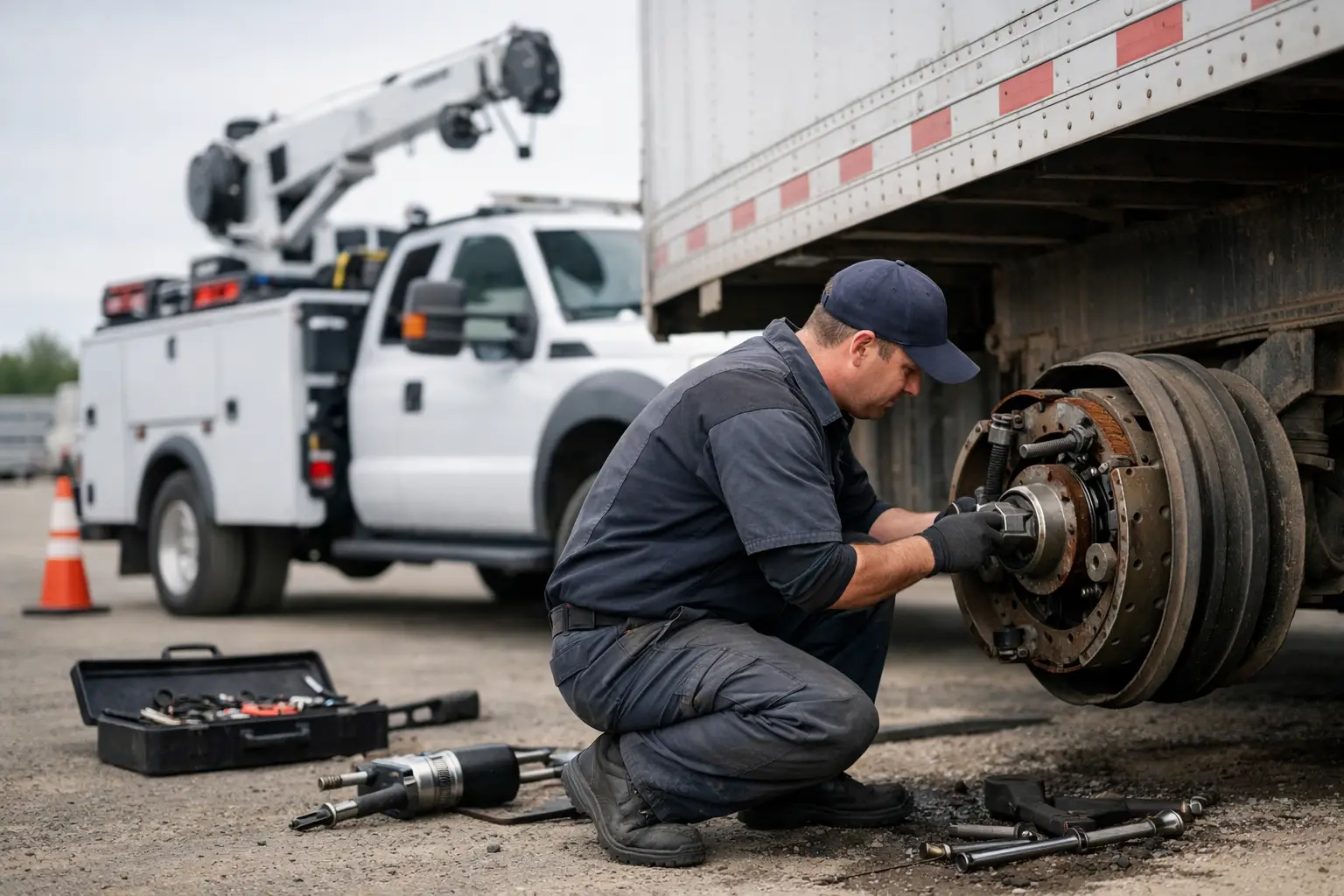
A trailer with weak, dragging, or non-functioning brakes is not equipment you can afford to keep rolling. When you need trailer brake repair service, the priority is clear: identify the fault, make the repair safely, and get the trailer back to work without adding unnecessary towing, shop delays, or missed freight.
For commercial drivers, owner-operators, dispatchers, and fleet managers, brake trouble can stop more than one trailer. It can disrupt a delivery window, leave a driver stranded, force a load transfer, or take a revenue-producing asset out of rotation. Mobile repair brings the technician to the breakdown location so diagnosis can begin where the trailer sits.
When Trailer Brake Trouble Requires Immediate Service
Some brake issues build gradually. Others appear without warning at a scale, inspection point, customer site, truck stop, roadside location, or jobsite. Either way, a trailer that will not stop correctly or will not release correctly needs prompt attention.
Common signs include a trailer pulling to one side during braking, reduced stopping power, brake smoke, hot hubs or drums, a burning odor, or wheels that remain locked after the brakes are released. You may also notice an air leak near an axle, an audible leak when the brakes are applied, a low-air warning, or a brake chamber pushrod that appears to travel too far.
Do not assume a brake problem will clear itself after the equipment cools down. A dragging brake can damage linings, drums, bearings, tires, and wheel-end components. A loss of braking force can create a serious safety risk before those parts show visible damage.
If a driver reports a brake issue, get the unit stopped in a safe location when possible. Set the parking brakes, secure the scene, and communicate the trailer number, axle location if known, symptoms, and any recent repair history to the service provider. That information helps a mobile technician arrive prepared to start work faster.
What a Trailer Brake Repair Service Checks
A proper diagnosis starts with the full brake system, not just the wheel that appears to be causing trouble. Air brakes rely on multiple connected components. An air leak, failed valve, damaged hose, worn slack adjuster, contaminated lining, or problem at the tractor connection can produce similar symptoms.
A technician may inspect air lines and fittings for leaks or chafing, check brake chambers and pushrods, examine slack adjusters, verify air pressure and valve operation, and inspect brake linings, drums, rotors, calipers, hubs, and wheel seals as needed. The trailer electrical connection may also need attention when an ABS warning is involved.
The repair depends on what failed. A loose or damaged air line may be corrected at the location quickly. A defective brake chamber, slack adjuster, valve, hose, or wiring connection may be replaceable on-site if the correct part is available. Worn brake components or a damaged wheel end can require a more involved repair plan.
That distinction matters. Fast service should not mean guessing. The goal is to address the actual cause of the failure, then verify that the brake system applies and releases correctly before the trailer returns to service.
Air Leaks and Loss of Brake Pressure
Air leaks are among the most common reasons for roadside brake calls. A cracked hose, failed fitting, damaged gladhand seal, or leaking valve can reduce available air and affect brake response. If the leak is severe, the trailer may not build or hold the air pressure needed to operate safely.
The exact location of the leak matters. A leak near the tractor-trailer connection may have a different repair path than one at an axle, relay valve, or spring brake chamber. A technician should test the system under the conditions that produce the complaint rather than replacing parts based on sound alone.
Dragging Brakes and Overheating
A hot wheel end is an urgent condition. Dragging brakes can result from an overadjusted brake, seized component, damaged hose, malfunctioning valve, weak return spring, or mechanical issue inside the brake assembly. Continuing to drive can turn a manageable brake repair into extensive wheel-end damage.
When smoke, heat, or a burning smell is present, allow the area to cool and keep people clear of the wheel end. Do not apply water to overheated brake components. The safest next step is to request service and have the system inspected before moving the trailer.
ABS and Electrical Brake Faults
An ABS warning does not always mean the foundation brakes have failed, but it does mean the system needs attention. Damaged sensor wiring, a loose connector, a failed wheel speed sensor, or an issue with the ABS control system can trigger a warning.
For fleets, documenting the warning condition and the repair performed helps prevent repeat issues. Wiring damage can be especially common on trailers that operate in severe weather, rough jobsite conditions, or environments where harnesses are exposed to road debris.
Mobile Repair Helps Protect Your Schedule
Taking a disabled trailer to a fixed shop can add time and expense before diagnosis even begins. Depending on the failure, moving the trailer may require a tow, a roadworthy substitute unit, or a load transfer. Those decisions become more difficult after hours or when a trailer is stopped far from a terminal.
Mobile brake service is built for the situation in front of you. A technician can meet the equipment at a roadside location, shipper or receiver, staging area, truck stop, yard, or jobsite. That can reduce the time between the first call and the first inspection.
MTG Truck Shops provides 24/7 mobile commercial truck and trailer repair. When brake trouble stops a trailer in areas including Wyoming, Colorado, or Texas service locations, the focus is straightforward: We Come to You, assess the problem, and work to get the equipment moving safely again.
Mobile service does have practical limits. A severely damaged axle, major wheel-end failure, or repair requiring specialized parts may not be safely completed at every location. In those cases, an accurate field diagnosis still saves time because you know what failed, what parts are needed, and whether the trailer can be moved or needs further handling.
What to Have Ready When You Call
The fastest service calls start with useful details. Provide the trailer number, make and type of trailer, current location, a callback number for the driver or on-site contact, and a description of the brake symptoms. If the problem involves a specific axle or wheel position, include that too.
Let the technician know whether the trailer is loaded, whether it can be safely moved, and whether air pressure is building and holding. Photos can help when they are safe to take, particularly for visible air-line damage, warning lights, or an affected wheel end. Do not crawl under a trailer or inspect hot brake components to collect information.
For fleet dispatchers, include any requirements for site access, customer check-in, gate codes, or work authorization. Small details can prevent delays once the technician arrives.
Preventing the Next Brake-Related Delay
Roadside repairs are sometimes unavoidable, but routine checks reduce the odds of a brake issue becoming a service interruption. Drivers should report changes in braking feel, air leaks, warning lamps, pull, vibration, or unusual heat as soon as they are noticed. Waiting until the next scheduled service can be costly when a minor defect is already affecting brake performance.
Pre-trip and post-trip inspections should include visible air lines, brake chambers, tires, wheel ends, and signs of leakage or heat. Maintenance teams should also track repeat axle or ABS faults. Repeating problems often point to an underlying wiring, adjustment, contamination, or component issue that needs more than a one-time repair.
A trailer earns only when it is safe and available to move freight. When the brakes put that at risk, respond early, keep the equipment secure, and get qualified mobile help to the location before a small fault becomes a longer shutdown.