
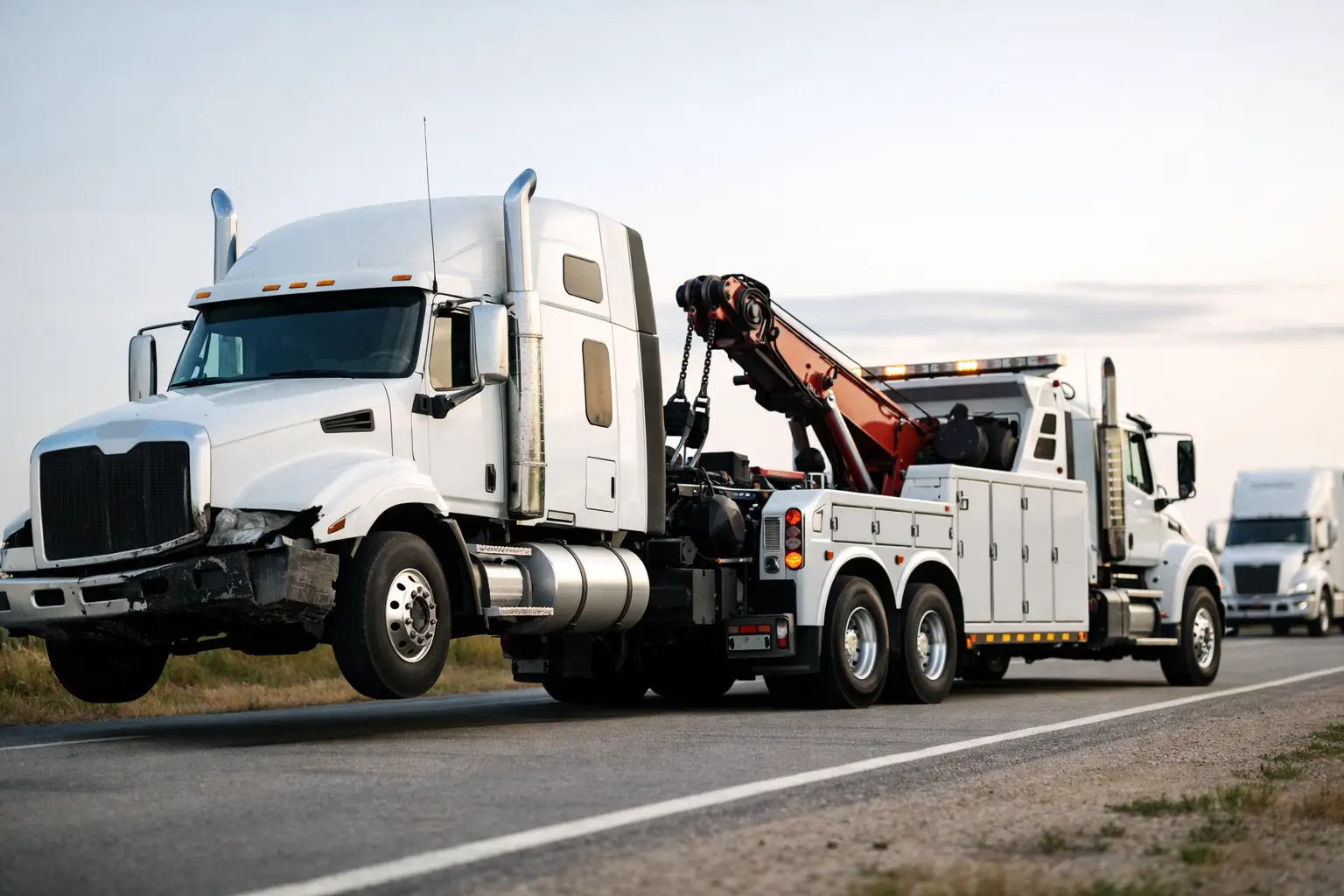
A disabled truck on the shoulder, at a receiver, or on a jobsite creates one immediate question: when should trucks be towed instead of repaired where they sit? The right answer protects the driver and the public first, then protects the load, the equipment, and the delivery schedule. Towing is sometimes the only safe option. But many breakdowns can be diagnosed and repaired on-site, avoiding the extra time, expense, and handling that come with moving a commercial vehicle.
For drivers, dispatchers, and fleet managers, the decision should not be based on whether the truck can still move a few feet. It should be based on whether it can be made safe, whether the repair can be completed in the field, and whether continued operation would cause more damage.
When Should Trucks Be Towed Immediately?
A truck should be towed when the vehicle cannot be made safe for roadside repair or travel. If there is a serious safety hazard, unstable equipment, major structural damage, or a condition that puts the driver or other motorists at risk, do not try to limp it to a shop.
Towing is usually the right call after a significant collision, especially when steering, suspension, frame components, wheels, axles, or the fifth wheel may be damaged. Visible damage is not always the full story. A bent tie rod, cracked spring hanger, shifted axle, or damaged kingpin area can turn a short move into a much larger incident.
A tow is also necessary when the truck is stuck in a location where mobile work cannot be performed safely. That may include a narrow highway shoulder, an active traffic lane, a steep embankment, deep mud, a ditch, or an area with restricted access for a service vehicle. Roadside repairs only make sense when the technician has room to work and can secure the scene.
Other conditions that generally require towing include:
- A fire, active fuel leak, or electrical issue that creates a fire risk
- Severe engine damage, such as a thrown rod, locked engine, or major oil loss
- Failed steering components or suspension damage that prevents controlled movement
- Brake failure that cannot be safely isolated or repaired on-site
- Transmission, driveline, or differential damage that makes the truck immobile
- A damaged trailer connection, landing gear failure, or cargo condition that makes separation or movement unsafe
The load matters, too. Hazardous materials, temperature-controlled freight, oversized equipment, livestock, and high-value cargo may require specific recovery procedures. Dispatch should involve the carrier's safety team, cargo representative, or emergency contact before authorizing movement when required.
Not Every Breakdown Requires a Tow
The presence of a warning light or a no-start condition does not automatically mean the truck needs a wrecker. Commercial equipment often has failures that can be repaired at the truck's location if the scene is safe and the right parts are available.
Common mobile repair calls include battery and charging problems, damaged air lines, air leaks, coolant hose failures, minor electrical faults, lighting issues, brake chamber or hose problems, loose connections, wheel-end concerns that are caught early, and many trailer defects. A technician can inspect the truck, identify the failed component, and determine whether a field repair will return the unit to safe service.
That distinction matters operationally. Towing a tractor and trailer can involve a heavy-duty wrecker, recovery coordination, trailer handling, secure parking, shop intake, and additional delay before diagnosis begins. If the repair can be safely completed where the truck stopped, the driver may avoid a long wait and the load may keep moving sooner.
Mobile repair is not about forcing every job into a roadside fix. It is about making the tow decision after a qualified inspection rather than assuming the vehicle must be moved first.
The Questions to Ask Before Authorizing a Tow
The fastest way to make a sound decision is to gather useful information from the driver before dispatching a tow or repair service. A vague report of “it broke down” slows everything down. Ask what happened, when it happened, and whether the truck can be secured without moving it.
First, determine the truck's exact location and whether it is in a safe position. A unit parked at a customer yard with an air leak is a different situation from a unit disabled in a live traffic lane. Tell the responding service provider whether the truck is loaded, the trailer type, and any access restrictions at the location.
Next, identify the symptoms. Is the engine cranking? Did the truck lose air pressure? Is there smoke, fluid on the ground, a burning smell, abnormal vibration, or a warning message on the dash? Did the driver hear a bang before losing power? These details help separate a likely mobile repair from a potential recovery situation.
Also ask whether the vehicle can move under its own power without creating more damage. A truck that will start but has no oil pressure should not be driven. A trailer with a flat tire may be serviceable on-site, while a trailer with a collapsed suspension or broken axle needs a different recovery plan.
Finally, consider the repair window. If the vehicle is safe where it is and the issue can be repaired quickly, mobile service may be the better path. If the required repair is extensive, requires shop lifting equipment, needs a major component that is not available, or cannot be verified safely in the field, towing may reduce total downtime.
Avoid the “Limp It In” Decision
Drivers often feel pressure to keep moving, especially when a delivery appointment is close. But attempting to limp a truck to a shop can turn a manageable repair into an expensive failure. Low engine oil pressure, high coolant temperature, severe air loss, driveline noise, steering play, and brake issues are not conditions to negotiate with.
Continuing to operate with an active mechanical problem can damage the engine, transmission, tires, wheels, hubs, or trailer. It can also create a roadside emergency farther from help. The cost of a tow may be less than the cost of a major component failure, cargo claim, crash, or out-of-service violation.
There are exceptions. Some fault codes allow limited operation, and some warning lights require inspection but do not indicate an immediate shutdown. The truck's operating manual, fleet policy, and a technician's assessment should guide that decision. Do not rely on guesswork or a dashboard warning alone.
Trailer Problems Change the Decision
A truck may be mechanically sound while the trailer makes travel unsafe. Trailer issues are often overlooked because the tractor still starts and moves, but a damaged trailer can create just as much risk and delay.
Towing or recovery may be needed when landing gear will not support the trailer, the kingpin or upper coupler is damaged, an axle is bent, suspension components are broken, or cargo has shifted in a way that affects stability. Refrigerated trailers, tankers, and specialized equipment may also need equipment-specific handling.
On the other hand, many trailer calls can be handled where the unit sits. Air leaks, lighting faults, electrical connection problems, brake issues, tire service needs, door hardware failures, and certain suspension repairs may be completed on-site when conditions allow. A mobile truck and trailer technician can assess the defect before a costly tow is arranged.
Choose the Response That Reduces Total Downtime
The cheapest immediate option is not always the lowest-cost decision. Waiting for a tow when a safe mobile repair is available can add hours. Sending a mobile technician to a truck with catastrophic engine or structural damage may not avoid the tow, but it can still provide a professional assessment, help secure the equipment, and clarify what recovery is needed.
The best response depends on safety, repair scope, location, parts availability, load requirements, and the risk of additional damage. A good dispatch decision starts with clear information from the driver and a service provider that understands both trucks and trailers.
MTG Truck Shops provides 24/7 mobile commercial truck and trailer repair, bringing technicians to disabled equipment when an on-site repair is the safe, practical option. If the truck cannot be safely repaired where it is, get recovery arranged early and keep the driver, load, and equipment protected.
When the next breakdown happens, do not let delivery pressure make the decision for you. Secure the scene, report the symptoms clearly, and choose the response that gets the equipment back to work without creating a bigger problem.